How Moisture History Shapes Hidden Contamination in Los Angeles Homes
Mold is often treated as a static problem. A visible patch appears, testing is done, and remediation follows. But in reality, mold behaves more like a timeline than a snapshot. It grows, retreats, migrates, and resurfaces based on subtle environmental shifts. At Fun Guy Inspections, we approach mold inspection as a dynamic process rather than a one time event. We analyze how moisture has moved through a structure over time and how that movement has influenced hidden microbial growth.
This perspective is particularly relevant in Los Angeles, where diverse microclimates, aging housing stock, and modern construction practices intersect in complex ways.
Why Mold in Los Angeles Is Not What You Expect
Los Angeles is often associated with dry weather, which leads many property owners to underestimate mold risk. However, this assumption overlooks several critical factors:
• Coastal humidity and marine layer intrusion
• Older plumbing systems in mid century homes
• Modern airtight construction trapping indoor moisture
• Seasonal temperature swings creating condensation zones
These variables create what we call “intermittent moisture environments.” Mold thrives not only in constant dampness but also in cycles of wet and dry conditions. These cycles allow spores to activate, go dormant, and reactivate repeatedly.
The Concept of Temporal Mold Mapping
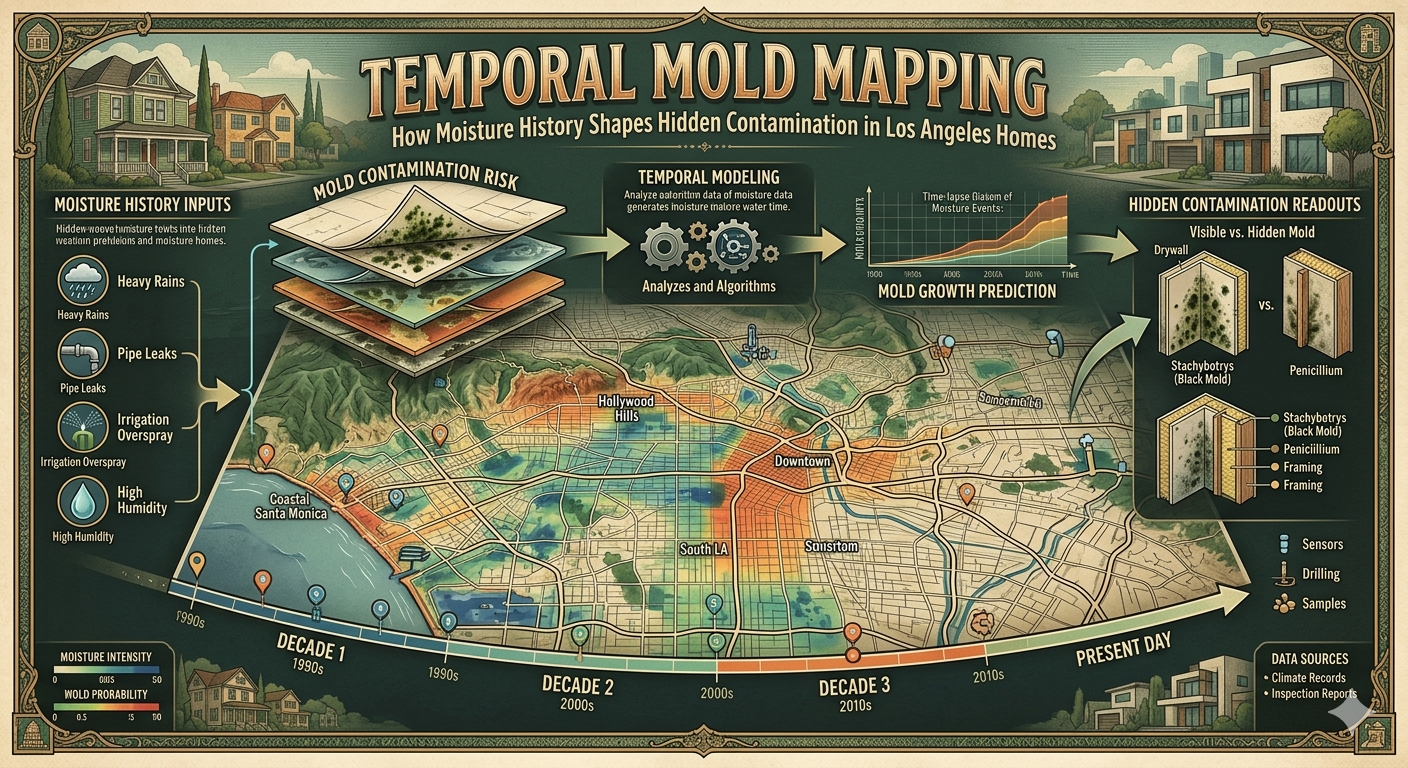
Traditional mold inspections focus on identifying current contamination. Our methodology goes further by reconstructing the moisture history of a property.
Temporal mold mapping involves:
• Identifying past water intrusion points
• Tracing airflow patterns inside walls and ceilings
• Analyzing building materials for moisture retention behavior
• Mapping areas where mold likely existed even if not currently visible
This approach helps us detect hidden colonies that standard inspections often miss.
How Building Materials Store Moisture Memory
Not all materials behave the same when exposed to water. In Los Angeles homes, we commonly see:
• Plaster walls that slowly release moisture over time
• Engineered wood flooring that traps humidity beneath its surface
• Insulation that holds moisture long after a leak has been repaired
These materials create what we refer to as “moisture memory zones.” Even when surfaces appear dry, internal conditions may still support microbial growth.
Airflow as a Hidden Driver of Mold Spread
Mold does not remain confined to where it starts. Air pressure differences inside a home can transport spores into entirely different areas.
We evaluate:
• HVAC system behavior and duct leakage
• Negative pressure zones created by exhaust systems
• Attic to living space air exchange
• Crawlspace air intrusion
By understanding airflow, we can identify how mold may have traveled through the structure over time.

The Role of Microclimates Inside the Home
Every home contains its own microclimates. Bathrooms, kitchens, closets, and even wall cavities can have vastly different humidity levels.
In Los Angeles properties, we frequently find:
• Closet corners with stagnant air leading to localized mold growth
• Window perimeters where condensation forms during cooler nights
• Kitchen cabinetry with hidden moisture from minor plumbing leaks
These microclimates often exist independently of the overall indoor environment, making them easy to overlook without a detailed inspection process.
Beyond Visual Inspection: Data Driven Analysis
Our inspections integrate advanced tools to support temporal mapping:
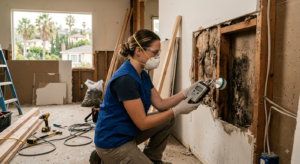
• Moisture meters to detect subsurface dampness
• Thermal imaging to identify temperature anomalies linked to moisture
• Air sampling to measure spore concentration patterns
• Surface testing to confirm active growth
This layered approach allows us to correlate present conditions with past events, providing a more complete picture of the property’s health.
Why This Matters for Property Owners
Understanding mold as a time based phenomenon changes how decisions are made. Instead of addressing only visible issues, property owners gain insight into underlying causes.
This leads to:
• More targeted remediation strategies
• Reduced risk of recurrence
• Better long term indoor air quality
• Increased property value stability
Without this perspective, mold problems often return, leading to repeated costs and ongoing frustration.
Our Approach at Fun Guy Inspections
We do not treat mold inspection as a checklist. We treat it as an investigation into how a building interacts with moisture over time.
Our process focuses on:
• Reconstructing moisture events
• Identifying hidden risk zones
• Providing actionable recommendations tailored to the property
• Delivering clear, technically grounded reports
We work with homeowners, buyers, and property managers who want more than surface level answers.
Mold is not just about what you can see today. It is about what has happened over months or even years inside the structure of a building. In a city like Los Angeles, where environmental and architectural factors create unique conditions, this deeper understanding is essential.
At Fun Guy Inspections, we bring a temporal lens to mold inspection. By analyzing the past, we help you protect your future.