The Invisible Timeline of Mold
Mold is rarely a sudden event. It is a quiet process that unfolds in layers, often beginning long before visible signs appear. By the time most property owners notice discoloration or musty odors, the underlying ecosystem has already matured. This is why mold inspection should not be treated as a reactive service but as a strategic intervention in a building’s lifecycle.
In this blog, we explore mold inspection through a less conventional lens: time. Specifically, how understanding the timeline of mold growth can redefine how we approach detection, risk mitigation, and long-term property health.
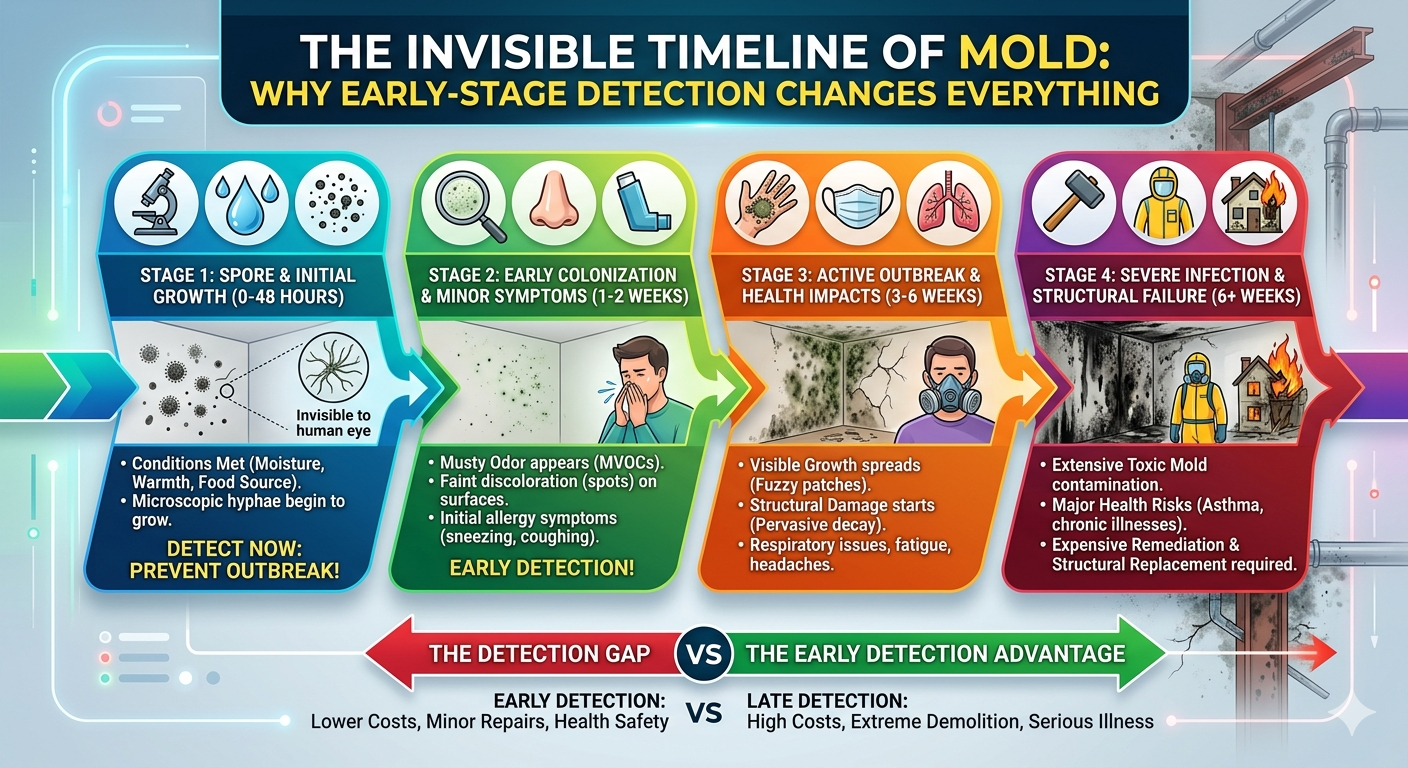
Phase One: The Silent Settlement
Every mold issue begins with a trigger, usually excess moisture combined with organic material. This could be as subtle as a minor HVAC imbalance or as obvious as a plumbing leak. In the earliest phase, spores settle and begin colonization at a microscopic level.
At this stage, there are no visible indicators. Traditional inspections that rely solely on surface observation often miss this critical window. This is where a proactive inspection strategy becomes essential. We focus on environmental indicators such as humidity gradients, airflow inconsistencies, and thermal anomalies that suggest hidden moisture accumulation.
Phase Two: Subsurface Expansion
As mold progresses, it moves beneath surfaces. Drywall, insulation, and wood framing become ideal hosts. The structure may still appear intact, but internally, degradation has begun.
This phase is particularly dangerous because it can compromise indoor air quality without any obvious signs. Occupants may experience symptoms like allergies or respiratory discomfort without understanding the cause.
Our inspection approach prioritizes non-invasive diagnostic tools that identify subsurface activity. Moisture meters, infrared imaging, and air sampling allow us to map contamination zones before they surface. This prevents unnecessary demolition while still delivering accurate results.
Phase Three: Surface Manifestation
Eventually, mold becomes visible. Staining, warping, and odor signal that the issue has reached an advanced stage. At this point, remediation is unavoidable and often more costly.
However, even in this phase, inspection plays a critical role. Not all visible mold represents the full extent of contamination. What appears on the surface is often just a fraction of the problem.
We conduct detailed assessments to determine the true spread, ensuring that remediation efforts are targeted and complete rather than superficial.
The Cost of Delayed Awareness
One of the most overlooked aspects of mold is how quickly costs escalate over time. Early-stage detection may require minor corrective actions such as moisture control or ventilation adjustments. Late-stage issues often involve structural repairs, material replacement, and extended remediation timelines.
This is why mold inspection should be integrated into routine property maintenance rather than reserved for emergencies. It is not just about identifying mold. It is about intercepting a process before it becomes disruptive.
Mold Inspection as Preventive Infrastructure
In modern property management, inspection is evolving from a diagnostic service into a form of infrastructure. Just as buildings rely on electrical and plumbing systems, they also require environmental monitoring to remain healthy.
We approach mold inspection as part of this broader system. By establishing baseline conditions and tracking changes over time, we help property owners maintain control over variables that would otherwise go unnoticed.
This includes:
• Monitoring indoor humidity trends
• Identifying high-risk zones based on building design
• Evaluating ventilation efficiency
• Detecting early microbial activity
This data-driven approach transforms inspection from a one-time event into an ongoing strategy.
Why Expertise Matters in Mold Inspection
Not all inspections deliver the same level of insight. The difference lies in methodology, experience, and interpretation. Mold is complex, and misdiagnosis can lead to either unnecessary panic or dangerous complacency.
At Fun Guy Inspections, we combine technical precision with practical understanding. Our goal is not just to find mold but to explain its behavior within your specific environment. This allows for informed decisions rather than guesswork.
We also recognize that every property has a unique timeline. Factors such as climate, construction materials, and occupancy patterns all influence how mold develops. Our inspections are tailored to reflect these variables.
Rethinking When to Inspect
Most people associate mold inspection with visible problems. However, the most valuable inspections happen before any signs appear. Consider scheduling an inspection in the following scenarios:
• After water intrusion events, even minor ones
• During property purchases or pre-sale evaluations
• As part of annual maintenance routines
• When indoor air quality concerns arise without clear causes
By shifting the timing of inspection, you shift the outcome.
Conclusion: Control the Timeline, Control the Outcome
Mold is not just a condition. It is a process that unfolds over time. The earlier you intervene, the more options you have and the lower the impact on your property and health.
A well-executed mold inspection provides more than answers. It provides foresight. At Fun Guy Inspections, we help you understand not just where mold is, but where it is likely to go next. That perspective makes all the difference.
If you are serious about protecting your space, do not wait for mold to appear. Act while it is still invisible.