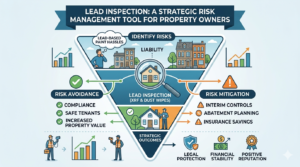
Lead Inspection as a Strategic Risk Management Tool for Property Owners
Lead based paint remains one of the most misunderstood liabilities in residential and multi family real estate. While many property owners associate lead inspection with regulatory compliance alone, the reality is far more complex. Lead hazards intersect with legal exposure, tenant safety, insurance underwriting, asset valuation, and long term portfolio performance. A proactive inspection strategy is not simply about meeting minimum standards. It is about protecting your investment at every level.
At Fun Guy Inspections, we approach lead inspection as a comprehensive risk management service rather than a checkbox exercise. Our objective is to provide clarity, documentation, and defensible data that supports responsible ownership.
Understanding the True Scope of Lead Risk
Lead based paint was widely used in residential properties built before 1978. Over time, paint deterioration, renovations, friction surfaces, and moisture intrusion can generate lead dust and debris. This is where risk increases significantly.
Many owners assume that if paint appears intact, there is no issue. However, friction points such as windows, doors, stair rails, and trim can release microscopic particles even when surfaces look stable. Renovation activities without proper containment protocols can also mobilize hidden hazards.
A professional lead inspection evaluates more than surface appearance. It assesses building age, substrate condition, historical alterations, environmental exposure patterns, and occupancy type. Each of these factors contributes to an accurate hazard profile.
Lead Inspection and Legal Liability
Lead related claims are among the most expensive forms of environmental litigation in residential housing. Even minor exposure allegations can result in significant settlement costs, legal fees, and reputational damage.
In many jurisdictions, failure to disclose known lead hazards or failure to conduct appropriate inspections in older housing stock can result in regulatory penalties. For landlords and property managers, documented inspection reports provide a layer of protection. Proper documentation demonstrates due diligence, which is critical in the event of disputes.
Our process at Fun Guy Inspections focuses on generating defensible, well structured reports that stand up to scrutiny from attorneys, insurance carriers, and regulatory bodies.
Insurance and Underwriting Considerations
Insurance providers increasingly evaluate environmental exposure when underwriting residential properties. Undocumented risk factors can lead to higher premiums, coverage exclusions, or denied claims.
A formal lead inspection provides objective data that insurers can review. In some cases, documented remediation or critical control points can improve underwriting terms. For portfolio owners and investors, this can influence overall operational costs across multiple assets.
Lead Inspection During Renovation and Turnover
Property turnover and renovation cycles are critical control points. Disturbing painted surfaces without testing introduces unnecessary risk. Contractors may not always recognize where lead hazards are present, particularly in properties that have undergone multiple cosmetic updates over decades.
Conducting a lead inspection before renovation allows owners to plan containment, worker protection, and waste disposal properly. This reduces project delays, avoids compliance violations, and protects occupants in adjacent units.
We work closely with property owners to integrate lead inspection findings into renovation planning, helping prevent costly mid project disruptions.
Tenant Safety and Community Trust
Beyond regulatory compliance and financial considerations, there is a human component that cannot be ignored. Children are particularly vulnerable to lead exposure. Even low levels of exposure can affect neurological development.
By investing in professional inspection services, property owners demonstrate a commitment to occupant wellbeing. This strengthens tenant relationships and builds trust within the community. In competitive rental markets, documented safety practices can also serve as a differentiator.
Strategic Portfolio Management
For investors holding multiple pre 1978 properties, a scattered inspection approach is inefficient. A structured portfolio wide assessment strategy allows owners to categorize properties by risk level, prioritize mitigation budgets, and develop phased compliance plans.
Rather than reacting to complaints or citations, owners can operate from a position of control. Organized inspection data also simplifies future transactions, refinancing, and due diligence processes during property sales.
Fun Guy Inspections supports both single property owners and portfolio investors with scalable inspection solutions designed to align with long term asset strategy.
The Value of Proactive Action
Lead hazards do not resolve themselves. Waiting until deterioration becomes visible or until a complaint arises only increases liability exposure. A proactive inspection program reduces uncertainty and allows informed decision making.
Our team at Fun Guy Inspections delivers detailed assessments, clear communication, and actionable recommendations. We focus on accuracy, compliance, and long term risk reduction so property owners can move forward with confidence.
Lead inspection should not be viewed as a burden. When approached strategically, it becomes a powerful tool for protecting assets, safeguarding occupants, and strengthening operational resilience across your real estate holdings.