
Hidden Lead Hazards in Older Los Angeles Homes Most Owners Miss
Los Angeles is known for its diverse neighborhoods, historic architecture, and charming older homes. While these properties often offer character and craftsmanship that newer homes cannot match, they can also conceal serious health and safety risks. One of the most overlooked dangers is lead contamination. Many homeowners assume that lead hazards are obvious, but the reality is that lead can remain hidden in unexpected places throughout a property for decades.
Understanding where lead may be present is essential for protecting your family, tenants, and property value. At Fun Guy Inspections, we frequently encounter hidden lead hazards that homeowners never suspected existed. Identifying these risks early can help prevent costly remediation projects and reduce potential health concerns.
Why Lead Remains a Concern in Los Angeles Homes
Lead was widely used in residential construction before it was banned from consumer paints in 1978. Many homes throughout Los Angeles were built long before that date, making them more likely to contain lead-based materials. While some homeowners have renovated their properties over the years, lead hazards often remain untouched behind walls, under layers of paint, or in areas that receive little attention.
Lead exposure can affect people of all ages, but young children and pregnant women face the highest risks. Even low levels of exposure may contribute to developmental, neurological, and behavioral issues. Because lead is often invisible, professional inspection remains one of the most effective ways to identify potential problems.
Lead Paint Beneath Multiple Layers
One of the most common hidden hazards is old lead-based paint concealed beneath newer coats of paint. Many homeowners assume that repainting a room completely eliminates the risk. Unfortunately, the original lead paint often remains underneath.
As painted surfaces age, crack, chip, or deteriorate, lead-containing dust can be released into the home. This is particularly common around windows, doors, trim, and stair railings where friction regularly wears away painted surfaces. Renovation projects that involve sanding, scraping, or demolition can also disturb hidden lead paint and spread contamination throughout the property.
Windows and Door Frames Often Go Unchecked
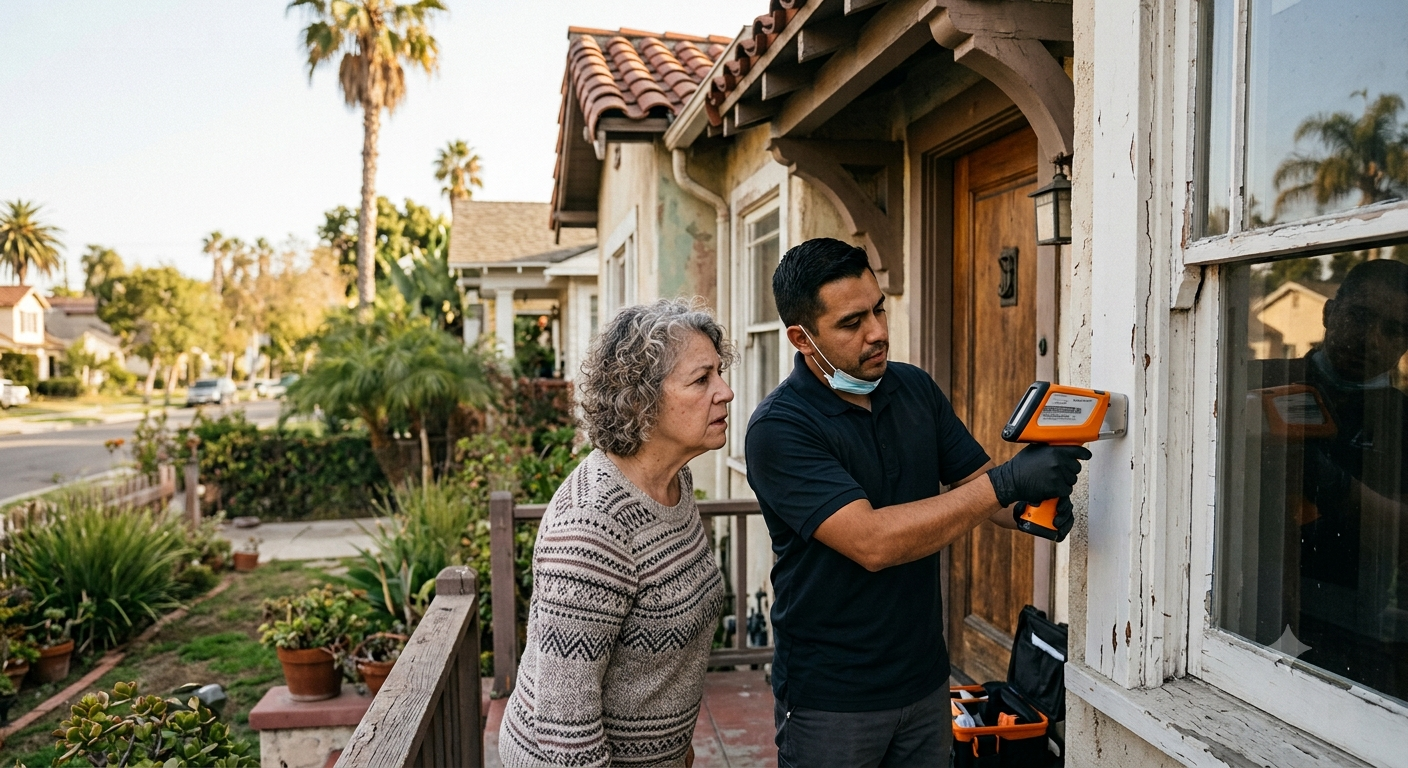
Windows and doors are among the most overlooked lead hazard locations. Older wooden frames were frequently coated with lead-based paint. Every time a window is opened or closed, friction can generate fine lead dust.
Homeowners often focus on walls and ceilings during inspections while overlooking these high-contact areas. Because window troughs and sills can collect contaminated dust over time, they become a significant source of potential exposure, especially in homes with children.
Soil Contamination Around the Property
Many Los Angeles homeowners are surprised to learn that lead hazards may exist outside the home. For decades, exterior lead paint deteriorated and fell into surrounding soil. Historical vehicle emissions also contributed to lead accumulation in many urban neighborhoods.
Contaminated soil can remain hazardous for years. Children playing in yards, gardeners working in flower beds, and pets digging around the property can all come into contact with lead-contaminated soil. Without testing, homeowners may never realize that their landscaping contains elevated lead levels.
Hidden Risks in Renovation Debris
Older remodeling projects can create another overlooked source of contamination. Previous owners may have removed lead-painted materials without following proper containment procedures. Dust and debris can settle in attics, crawl spaces, wall cavities, and other hidden areas.
Even if a renovation occurred years ago, residual contamination may still be present. Homeowners purchasing older properties often inherit these hidden issues without any indication that lead-containing materials were disturbed in the past.
Plumbing Components May Contain Lead
While many people associate lead hazards with paint, older plumbing systems can also present concerns. Some older pipes, solder joints, and plumbing fixtures contained lead components. Over time, lead can enter drinking water under certain conditions.
Although water quality regulations have improved significantly, older homes may still contain outdated plumbing materials. Testing can help determine whether lead is affecting the property’s water supply and whether replacement or corrective measures are necessary.
Lead Dust in Unexpected Areas
Lead dust is often the most dangerous hazard because it is difficult to see. Dust can accumulate on floors, shelves, vents, and HVAC components without obvious warning signs. Normal household activities can disturb the particles and circulate them throughout the home.
Many homeowners focus solely on visible paint deterioration while overlooking the dust generated by years of wear and tear. Professional sampling can reveal contamination levels that are impossible to detect through visual inspection alone.
Garages, Sheds, and Outbuildings
Ancillary structures are frequently ignored during lead assessments. Older garages, storage sheds, workshops, and detached buildings often contain original painted surfaces that have never been updated. Because these structures receive less maintenance than the main residence, paint deterioration may be more severe.
Property owners may store tools, equipment, or children’s items in these areas without realizing they could contain significant lead hazards. A comprehensive inspection should include all structures on the property, not just the primary residence.
The Importance of Professional Lead Inspections
Identifying lead hazards requires more than a visual walkthrough. Specialized testing methods can determine whether lead is present and where contamination exists. Professional inspectors understand how lead behaves in older structures and know where hidden risks are most likely to occur.
A thorough inspection provides homeowners with valuable information for making informed decisions about maintenance, renovations, and remediation. Early detection can prevent exposure while helping property owners avoid unexpected expenses in the future.
At Fun Guy Inspections, we help homeowners uncover hidden environmental concerns before they become larger problems. Our comprehensive inspection services are designed to identify potential lead hazards and provide clear guidance on the next steps.
Protecting Your Home and Family
Older Los Angeles homes offer tremendous value, charm, and history, but they can also contain hidden lead hazards that many owners never notice. Lead-based paint, contaminated soil, aging plumbing, renovation debris, and accumulated dust can all contribute to exposure risks. Because these hazards are often concealed, homeowners should not rely solely on visual observations.
Working with experienced professionals allows property owners to understand the true condition of their homes and take proactive measures when necessary. Fun Guy Inspections is committed to helping Los Angeles homeowners identify potential lead hazards and create safer living environments. By investing in a professional assessment, homeowners can gain peace of mind while protecting the health and well-being of everyone who lives in the property.