
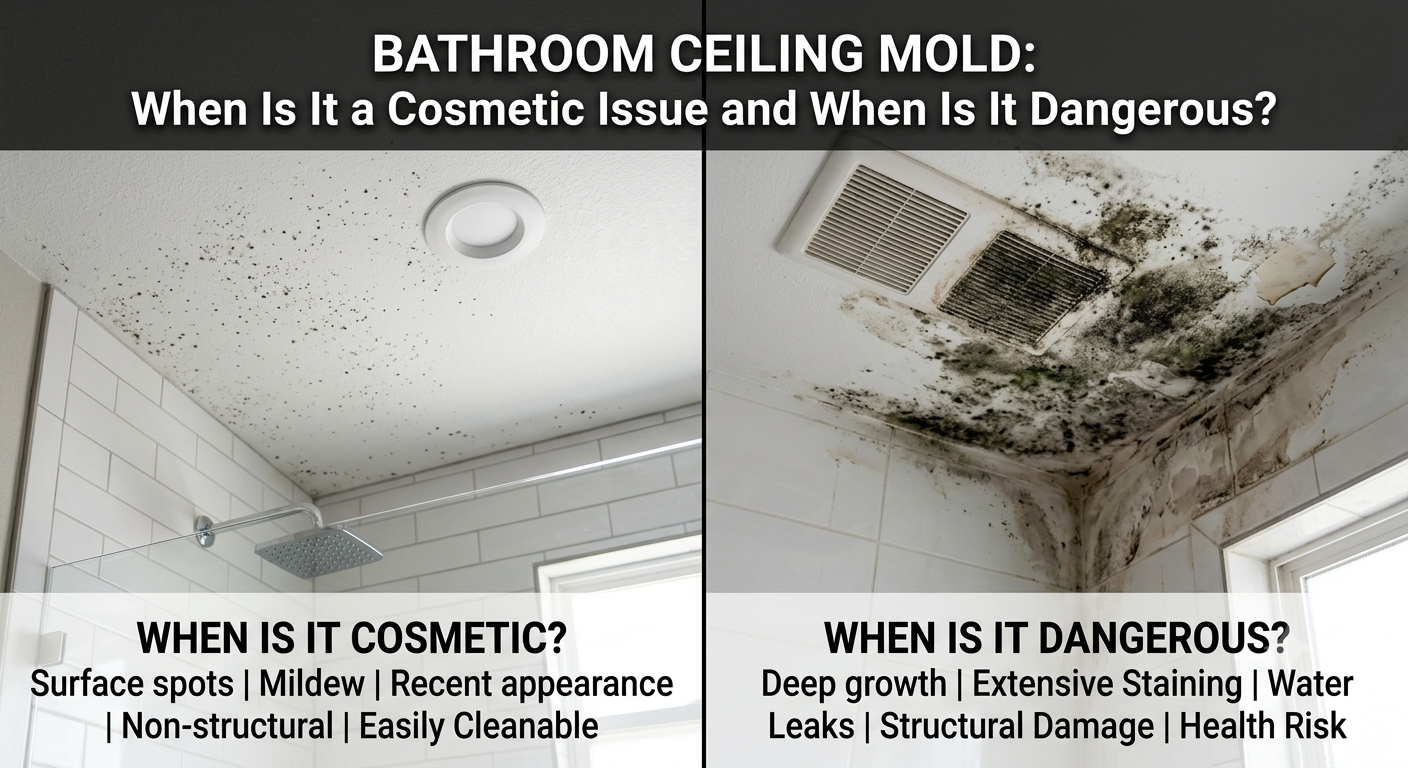
Bathroom Ceiling Mold: When Is It a Cosmetic Issue and When Is It Dangerous?
Bathroom ceiling mold is one of the most common problems homeowners encounter. Because bathrooms naturally generate moisture through showers, baths, and daily use, ceilings often become the first place where mold begins to develop. While some mold growth may appear harmless at first, there are situations where it can indicate a much larger problem that requires immediate attention.
Understanding the difference between a cosmetic mold issue and a potentially dangerous one can help homeowners protect their property, maintain indoor air quality, and avoid costly repairs. At Fun Guy Inspections, we frequently help homeowners determine the severity of mold growth and identify the underlying causes before the problem worsens.
Why Mold Commonly Appears on Bathroom Ceilings
Bathrooms create the ideal environment for mold growth. Warm temperatures, high humidity, and limited airflow allow moisture to accumulate on ceilings and walls. When moisture remains trapped for extended periods, mold spores can begin colonizing painted surfaces, drywall, and other building materials.
Even a well-maintained bathroom can experience mold growth if ventilation is inadequate. Small amounts of condensation may seem harmless, but repeated exposure to moisture creates conditions that encourage mold development over time.
In many homes, bathroom ceiling mold begins as tiny black, brown, green, or gray spots. Homeowners often notice discoloration near corners, around exhaust fans, or directly above showers where steam concentration is highest.
When Bathroom Ceiling Mold Is Primarily Cosmetic
Not all mold growth represents a major health or structural concern. In some situations, mold remains confined to the surface of painted ceilings and develops due to temporary moisture accumulation.
A cosmetic mold issue typically exhibits several characteristics. The affected area is relatively small, often covering only a few square inches. The mold remains on the surface without causing visible damage to the drywall or ceiling material underneath. There is no noticeable musty odor throughout the bathroom, and the mold does not appear to be spreading rapidly.
In these cases, the root cause is often excessive humidity combined with insufficient ventilation. Once moisture levels are controlled and the surface is properly cleaned, the issue may be resolved without significant remediation work.
However, even seemingly minor mold growth should not be ignored. Surface mold often serves as an early warning sign that moisture management in the bathroom needs improvement.
Signs That Bathroom Ceiling Mold May Be Dangerous
There are circumstances where ceiling mold represents more than a cosmetic concern. Certain warning signs indicate that the mold may be actively spreading, affecting indoor air quality, or resulting from hidden water damage.
One of the most significant indicators is the size of the affected area. When mold extends across large sections of the ceiling or continues returning after repeated cleaning, it often points to an underlying moisture source that remains unresolved.
Peeling paint, bubbling surfaces, sagging drywall, or water stains may indicate that water is entering from above the ceiling. This could result from plumbing leaks, roof leaks, or condensation problems occurring within hidden spaces.
Persistent musty odors are another warning sign. Even if visible mold appears limited, a strong moldy smell may suggest hidden growth inside ceiling cavities, insulation, or wall assemblies.
When occupants begin experiencing increased respiratory irritation, allergy symptoms, coughing, or other indoor air quality concerns, mold contamination should be evaluated more thoroughly.
The Hidden Risks Behind Ceiling Mold
Many homeowners focus only on the visible mold they can see. Unfortunately, mold often grows beyond the surface appearance.
Bathroom ceiling mold may spread into drywall, wooden framing components, insulation, and attic spaces. Once mold penetrates porous materials, simple cleaning methods may no longer eliminate the contamination.
Long-term moisture exposure can also weaken building materials. Drywall may deteriorate, wood framing can become compromised, and repeated water intrusion may create structural concerns that extend far beyond the bathroom itself.
In some cases, hidden mold growth can continue for months or even years before becoming obvious. By the time extensive discoloration appears on the ceiling surface, significant damage may already exist behind the scenes.
Common Causes of Dangerous Mold Growth
Several underlying issues can transform a minor mold problem into a serious one.
Poor ventilation remains one of the leading causes. Bathrooms without properly functioning exhaust fans often trap moisture after every shower. Over time, this continuous humidity exposure supports ongoing mold development.
Roof leaks can allow water to enter ceiling cavities from above. Even small leaks can create ideal conditions for mold growth within hidden spaces.
Plumbing leaks from pipes located above the bathroom ceiling may provide a constant moisture source. Because these leaks often remain concealed, mold growth can become extensive before homeowners discover the problem.
Insufficient insulation can also contribute to condensation. When warm indoor air meets cold ceiling surfaces, moisture forms and creates favorable conditions for mold colonization.
Why Professional Mold Inspections Matter
Determining whether bathroom ceiling mold is cosmetic or dangerous often requires more than a visual assessment. Visible mold represents only part of the overall picture.
Professional inspections help identify moisture sources, evaluate the extent of contamination, and determine whether hidden mold may be present. Moisture detection equipment, thermal imaging technology, and comprehensive evaluations can reveal problems that are not visible to the naked eye.
At Fun Guy Inspections, we focus on identifying the root cause of mold growth rather than simply addressing the visible symptoms. Understanding why mold developed is essential for preventing future recurrence.
An inspection can also provide homeowners with clarity regarding necessary remediation efforts, helping them avoid unnecessary expenses while ensuring that legitimate concerns are addressed appropriately.
Preventing Bathroom Ceiling Mold
The most effective strategy for controlling mold is moisture management. Proper ventilation should be used during and after showers to reduce humidity levels. Exhaust fans should remain running long enough to remove excess moisture from the room.
Regular cleaning of bathroom surfaces can help prevent mold spores from establishing colonies. Any signs of water staining, peeling paint, or recurring discoloration should be investigated promptly.
Homeowners should also periodically inspect ceilings for changes in appearance, particularly around corners, light fixtures, and exhaust fans where moisture often accumulates first.
Addressing small moisture issues early can prevent larger and more expensive mold problems later.
Bathroom ceiling mold is not always a serious threat, but it should never be dismissed as harmless without proper evaluation. Small surface growth caused by humidity may represent a cosmetic issue that can be corrected through improved ventilation and maintenance. However, extensive mold growth, recurring contamination, water damage, strong odors, or signs of hidden moisture may indicate a much more significant problem.
Knowing the difference can help protect your home, indoor air quality, and long-term property value. At Fun Guy Inspections, we help homeowners uncover the true cause of mold growth and determine whether the issue is merely cosmetic or requires immediate attention. Through thorough inspections and expert evaluation, we provide the information needed to make informed decisions and maintain a healthier living environment.