
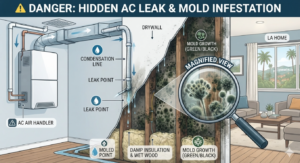
Understanding the Connection Between HVAC Condensation and Mold Growth
Heating, ventilation, and air conditioning systems play an essential role in maintaining comfortable indoor temperatures throughout Los Angeles properties. During warmer months, air conditioning systems remove heat and humidity from indoor air, producing condensation as part of the cooling process. Under normal operating conditions, this moisture drains safely away through a properly installed and maintained condensate drainage system. However, when condensation accumulates in unexpected places, it can create damp conditions that encourage mold growth behind walls, above ceilings, and inside HVAC equipment. These hidden moisture problems can develop gradually without producing obvious signs during the early stages. At Fun Guy Inspections, we help property owners understand how overlooked moisture sources can contribute to indoor mold concerns and why identifying the underlying cause is essential for protecting a building.
Why HVAC Systems Produce Condensation
Air conditioning systems cool warm indoor air by passing it over a cold evaporator coil, which causes moisture in the air to condense on the coil’s surface. This process is similar to the water droplets that form on the outside of a cold beverage container on a warm day. The collected moisture normally flows into a condensate drain pan before traveling through a drain line to an appropriate discharge point. When every component operates correctly, the system can remove moisture without allowing it to accumulate around surrounding building materials. Problems arise when the drain line becomes clogged, the drain pan develops a crack, or the system produces more condensation than its drainage components can manage. Over time, repeated moisture exposure can create favorable conditions for mold to develop on organic materials such as drywall paper, wood framing, dust, and certain insulation products.
How Los Angeles Climate Conditions Affect HVAC Moisture Problems
Los Angeles is often associated with a relatively dry climate, but local conditions vary considerably between coastal neighborhoods, inland valleys, and foothill communities. Properties near the coast may experience marine moisture and cool, damp conditions, while inland areas can experience substantial temperature differences between daytime and nighttime. These variations influence how HVAC systems operate and where condensation may develop within a building. Air conditioning equipment may run for extended periods during hot weather, creating continuous condensate production that places additional demands on drainage systems. Properties with inadequate ventilation, poorly insulated ductwork, or improperly managed indoor humidity may also experience moisture accumulation even when outdoor conditions appear dry. Consequently, homeowners and commercial property managers should not assume that a building is protected from mold simply because it is located in Southern California.
Clogged Condensate Drain Lines Can Cause Hidden Water Damage
A clogged condensate drain line is one of the most common mechanical issues that can lead to moisture accumulation around an HVAC system. Over time, algae-like biofilm, dust, debris, and other material can restrict the flow of water through the drainage line. When water cannot drain properly, it may back up into the condensate pan and eventually overflow onto nearby surfaces. Depending on the equipment’s location, the resulting moisture may spread across an attic platform, utility closet, ceiling cavity, or interior wall. Small leaks can remain unnoticed when water is absorbed by insulation or concealed behind finished surfaces rather than appearing as visible puddles. Our inspection approach focuses on recognizing signs of moisture intrusion and potential mold development so property owners can investigate the source before the damage becomes more extensive.
Damaged Drain Pans and Improper HVAC Installation
Condensate drain pans are designed to collect water produced during normal air conditioning operation, but their effectiveness depends on proper installation, maintenance, and structural condition. A cracked pan, corroded metal surface, or poorly positioned drainage connection can allow moisture to escape into surrounding areas. Improper installation may also prevent water from flowing toward the drain outlet, leaving standing water inside the pan for extended periods. If the HVAC unit is installed in an attic or above a finished ceiling, even a relatively small leak can affect materials that are difficult to inspect without access to the concealed space. Water may travel along framing members or penetrate ceiling materials before creating visible staining or deterioration. Addressing the mechanical defect is essential because cleaning visible mold without correcting the source of moisture can allow the problem to return.
Condensation on Ductwork Can Encourage Mold Growth
Air conditioning ductwork can become another source of concealed moisture when cold surfaces come into contact with warmer, humid air. If ducts are inadequately insulated, damaged, or poorly sealed, condensation may form on their exterior surfaces during system operation. The resulting moisture can drip onto attic insulation, ceiling materials, wooden framing, or other nearby components. Flexible ducts with damaged outer vapor barriers may be particularly vulnerable when surrounding conditions allow humid air to reach cold surfaces. Dust and debris that accumulate on damp materials can provide additional organic matter that supports mold growth when moisture persists. Inspecting accessible ductwork, insulation, and nearby building materials can help determine whether condensation is contributing to a larger indoor moisture problem.
How Poor Indoor Humidity Control Contributes to Hidden Mold
HVAC systems must manage both indoor temperature and moisture to maintain suitable indoor conditions. A system that cools a property without adequately addressing humidity may leave indoor air damp enough to increase condensation risks on cold surfaces. Oversized equipment can sometimes satisfy thermostat temperature settings too quickly, reducing the time available for moisture removal during each cooling cycle. Other contributing factors may include restricted airflow, malfunctioning components, incorrect fan settings, or ventilation problems that introduce excess moisture. When indoor humidity remains elevated, moisture can accumulate around windows, exterior walls, supply vents, and other surfaces where temperatures differ from the surrounding air. Monitoring indoor humidity and evaluating HVAC performance can help property owners identify conditions that may increase the likelihood of mold development.
Why Hidden HVAC Mold Often Goes Undetected
Mold associated with HVAC condensation can develop in locations that are not routinely visible during everyday property use. Evaporator coil compartments, drain pans, air handler cabinets, attic insulation, and concealed wall cavities may remain out of sight until a maintenance visit or moisture investigation reveals a problem. In some cases, occupants first notice a persistent musty odor that becomes more noticeable when the air conditioning system operates. Other warning signs may include recurring ceiling stains, peeling paint, warped trim, unexplained dampness, or repeated drainage problems near HVAC equipment. However, the absence of these symptoms does not necessarily mean that hidden moisture or mold is absent. A professional inspection can help evaluate suspicious conditions, identify accessible moisture sources, and determine whether further investigation or sampling is appropriate.
Recognizing Warning Signs in Residential Properties
Homeowners should pay attention to recurring moisture patterns around air conditioning equipment and the rooms it serves. Water stains beneath an indoor unit, dampness near ceiling vents, or discoloration around access panels may indicate a drainage or condensation issue that requires investigation. Musty odors that return after cleaning or become noticeable during HVAC operation can also justify closer examination of the affected areas. Another potential warning sign is insulation that appears compressed, discolored, or damp near ductwork or condensate lines. Frequent drain line blockages and repeated condensate pan overflows should be treated as underlying maintenance concerns rather than isolated inconveniences. When these signs occur, documenting their location and timing can help HVAC technicians and mold inspectors narrow down possible sources of moisture.
Commercial Buildings Face Similar Condensation Risks
Commercial properties in Los Angeles can experience HVAC condensation problems on a larger scale because they often contain extensive duct networks, multiple air handlers, and equipment operating for long periods. Offices, retail spaces, apartment buildings, and other facilities may have mechanical rooms or ceiling plenums that are difficult to access during routine occupancy. A leak in one location can affect several building materials before the problem becomes visible to occupants or maintenance personnel. Shared HVAC infrastructure may also make it more challenging to determine whether moisture originates from a particular unit, drainage connection, or ventilation issue. Building managers should maintain consistent inspection and maintenance procedures, especially in areas where previous leaks or humidity problems have occurred. Promptly investigating recurring moisture can reduce the likelihood of extensive material damage and help avoid repeated disruption to building operations.
The Importance of Professional Mold Inspections
When HVAC condensation is suspected of causing hidden mold growth, a professional inspection can help clarify the extent of the concern and identify conditions that require corrective action. An inspection may include a visual assessment of accessible HVAC components, nearby building materials, areas with water staining, and locations where moisture is likely to accumulate. Moisture meters and other appropriate inspection tools can help identify damp materials that do not yet show obvious surface damage. Depending on the property’s condition, the inspector may recommend additional access to concealed spaces or targeted mold sampling when it is likely to answer a specific question. Sampling is not necessary in every situation, and results must be interpreted alongside the building’s moisture history and visible conditions. At Fun Guy Inspections, our goal is to help property owners better understand potential mold concerns and make informed decisions about the next steps in evaluating their properties.
What Happens During an HVAC-Related Mold Investigation
A thorough investigation begins with understanding the property’s history, including previous leaks, HVAC repairs, drainage problems, and recurring indoor odors. The inspector then evaluates accessible areas where condensation may form or water may escape from the HVAC system. Particular attention may be given to condensate drain pans, visible drain lines, duct insulation, air handler surroundings, attic spaces, and materials showing signs of water damage. When appropriate, moisture measurements and targeted sampling can provide additional information about suspected problem areas. The findings should distinguish between the observed conditions, the suspected moisture source, and any limitations caused by inaccessible spaces or concealed construction. This information helps property owners coordinate with HVAC technicians, qualified remediation professionals, or other specialists when repairs or further evaluation are necessary.
Preventing Mold Problems Through HVAC Maintenance
Preventive maintenance is one of the most effective ways to reduce moisture problems associated with air conditioning systems. Condensate drain lines should be inspected and serviced according to manufacturer recommendations and the conditions in which the equipment operates. Drain pans, accessible coils, filters, and drainage connections should also receive appropriate attention during routine maintenance visits. Property owners should arrange for damaged insulation, leaking connections, and improperly draining components to be corrected rather than relying on temporary measures that leave the underlying problem unresolved. Indoor humidity should be monitored when moisture concerns persist, and HVAC performance should be evaluated if rooms remain damp or condensation repeatedly develops. These steps can help reduce unnecessary moisture exposure, protect building materials, and make emerging problems easier to detect before they become more extensive.
Why Cleaning Mold Without Fixing Condensation Is Not Enough
Removing visible mold does not automatically resolve the conditions that allowed it to develop. If a condensate drain continues to overflow or cold ductwork repeatedly collects moisture, the affected area may become damp again after cleaning. Persistent moisture can also allow contamination to spread to adjacent materials that were not included in the original cleanup. Effective corrective action therefore requires identifying and addressing the water source alongside any necessary mold remediation. Porous materials that have sustained significant water damage may require specialized assessment to determine whether cleaning is appropriate or replacement is necessary. Property owners should coordinate the mechanical repair and any required remediation so that the building can dry properly and the conditions supporting further growth are reduced.
Protecting Indoor Environments in Los Angeles Properties
HVAC condensation is a normal part of air conditioning operation, but uncontrolled moisture can become a serious building maintenance concern when drainage, insulation, ventilation, or equipment performance is inadequate. Hidden mold can develop in concealed spaces long before obvious surface damage attracts attention, making early investigation especially valuable. Property owners who recognize recurring moisture, musty odors, or water staining should investigate these conditions rather than assuming they will disappear on their own. Regular HVAC maintenance, appropriate humidity management, and timely moisture assessments can help reduce the risk of ongoing damage. When concerns extend beyond routine equipment maintenance, a qualified mold inspection can help determine whether further investigation or remediation is warranted. Fun Guy Inspections helps property owners evaluate potential mold concerns, understand moisture-related findings, and identify practical next steps for maintaining healthier indoor environments.
Schedule an Inspection for Suspected HVAC-Related Mold
If you suspect that air conditioning condensation is contributing to hidden mold in your Los Angeles property, investigating the moisture source is an important first step. Persistent odors, recurring leaks, damp insulation, and unexplained water stains can all indicate conditions that deserve closer attention. A professional assessment can help identify accessible signs of moisture intrusion and determine whether additional evaluation is appropriate. It is equally important to have HVAC defects corrected and ensure that affected building materials are properly addressed. Taking action early may help limit further damage and reduce the chance of recurring moisture problems. Contact Fun Guy Inspections to discuss your concerns and determine whether a mold inspection is appropriate for your property.