
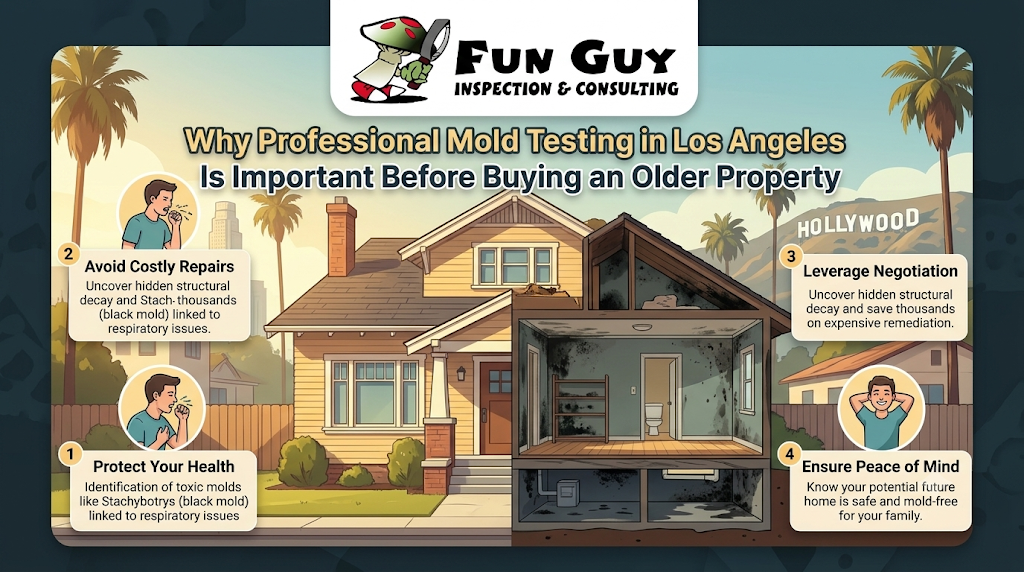
Why Professional Mold Testing in Los Angeles Is Important Before Buying an Older Property
Buying an older property in Los Angeles can be an exciting investment, whether you are planning to move into a new home, renovate an existing building, or purchase a property for rental purposes. Older homes often have unique architectural features, established neighbourhoods, spacious layouts, and character that newer properties may not offer. However, beneath their attractive appearance, these properties can sometimes hide problems that are not immediately visible during a standard property viewing. Mold growth is one of the most common concerns because it can develop behind walls, beneath flooring, inside ceilings, and around plumbing systems without obvious signs. Before making a significant financial commitment, we recommend arranging professional mold testing to understand the property’s indoor environmental condition and identify potential concerns that could become expensive after purchase.
Understanding Why Older Properties in Los Angeles May Have Mold Problems
Older properties can be more vulnerable to mold growth because their building materials, plumbing systems, roofing structures, and ventilation arrangements may have experienced years of wear and tear. Small plumbing leaks, roof damage, deteriorating window seals, and moisture entering through foundations can create conditions where mold begins to develop. Even when previous owners have repaired visible water damage, moisture may remain trapped inside wall cavities, insulation, or wooden structural components. Los Angeles has a relatively dry climate compared with many other regions, but seasonal rainfall, coastal moisture, plumbing failures, and poor ventilation can still contribute to indoor mold problems. Properties that have undergone multiple renovations may also contain concealed moisture issues that were never properly addressed. Professional testing helps us identify potential concerns that a visual inspection alone may not reveal, giving prospective buyers a clearer understanding of what they are purchasing.
Hidden Mold Can Exist Even When a Property Looks Well Maintained
One of the biggest challenges when purchasing an older home is that visible cleanliness does not necessarily indicate a healthy indoor environment. Fresh paint, newly installed flooring, renovated bathrooms, and modern fixtures can make an older property appear completely updated while concealing previous moisture damage. Mold may develop behind kitchen cabinets, underneath bathroom tiles, inside attic spaces, around HVAC equipment, and behind recently installed drywall. Sometimes, homeowners repaint affected areas or replace damaged surfaces without correcting the original moisture problem, allowing mold to continue developing underneath the new materials. Buyers may notice a musty smell or occasional discoloration, but these signs are not always present, particularly when mold is growing inside enclosed spaces. Through professional mold testing, we can investigate areas of concern and help determine whether further inspection or remediation may be necessary before the transaction is completed.
Protecting Your Investment From Unexpected Repair Expenses
Purchasing an older property already involves several financial considerations, including the down payment, closing costs, insurance, renovations, and ongoing maintenance. Discovering significant mold contamination after completing the purchase can create additional expenses that were not included in your original budget. Depending on the affected areas, addressing a mold problem may involve removing contaminated drywall, replacing insulation, repairing plumbing, improving ventilation, and correcting underlying moisture intrusion. Extensive contamination can also require professional remediation and additional construction work to restore affected areas. These expenses can become particularly challenging when the problem involves concealed structural components or multiple rooms throughout the property. By arranging professional mold testing before closing, we help buyers identify potential environmental concerns early enough to investigate repair requirements, request appropriate remediation, or reconsider the purchase when necessary. Taking this precaution can make a meaningful difference in protecting your property investment and avoiding preventable financial surprises.
Identifying Previous Water Damage and Undisclosed Moisture Issues
Water damage is one of the primary conditions that contribute to mold development in residential and commercial properties. Older buildings may have experienced plumbing leaks, roof failures, overflowing appliances, drainage problems, or flooding during their lifetime. Although some of these issues may have been repaired, the resulting moisture may have created conditions for mold growth that remain unnoticed. During a property inspection, we recommend paying particular attention to basements, crawl spaces, bathrooms, kitchens, laundry areas, attics, and locations surrounding older plumbing connections. Water stains, bubbling paint, warped flooring, deteriorating baseboards, and unusual odours can indicate previous or ongoing moisture problems. Professional mold testing can help evaluate suspected areas and determine whether sampling or additional moisture investigation is appropriate. Understanding the property’s moisture history before purchasing allows buyers to ask more informed questions about previous repairs and whether the underlying problems were properly resolved.
Understanding the Potential Health Concerns Associated With Indoor Mold
Indoor mold is more than a cosmetic property concern because exposure can affect indoor environmental quality and contribute to health symptoms in some individuals. Depending on the type and level of exposure, mold may trigger allergic reactions, respiratory irritation, coughing, sneezing, nasal congestion, and skin irritation. People with asthma, existing respiratory sensitivities, or mold allergies may be particularly vulnerable to indoor mold exposure. Families purchasing older homes should therefore consider the indoor environmental condition alongside the property’s appearance, location, and structural quality. It is also important to understand that different people can respond differently to mold exposure, and the presence of mold does not automatically indicate that everyone living in the property will experience health problems. Professional testing can help identify potential mold contamination and provide useful information about areas requiring further attention. If you have existing health concerns or experience persistent symptoms, consulting a qualified healthcare professional is important rather than relying on mold testing alone to determine the cause.
Why a Standard Home Inspection May Not Be Enough
A standard home inspection is an important part of the property purchasing process, but it does not necessarily include comprehensive mold testing or environmental sampling. General home inspections typically focus on visible and accessible building components, including roofing, electrical systems, plumbing, heating, cooling, and structural conditions. While inspectors may identify visible moisture damage or signs of suspected mold, concealed contamination can remain undetected without additional investigation. Mold can grow inside wall cavities, beneath carpets, behind bathroom fixtures, and around HVAC components where a routine visual assessment may have limited access. Buyers sometimes assume that receiving a satisfactory home inspection report means there are no environmental concerns, but these are separate areas of evaluation. We recommend considering professional mold testing as an additional precaution when purchasing an older property, particularly if there are signs of previous leaks, musty odours, water stains, or unexplained moisture. Combining a general property inspection with appropriate environmental testing provides a more complete understanding of the building’s condition.
The Importance of Professional Mold Sampling and Laboratory Analysis
Professional mold testing involves more than simply identifying visible discoloration or collecting random samples from different rooms. A qualified inspection professional evaluates the property’s condition, identifies potential moisture sources, and determines which testing methods are appropriate for the situation. Depending on the findings, the assessment may involve air sampling, surface sampling, or other targeted sampling methods to investigate suspected contamination. Air sampling can help evaluate airborne mold spores in selected indoor areas, while surface sampling may be useful when visible growth or a suspicious material requires further examination. Samples may be submitted to an appropriate laboratory for analysis to identify the types of mold present. However, results should always be interpreted alongside the property’s moisture conditions, visible observations, and inspection findings because mold spores can naturally exist in both indoor and outdoor environments. At Fun Guy Inspections, we understand the importance of a thorough assessment and meaningful results that help property buyers make informed decisions instead of relying on assumptions.
Checking Bathrooms, Kitchens, and Other High-Moisture Areas
Bathrooms and kitchens deserve particular attention when evaluating an older property because these spaces regularly experience moisture from showers, cooking, dishwashing, and plumbing connections. Over time, deteriorating grout, damaged caulking, leaking pipes, and inadequate exhaust ventilation can allow moisture to accumulate around walls, cabinets, ceilings, and flooring. Even a small leak beneath a kitchen sink can create a favourable environment for mold growth if the affected area remains damp for an extended period. Bathrooms with older ventilation systems may also experience condensation that contributes to recurring moisture problems around windows, ceilings, and shower enclosures. Buyers should also consider laundry rooms, utility closets, and areas surrounding water heaters because these locations can develop hidden leaks. Professional mold testing can help investigate suspicious areas and determine whether further evaluation is necessary before purchasing the property. Addressing these concerns before moving in can help prevent avoidable repair work and reduce the likelihood of moisture-related problems becoming more extensive.
Evaluating Attics, Crawl Spaces, and HVAC Systems
Some of the most important areas to investigate during an older property purchase are spaces that homeowners rarely access during everyday activities. Attics can develop moisture problems because of roof leaks, inadequate ventilation, damaged insulation, or condensation around roof structures. Crawl spaces may experience moisture accumulation due to poor drainage, plumbing leaks, ground moisture, or insufficient ventilation. HVAC systems also deserve attention because condensation problems, clogged drain lines, and moisture around air-handling equipment can contribute to mold growth in certain conditions. If mold contamination develops around HVAC components or within associated ductwork, it may become an indoor air quality concern that requires further professional evaluation. These areas are often overlooked during casual property viewings because they are not part of the main living spaces. We recommend including accessible concealed areas in the overall assessment so buyers can better understand whether the property has moisture-related concerns beyond what is immediately visible.
Why Los Angeles Property Buyers Should Not Ignore Musty Odours
A persistent musty smell inside an older property should never be dismissed as simply an effect of age or an enclosed room. This type of odour may indicate damp materials, previous water intrusion, inadequate ventilation, or possible microbial growth in concealed locations. Sometimes, the smell becomes stronger when the heating or cooling system operates, suggesting that further investigation of the HVAC system or nearby building materials may be appropriate. Other properties may have odours concentrated around bathrooms, closets, basements, or rooms that have remained closed for extended periods. Although musty smells do not confirm the presence of mold on their own, they provide a useful warning sign that should be investigated before completing a purchase. Masking these odours with air fresheners, repainting, or replacing carpets without identifying the underlying source may only provide temporary relief. Professional testing and moisture assessment can help buyers understand what may be causing the smell and whether corrective action is required.
Using Mold Testing Results During Property Negotiations
One practical advantage of arranging mold testing before closing is that the findings may provide useful information during property negotiations. If testing identifies suspected contamination or moisture-related concerns, buyers can discuss the results with their real estate agent, seller, and other relevant professionals. Depending on the purchase agreement and the circumstances, the findings may support requests for additional investigation, professional remediation, necessary repairs, or an adjustment to the purchase terms. Buyers should remember that mold testing results need to be interpreted carefully, and laboratory findings alone do not automatically establish the full extent or cost of a problem. A qualified remediation professional may need to assess the affected materials and determine the appropriate corrective measures. Having documented inspection findings can make these discussions more informed and help prevent misunderstandings between buyers and sellers. Our goal is to help property buyers understand potential environmental concerns before making decisions that could affect their finances and future living conditions.
When Should You Schedule Professional Mold Testing?
The ideal time to arrange professional mold testing is during the property due diligence period, before finalising the purchase. Scheduling an assessment early gives buyers sufficient time to investigate any concerns and understand whether additional inspections or corrective work may be required. It is particularly important to consider testing when purchasing a property with a history of water damage, recurring plumbing problems, roof leaks, visible mold-like growth, or persistent musty odours. Properties that have recently undergone extensive renovations may also benefit from additional evaluation if there are questions about how previous moisture problems were addressed. Even when a home appears clean and well maintained, testing can be a useful precaution when the building has a long history or several areas with limited accessibility. We encourage buyers to coordinate with their real estate professionals so that the assessment can be completed within the agreed inspection and contingency timelines. Planning ahead helps avoid last-minute surprises and provides more time to make a confident purchasing decision.
What Happens After Mold Testing Identifies a Problem?
Receiving a mold testing report that identifies potential concerns does not necessarily mean you should immediately abandon the property purchase. The next step is to understand the findings, identify the possible source of moisture, and determine whether further evaluation is necessary. In some situations, the issue may be limited to a small area requiring moisture correction and appropriate remediation. More extensive problems may involve damaged drywall, insulation, flooring, roofing components, plumbing systems, or other building materials. A qualified remediation professional can evaluate the affected areas and recommend suitable corrective measures based on the extent of contamination. It is equally important to address the original moisture source because removing visible mold without correcting the underlying problem may allow it to return. After remediation, appropriate follow-up assessment or post-remediation verification can help determine whether the corrective work has been completed satisfactorily. Understanding these steps before purchasing gives buyers a realistic picture of the property’s condition and any additional work that may be required.
Make an Informed Property Purchase With Professional Mold Testing
Purchasing an older property in Los Angeles should involve more than evaluating its location, architectural appearance, square footage, and resale potential. Hidden moisture problems and mold contamination can affect the property’s condition, create additional repair expenses, and influence the quality of the indoor environment. Professional mold testing provides valuable information that helps buyers investigate potential concerns before committing to a significant financial investment. From checking suspected moisture damage to evaluating concealed areas and arranging appropriate laboratory analysis, a thorough assessment can help uncover issues that may otherwise remain unnoticed. At Fun Guy Inspections, we believe that informed buyers are better prepared to make confident property decisions. Our focus is on helping clients understand potential mold concerns through professional inspection services and clear findings that support their next steps.
Planning to purchase an older home or investment property in Los Angeles?
Do not let hidden mold problems become an unexpected expense after closing. Contact Fun Guy Inspections today to discuss your property inspection requirements and schedule professional mold testing in Los Angeles. Let our team help you identify potential moisture and mold concerns before you make your investment. Reach out to us today and take an important step towards making a more informed property purchase.