
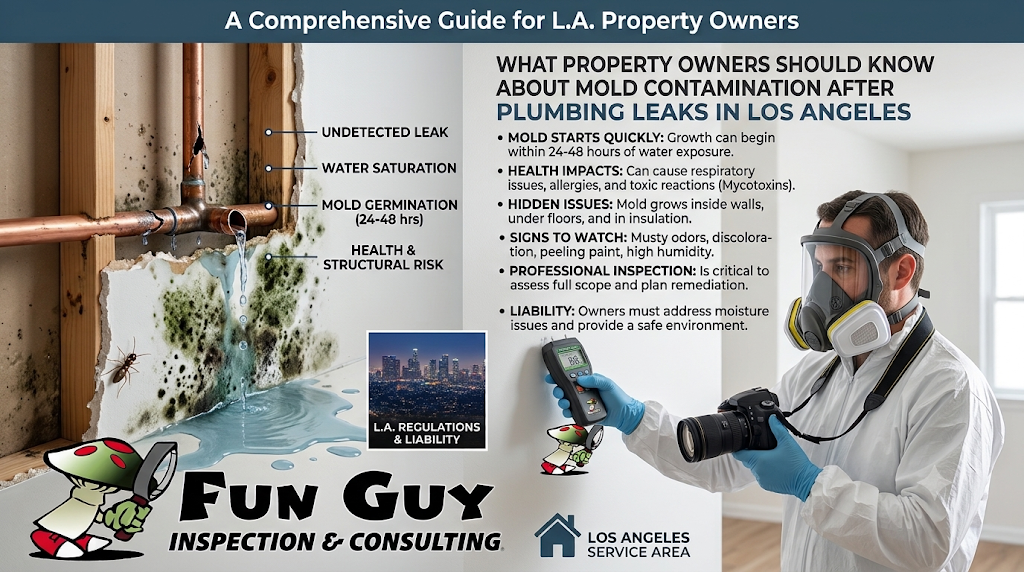
What Property Owners Should Know About Mold Contamination After Plumbing Leaks in Los Angeles
Plumbing leaks can cause more damage to a property than many owners initially realize. While a leaking pipe, overflowing fixture, or damaged water line may appear to be a straightforward plumbing issue, the moisture left behind can create conditions that encourage mold growth. In Los Angeles, property owners should take water damage seriously, particularly when leaks occur behind walls, beneath flooring, inside cabinets, or in other concealed areas. Even after the visible water has been removed, moisture can remain trapped in building materials and provide an environment where mold can develop. This can eventually affect indoor air quality, damage structural components, and create concerns for occupants who spend time inside the property. Understanding how mold contamination develops after plumbing leaks can help property owners make informed decisions about inspections, repairs, and moisture control.
How Plumbing Leaks Create Conditions for Mold Growth
Mold develops when moisture, suitable organic materials, and favorable environmental conditions are present. Plumbing leaks can introduce moisture into areas that are not designed to handle continuous water exposure, including drywall, insulation, wooden framing, subflooring, and cabinetry. These materials can absorb water and remain damp long after the original leak has been repaired. When moisture is not properly identified and addressed, mold spores that are naturally present in the environment can begin growing on suitable surfaces. The problem is not always immediately noticeable because mold can develop inside wall cavities, beneath flooring, or behind bathroom and kitchen fixtures. Property owners should understand that stopping the water leak is only the first part of resolving the problem, as the affected materials may still require professional moisture assessment and further evaluation.
Why Hidden Mold Contamination Is a Concern in Los Angeles Properties
Los Angeles has a varied climate, and property owners sometimes assume that the region’s generally dry weather will prevent indoor mold problems. However, outdoor weather conditions do not eliminate moisture problems caused by plumbing failures inside buildings. A leaking pipe beneath a kitchen sink, a bathroom supply line failure, or a slow leak inside a laundry room can create localized damp conditions that remain undetected for extended periods. Modern properties with enclosed plumbing systems, built-in cabinetry, wall insulation, and finished flooring can make it particularly difficult to identify hidden moisture without a proper inspection. Older properties may also have aging plumbing connections, deteriorating seals, and materials that have experienced previous water damage. These conditions make it important to investigate suspected leaks carefully rather than assuming that visible drying means the entire affected area is free from moisture.
Common Signs of Mold Growth After a Plumbing Leak
One of the earliest indications of a possible mold problem is a persistent musty or earthy odor, particularly in rooms where plumbing fixtures or water lines are located. Property owners may also notice discoloration on ceilings, walls, baseboards, or flooring, although not every stain is necessarily caused by mold. Paint that begins bubbling, drywall that feels soft, wallpaper that separates from the wall, and wooden cabinets that start swelling can all indicate prolonged moisture exposure. In some cases, occupants may notice that certain areas smell damp even after cleaning and ventilation. Mold growth can also occur in concealed spaces where there are no obvious visual signs on finished surfaces. If these warning signs appear after a plumbing leak, arranging a professional mold inspection can help determine whether further investigation or testing is appropriate.
How Quickly Can Mold Develop After a Plumbing Leak?
Time is an important factor when dealing with water damage because mold can begin developing relatively quickly when building materials remain damp. According to the U.S. Environmental Protection Agency, wet or damp materials that are thoroughly dried within 24 to 48 hours will, in most cases, avoid mold growth. However, this timeframe should not be treated as a guarantee that mold cannot develop after a leak. Factors such as the amount of water released, indoor humidity, temperature, ventilation, and the materials affected can influence how quickly contamination develops. A small plumbing leak that continues unnoticed for several days may create more extensive damage than a larger leak that is identified and addressed immediately. Property owners should therefore arrange prompt water removal, drying, and moisture assessment whenever plumbing failures occur.
Areas of a Property Most Vulnerable to Mold Contamination
Certain areas of residential and commercial properties are more vulnerable to mold contamination following plumbing leaks because they contain absorbent materials or have limited airflow. Bathrooms and kitchens are particularly common locations because they contain multiple water connections, drainage systems, sinks, dishwashers, and plumbing fixtures. Water leaking beneath cabinets can become trapped against wooden surfaces, insulation, and drywall, allowing moisture to spread beyond the original leak location. Laundry rooms may also experience hidden moisture problems when washing machine connections or drainpipes fail. Similarly, water escaping from an upstairs bathroom can travel through ceiling cavities and affect rooms on lower floors. Crawl spaces, utility areas, and wall cavities should also be considered during an inspection because moisture can accumulate in these locations without producing immediate visible signs.
Understanding the Difference Between Water Damage and Mold Contamination
Water damage and mold contamination are related problems, but they are not necessarily the same thing. Water damage refers to the physical effects of moisture exposure on building materials, including swelling, staining, deterioration, and structural weakening. Mold contamination occurs when mold begins growing on damp surfaces or materials within the property. A wall may show water staining without having visible mold growth, while a concealed section of the same wall may already contain fungal growth because moisture has remained trapped inside. This distinction is important because repairing the plumbing and repainting damaged surfaces may not address the underlying contamination. Property owners need to understand the extent of moisture intrusion before deciding whether materials can be dried and retained or whether professional remediation is necessary. A thorough assessment helps establish what has been affected and what additional steps may be required.
Why Mold Inspections Are Important After Plumbing Repairs
Repairing a leaking pipe does not automatically mean that the surrounding building materials have returned to a dry condition. Water may have traveled through wall cavities, flooring systems, insulation, and other concealed spaces before the plumbing problem was discovered. A professional mold inspection can help identify visible mold growth, investigate suspected moisture intrusion, and determine whether additional evaluation is needed. Inspectors may use moisture meters, thermal imaging equipment, visual examination, and other appropriate assessment methods to investigate affected areas. These methods can help identify moisture patterns that might otherwise remain unnoticed during a routine property inspection. Mold testing may also be appropriate in certain situations, depending on the inspection findings and the specific questions that need to be answered. However, testing is not automatically necessary whenever mold is suspected, particularly when visible growth or clear moisture problems have already been identified.
How Mold Contamination Can Affect Indoor Air Quality
Mold growth inside a building can affect indoor environmental conditions, particularly when contaminated materials are disturbed or when growth spreads across larger areas. Mold releases microscopic spores into the surrounding environment, and these particles can become airborne under certain conditions. People who are sensitive to mold may experience symptoms such as nasal congestion, coughing, throat irritation, wheezing, skin irritation, or eye discomfort. Individuals with existing allergies, chronic respiratory conditions, or weakened immune systems may be more vulnerable to certain effects associated with mold exposure. The extent of potential effects can vary depending on individual sensitivity, exposure conditions, and the characteristics of the indoor environment. Property owners should avoid assuming that mold is harmless simply because the affected area is small or located away from frequently occupied rooms. Addressing moisture problems and arranging appropriate professional evaluation can help protect the condition of the property and support a healthier indoor environment.
Why Painting Over Mold Is Not a Permanent Solution
One common mistake property owners make after discovering mold is applying fresh paint or primer over affected surfaces without resolving the underlying moisture problem. Although painting may temporarily conceal discoloration, it does not remove mold growth or eliminate moisture trapped inside building materials. Mold can continue developing beneath painted surfaces when damp conditions remain present, eventually causing stains, peeling paint, unpleasant odors, and further deterioration. Similarly, applying household cleaning products without understanding the extent of contamination may leave affected porous materials untreated. Drywall, insulation, carpeting, and other absorbent materials may need to be removed and replaced when they cannot be adequately cleaned and dried. Proper mold management requires identifying the moisture source, correcting the plumbing issue, evaluating affected materials, and addressing contamination using suitable procedures. Taking these steps helps reduce the possibility of recurring problems and unnecessary repair expenses.
What Property Owners Should Do Immediately After Discovering a Plumbing Leak
The first priority after discovering a plumbing leak should be stopping the water source and preventing additional damage. Property owners should contact a qualified plumber to identify the cause of the leak and complete the necessary repairs. If water has accumulated inside the property, professional water extraction and drying services may be needed to remove moisture from affected areas. It is also important to document visible damage, take photographs, and maintain records of plumbing repairs and any professional assessments for future reference. Avoid disturbing suspected mold growth or removing heavily contaminated materials without understanding the appropriate safety precautions. If electrical systems have been exposed to water, qualified professionals should assess them before the affected area is used again. Once the immediate leak has been addressed, arrange an appropriate moisture or mold inspection to determine whether hidden contamination or additional damage requires attention.
Mold Inspection Considerations for Rental and Commercial Properties
Property owners and managers of rental units, apartment buildings, offices, and commercial facilities have additional responsibilities when dealing with plumbing-related moisture problems. A leak in one unit may affect neighboring spaces, shared walls, ceilings, utility areas, or common building systems. This means that inspecting only the room where the leak originated may not provide a complete understanding of the damage. Property managers should respond promptly to tenant reports of water intrusion, investigate recurring moisture complaints, and arrange suitable repairs and assessments. Maintaining clear communication with occupants is also important, particularly when inspection or remediation work may temporarily affect access to certain areas. In California, qualifying dampness and mold conditions can fall under housing habitability requirements, making timely attention to these problems particularly important. Keeping accurate maintenance records and arranging professional evaluations when necessary can help property owners manage building conditions more responsibly.
How Professional Mold Inspections Help Identify Hidden Problems
A professional inspection provides a more systematic understanding of potential mold contamination than simply examining visible surfaces. During an assessment, an inspector can evaluate areas with a history of water intrusion, investigate musty odors, identify visible signs of mold, and assess moisture conditions in affected building materials. Particular attention may be given to plumbing access points, bathroom walls, kitchen cabinets, flooring transitions, ceilings, and other locations where water could have accumulated. Depending on the property and the findings, additional investigation may be recommended to determine whether concealed spaces require further examination. Thermal imaging may help identify temperature differences associated with possible moisture conditions, while moisture meters can provide additional information about affected materials. It is important to remember that no single tool can independently confirm the presence or absence of mold in every situation. A professional inspection combines observations, measurements, building history, and appropriate investigative methods to develop a more reliable understanding of the problem.
Preventing Future Mold Problems After Plumbing Leaks
Preventing future mold contamination starts with keeping plumbing systems in good working condition and responding quickly whenever signs of leakage appear. Property owners should periodically inspect visible plumbing connections beneath sinks, around toilets, near water heaters, and behind accessible appliances. Water pressure changes, unexplained increases in water bills, damp cabinet interiors, and persistent plumbing odors can sometimes indicate developing problems that deserve further investigation. Proper bathroom and kitchen ventilation is equally important because these areas regularly generate moisture through normal household activities. Indoor humidity should ideally remain between 30% and 50%, with levels kept below 60% whenever possible, according to EPA guidance. After plumbing repairs, property owners should confirm that affected materials have been adequately dried rather than relying solely on the disappearance of visible water. Combining routine maintenance with timely moisture assessments can significantly reduce the likelihood of recurring water damage and mold-related concerns.
Choosing the Right Mold Inspection Company in Los Angeles
Choosing a mold inspection company requires more consideration than simply comparing prices or selecting the first available service provider. Property owners should look for professionals who understand moisture intrusion, building materials, common sources of hidden water damage, and appropriate inspection procedures. A reliable inspection should explain the areas examined, the observations made, any limitations encountered, and whether further investigation is recommended. Clear documentation is particularly valuable for property owners who need to coordinate plumbing repairs, restoration work, insurance discussions, or property maintenance decisions. It is also important to understand the difference between an independent inspection and mold remediation, as the two services have different purposes. California does not currently require a specific state license for mold inspectors or mold assessors, so property owners should carefully evaluate experience, qualifications, inspection methods, and professional practices before making a decision. Selecting an experienced inspection provider can help you better understand the condition of your property and determine the most appropriate next steps.
Protect Your Los Angeles Property With Professional Mold Inspection Services
A plumbing leak may appear to be a minor maintenance issue, but the moisture left behind can create conditions for hidden mold contamination and long-term property damage. Acting quickly, investigating affected materials, and addressing moisture problems are essential steps in protecting residential and commercial buildings. At Fun Guy Inspections, we understand the importance of identifying potential mold concerns and helping property owners make informed decisions about their indoor environments. Our inspection approach focuses on evaluating suspected problem areas, identifying signs of moisture intrusion, and providing useful information about conditions that may require further attention. Whether you have recently experienced a bathroom leak, discovered water damage beneath kitchen cabinets, or noticed persistent musty odors after plumbing repairs, arranging a professional assessment can be a valuable next step. Do not allow an unresolved moisture problem to become a larger property concern. Contact Fun Guy Inspections today to schedule a professional mold inspection in Los Angeles and take the next step toward understanding and protecting your property.