How Mold Inspection Protects the Invisible Health of Your Home
A home can look perfectly clean and still hide serious problems beneath its surfaces. Mold is one of the most overlooked threats because it often grows silently inside walls, ceilings, crawl spaces, and HVAC systems. At Fun Guy Inspections, we believe mold inspection for a home is not just a maintenance task. It is a critical step in protecting both property value and the long term wellbeing of everyone who lives inside.
Why Mold Thrives in Modern Homes
Modern homes are built to be energy efficient and tightly sealed. While this improves comfort and reduces utility costs, it also creates an environment where moisture can become trapped. Even minor leaks, condensation, or high humidity can provide the conditions mold needs to grow.
Bathrooms, kitchens, basements, laundry rooms, and attics are especially vulnerable. Mold does not require flooding or obvious water damage. Slow plumbing leaks, roof seepage, and poorly ventilated spaces are enough to start growth that remains hidden for months or even years.
The Difference Between Surface Mold and Structural Mold
Many homeowners assume mold is only a surface issue that can be wiped away. This is one of the most dangerous misconceptions. Surface mold is only the visible part of a much larger problem. Structural mold grows inside drywall, wood framing, insulation, and subfloors.
Without a professional mold inspection, homeowners often treat symptoms instead of causes. Cleaning visible spots without identifying the moisture source allows mold to return and spread further into the structure.
How Mold Impacts Indoor Living Conditions
Mold affects more than just materials. It changes the quality of indoor air. Mold spores are microscopic and easily become airborne. When inhaled, they can irritate the respiratory system and worsen existing sensitivities.
Children, older adults, and individuals with asthma or compromised immune systems are particularly vulnerable. Even healthy individuals may experience headaches, fatigue, congestion, or skin irritation when mold is present long term.
A proper mold inspection focuses on identifying hidden contamination that directly impacts indoor comfort and air quality.
Why Mold Inspection Requires Specialized Training
Mold inspection is not a visual walkthrough. It requires a combination of building science knowledge, moisture detection, and air sampling expertise. Mold growth patterns vary depending on humidity levels, airflow, construction materials, and previous repairs.
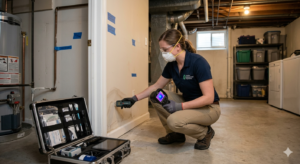
We use professional equipment to detect moisture behind walls and under flooring where mold often develops unnoticed. Air and surface sampling helps determine mold presence even when there are no visible signs. This scientific approach allows us to identify the scope of the issue accurately.
Mold Inspection Before Buying or Selling a Home
Real estate transactions are one of the most common times mold issues surface. Buyers want confidence that they are investing in a safe home. Sellers want to avoid surprises that delay or derail a sale.
A mold inspection provides clear documentation of current conditions. For buyers, it offers peace of mind. For sellers, it allows proactive solutions rather than last minute negotiations or price reductions. Addressing mold concerns early protects both parties and supports smoother transactions.
Understanding Moisture Sources Is Key
Mold inspection is not only about finding mold. It is about identifying why it is there. Moisture sources can include roof leaks, foundation seepage, plumbing failures, poor drainage, or ventilation issues.
By locating the source of moisture, we help homeowners understand what needs to be corrected to prevent future growth. Without addressing moisture, mold remediation alone is rarely successful long term.
Seasonal Changes and Mold Risk
Mold risk changes throughout the year. High humidity during warmer months and condensation during colder seasons can both contribute to mold growth. Homes that appear dry during one season may experience hidden moisture issues during another.
Routine mold inspection helps identify seasonal vulnerabilities before they develop into major problems. Preventative inspections are especially valuable in regions with fluctuating temperatures and humidity levels.
Protecting Long Term Property Value
Mold damage can significantly reduce property value if left unaddressed. Structural deterioration, persistent odors, and documented mold issues can affect appraisal outcomes and insurance coverage.
Early mold inspection helps preserve the integrity of building materials and prevents costly repairs later. It also demonstrates responsible ownership, which matters to future buyers and insurers.
When to Schedule a Mold Inspection
Homeowners should consider mold inspection if they notice musty odors, recent water damage, unexplained health symptoms, or visible discoloration on surfaces. It is also recommended after major plumbing issues, roof leaks, or flooding events.
Even without obvious signs, routine inspection can uncover hidden issues before they escalate. Mold rarely announces itself until the problem is advanced.
A Proactive Approach to a Healthier Home
Mold inspection is an investment in prevention, safety, and peace of mind. It provides clarity about what is happening inside a home beyond what the eye can see. At Fun Guy Inspections, we approach every inspection with precision, transparency, and respect for the homeowner’s long term interests.
Understanding mold today helps protect your home tomorrow. A thorough mold inspection ensures your living space remains safe, durable, and comfortable for years to come.