
Understanding Why Mold Inspections Matter for Los Angeles Homeowners
Mold growth is a common property concern that can affect homes of all ages and sizes throughout Los Angeles. Although the region is known for its warm climate and abundant sunshine, moisture problems can still develop inside residential properties due to plumbing leaks, roof damage, poor ventilation, condensation, and water intrusion. These conditions can create an environment where mold spores settle and begin growing on different household surfaces. Many homeowners assume that mold is only a concern in properties with visible water damage, but growth can also develop in concealed areas where moisture remains unnoticed for extended periods. Regular property inspections help identify potential moisture problems before they become more extensive and expensive to address. At Fun Guy Inspections, we understand the importance of examining areas where mold commonly develops so homeowners can make informed decisions about maintaining a safe and comfortable living environment.
Bathrooms and Shower Enclosures
Bathrooms are among the most common areas where mold can develop because they experience frequent exposure to moisture and humidity. Daily showers, hot baths, and limited ventilation can cause moisture to accumulate on walls, ceilings, floors, and surrounding fixtures. Areas around bathtubs, shower enclosures, faucets, and sink cabinets deserve particular attention during property inspections. Mold may develop along grout lines, behind loose tiles, beneath bathroom flooring, and around deteriorating caulking where water can penetrate small openings. Homeowners should also examine bathroom ceilings for discoloration, peeling paint, or unusual spotting that could indicate persistent moisture problems. During a professional mold inspection, identifying these conditions can help determine whether the issue is limited to surface growth or connected to a more significant moisture source.
Kitchens and Areas Beneath Sinks
Kitchens contain several plumbing connections, water appliances, and enclosed storage spaces that can contribute to hidden mold growth. The cabinets beneath kitchen sinks are particularly important inspection areas because small plumbing leaks can remain unnoticed for weeks or even months. Moisture trapped inside these enclosed spaces can affect cabinet materials, wooden flooring, wall surfaces, and stored household items. Homeowners should also inspect the areas around dishwashers, refrigerators with water dispensers, and kitchen washing appliances for signs of water leakage. Discoloration, swollen cabinet panels, musty odors, and soft wooden surfaces may indicate that moisture has been present for an extended period. Checking these locations regularly can help homeowners recognize early warning signs and arrange appropriate repairs before mold spreads to surrounding materials.
Attics and Roof Structures
Attics are frequently overlooked during routine property maintenance, yet they can experience moisture problems that encourage mold development. Roof leaks, damaged flashing, insufficient ventilation, and condensation can allow moisture to accumulate around wooden beams, roof sheathing, insulation, and other structural components. In Los Angeles, seasonal rainfall and occasional roof drainage problems can contribute to water intrusion, particularly in older properties with aging roofing materials. Homeowners should look for dark patches on roof decking, water stains around structural supports, damp insulation, and unusual musty smells. Blocked ventilation openings can also contribute to moisture buildup by preventing humid air from escaping effectively. A thorough attic inspection can help identify these conditions and determine whether further moisture assessment or professional remediation may be necessary.
Basements and Crawl Spaces
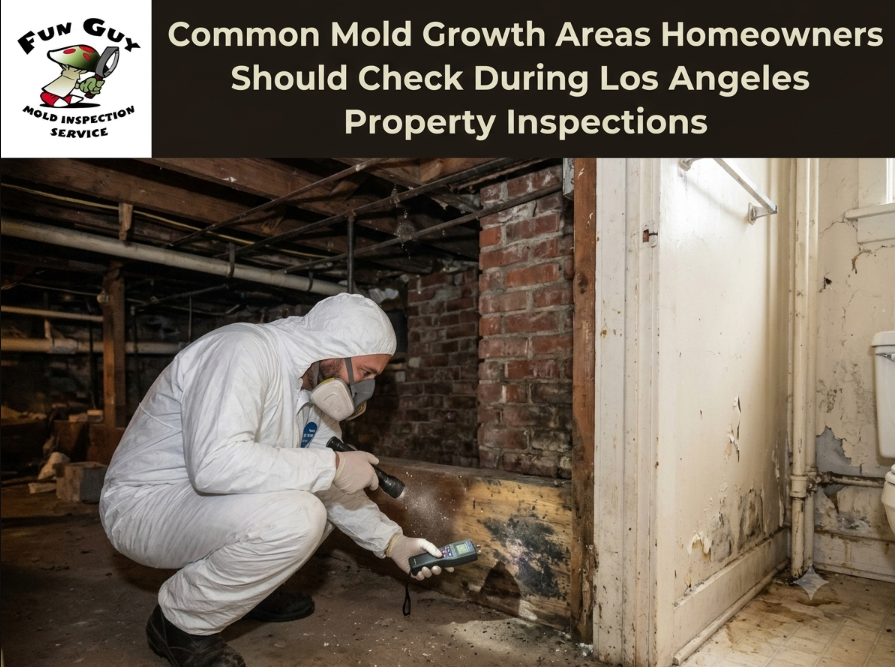
Although basements are less common in some Los Angeles neighborhoods than in other parts of the country, properties with below-ground spaces and crawl spaces can still experience significant moisture concerns. These areas may be affected by groundwater intrusion, plumbing leaks, poor drainage, foundation cracks, and inadequate ventilation. Because crawl spaces are often dark and receive limited airflow, moisture can remain trapped for extended periods without being noticed by homeowners. Mold may develop on wooden floor supports, insulation, subflooring, and other materials that remain exposed to damp conditions. Signs worth investigating include standing water, condensation on pipes, musty odors, deteriorating wood, and visible discoloration on structural surfaces. Inspecting these concealed spaces is especially important because moisture problems beneath a home can eventually affect flooring and indoor air conditions throughout the property.
Laundry Rooms and Washing Machine Connections
Laundry rooms are another location where homeowners should pay close attention during property inspections because washing machines and water supply connections can create recurring moisture problems. Loose hoses, damaged drainage connections, leaking valves, and overflowing washing machines can introduce water into surrounding flooring and walls. Mold may develop behind appliances, beneath laundry room cabinets, around floor drains, and along baseboards where moisture is not easily visible. Dryer ventilation should also be examined because improperly connected or obstructed exhaust systems can contribute to excess indoor humidity. Homeowners should look for peeling paint, warped flooring, damp walls, and unusual odors around laundry appliances. Maintaining proper appliance connections and ensuring that the laundry area receives adequate ventilation can reduce the likelihood of persistent moisture accumulation.
Windows, Window Frames, and Sills
Windows can become moisture entry points when seals deteriorate, frames develop cracks, or condensation repeatedly collects on glass surfaces. These conditions may create favorable environments for mold growth around window sills, interior trim, surrounding drywall, and concealed sections of wall cavities. Properties with older windows may be particularly vulnerable to water intrusion during periods of heavy rainfall or when exterior drainage is not functioning properly. Homeowners should inspect window corners for dark spotting, peeling finishes, soft wood, and moisture stains. Condensation that repeatedly forms on interior glass can also indicate elevated indoor humidity or ventilation concerns that deserve attention. Identifying these issues early can help prevent moisture from affecting larger sections of the surrounding wall structure.
Closets and Storage Areas
Closets and enclosed storage areas are often neglected during routine property inspections, even though their limited airflow can contribute to moisture accumulation. Closets located against exterior walls may be particularly vulnerable when insulation, ventilation, or exterior waterproofing is inadequate. Mold can develop behind stored furniture, beneath clothing, around cardboard boxes, and along walls where airflow is restricted. Homeowners may first notice a persistent musty smell or discoloration on stored belongings rather than visible growth on the walls themselves. Storing damp clothing, shoes, towels, and other household materials in enclosed spaces can further increase moisture levels. Keeping closets organized, allowing sufficient airflow, and investigating unexplained odors can help homeowners identify potential mold concerns before they become more widespread.
Behind Drywall and Inside Wall Cavities
Some of the most difficult mold problems to identify occur behind drywall and inside concealed wall cavities. Plumbing leaks, roof drainage problems, damaged exterior walls, and moisture penetration around windows can allow water to enter these spaces without producing obvious surface damage. Over time, moisture can affect insulation, wooden framing, drywall backing, and other building materials located inside the walls. Homeowners may notice indirect warning signs such as bubbling paint, unexplained stains, peeling wallpaper, or persistent musty odors. In certain situations, visible damage may appear far away from the original moisture source, making it difficult to determine where the problem started. Professional inspection methods can help assess suspicious areas and identify whether additional investigation is necessary before extensive repairs are undertaken.
HVAC Systems, Air Vents, and Ductwork
Heating, ventilation, and air conditioning systems play an important role in maintaining indoor comfort, but moisture-related problems within these systems can contribute to mold concerns. Condensation around cooling coils, clogged condensate drain lines, poorly insulated ducts, and excessive indoor humidity can create conditions that support microbial growth. Mold may develop around HVAC drain pans, air handler cabinets, duct insulation, and nearby building materials when moisture remains present. Homeowners should pay attention to musty odors coming from air vents, unexplained condensation around equipment, and signs of water leakage near indoor HVAC components. Air filters should also be replaced according to manufacturer recommendations to support proper airflow and system performance. Including accessible HVAC components in a property inspection can help identify moisture concerns that might otherwise remain unnoticed.
Garages and Areas Around Water Heaters
Garages are frequently used for storage and utility equipment, which means moisture problems can develop without receiving much attention. Water heaters, plumbing connections, exterior walls, and garage ceilings should be examined for leaks, condensation, and water stains. Damaged water heater connections or aging storage tanks can introduce moisture into nearby walls and flooring, potentially encouraging mold growth on porous materials. Garages with limited ventilation may also retain moisture brought in by vehicles, wet equipment, or seasonal rainfall. Homeowners should check for discoloration around the water heater, damp concrete, peeling wall finishes, and unusual odors near stored belongings. Addressing leaks and improving drainage can help reduce moisture accumulation and protect the surrounding building materials.
Exterior Walls, Foundations, and Drainage Systems
Mold prevention should not be limited to the interior of a property because exterior moisture problems can eventually affect indoor building materials. Cracks in exterior walls, damaged siding, deteriorating sealants, and poorly maintained drainage systems can allow rainwater to enter the building envelope. Foundation areas should also be examined for moisture staining, water accumulation, and signs of persistent dampness. Downspouts and gutters play an important role in directing rainwater away from the property, so blockages or improper drainage can increase the risk of water intrusion. Homeowners should pay particular attention to landscaping that directs water toward the foundation instead of allowing it to drain away naturally. Identifying exterior moisture concerns during property inspections can help prevent water from reaching concealed interior spaces and creating conditions suitable for mold growth.
Common Warning Signs of Mold Growth During Property Inspections
Recognizing early warning signs is an important part of identifying potential mold problems before they become more extensive. Visible mold can appear as dark, greenish, gray, or white patches on walls, ceilings, wooden materials, and other surfaces, although appearance alone cannot reliably identify the type of mold present. A persistent musty odor may indicate hidden moisture or microbial growth, particularly in enclosed areas such as closets, cabinets, and crawl spaces. Other warning signs include peeling paint, bubbling wallpaper, swollen wooden materials, unexplained stains, and recurring condensation. Homeowners should also pay attention to areas that have experienced previous flooding, plumbing leaks, or roof damage because unresolved moisture can contribute to recurring problems. When these signs appear, arranging a professional assessment can help determine the extent of the concern and identify the moisture conditions that need to be corrected.
Why Professional Mold Inspections Are Important
A professional mold inspection provides a more systematic approach to identifying visible and potential hidden moisture-related problems throughout a residential property. Rather than focusing only on obvious mold patches, an inspection considers the building’s history, ventilation, plumbing conditions, water intrusion points, and areas where moisture may accumulate. Depending on the property and inspection findings, professionals may use moisture meters, thermal imaging equipment, visual assessment techniques, and other appropriate methods to investigate suspicious locations. These methods can help identify areas that require further evaluation, although no single inspection tool can guarantee that every concealed mold issue will be detected. Mold sampling may also be considered when it is appropriate for the inspection objectives, but testing is not automatically necessary in every situation. Understanding the findings allows homeowners to make better decisions about moisture repairs, further investigation, and professional remediation when required.
Practical Ways to Reduce Mold Growth in Los Angeles Homes
Preventing mold growth starts with controlling moisture and addressing water problems as soon as they are discovered. Homeowners should repair leaking faucets, damaged plumbing connections, roof leaks, and deteriorating window seals instead of allowing moisture to accumulate over time. Bathrooms and kitchens should have adequate ventilation, while exhaust fans should be used to help remove excess humidity during everyday activities. Air conditioning systems should receive routine maintenance, including inspections of condensate drainage and accessible components that may develop moisture problems. It is also important to keep gutters clear, direct downspouts away from foundations, and maintain proper drainage around the property. When water damage occurs, affected materials should be dried promptly and professionally assessed when necessary, particularly if moisture has penetrated concealed building materials.
Schedule a Professional Mold Inspection for Your Los Angeles Property
Mold concerns can develop in many different parts of a home, from bathrooms and kitchens to attics, crawl spaces, HVAC systems, and concealed wall cavities. While routine homeowner checks can help identify obvious warning signs, some moisture problems require professional evaluation to understand their source and potential extent. Whether you are purchasing a property, preparing to sell your home, maintaining an older residence, or investigating a persistent musty odor, a professional mold inspection can provide valuable information about the property’s condition. At Fun Guy Inspections, we focus on helping homeowners identify potential mold concerns, recognize moisture-related problems, and understand the next steps needed to protect their properties. Our inspection approach is designed to provide clear findings and practical guidance based on the conditions observed during the assessment. Contact our team today to schedule a professional mold inspection in Los Angeles and take a proactive step toward maintaining a healthier, better-maintained home.