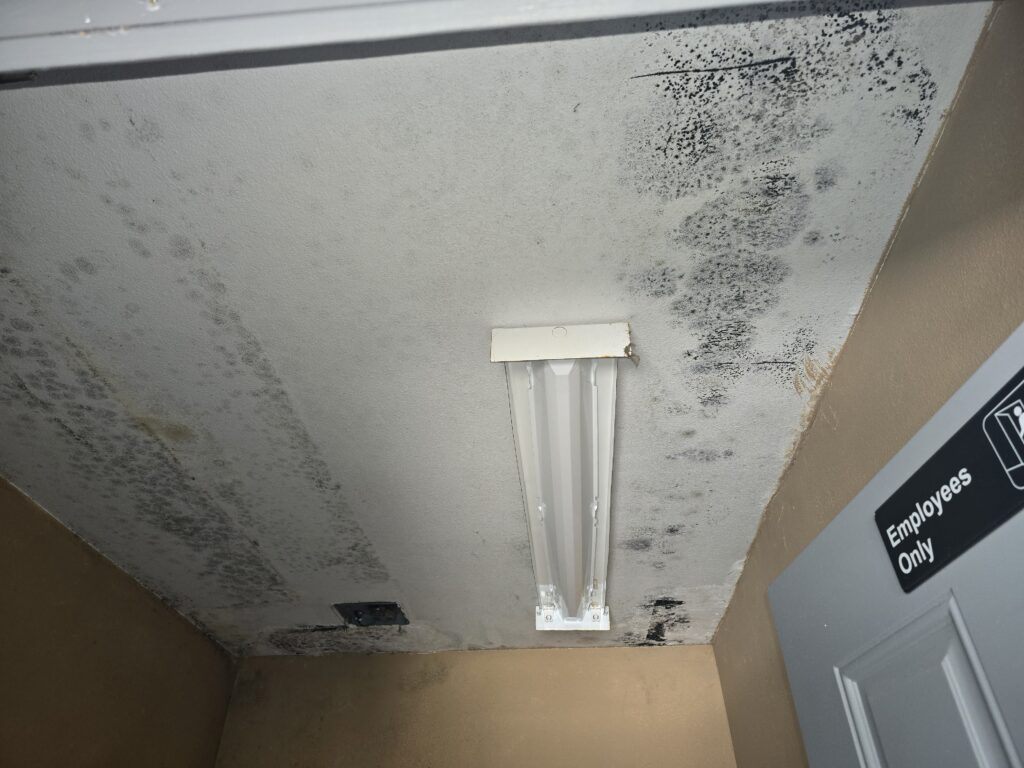
It’s a sinking feeling homeowners know all too well. You happen to glance up while relaxing on the couch or stepping out of the shower, and there it is: a discoloration on the ceiling.
Is it just a shadow? A stain from an old spill upstairs? Or is it something alive, growing right above your head?
Ceilings are prime real estate for fungal growth. Heat and humid air rise, carrying moisture that settles on cooler ceiling surfaces. Furthermore, ceilings are often the first place to show evidence of hidden disasters happening in the attic or between floors, such as slow plumbing leaks or roof failures.
When you see a spot, the immediate question is: Is this mold or mildew? While people often use the terms interchangeably, they are distinct types of fungi with very different implications for your home’s structure and your family’s health.
In this guide, we will break down the visual and structural differences between mold and mildew, assess the risks, and explain how to handle the situation.
Note: While this guide will help you identify surface issues, if you are unsure about the severity of a growth in your home, professional testing is the only way to be certain. When in doubt, contact the experts at Funguy Inspections.
The Main Differences: Mold vs. Mildew
Both mold and mildew are types of fungi that thrive in moist environments, spreading via microscopic spores in the air. However, the similarities largely end there.
The most critical distinction for a homeowner is depth. Mildew is generally a surface dweller. It grows flat on top of moist areas. Mold, however, is invasive. Its root structures (hyphae) burrow deep into porous materials like drywall, insulation, and wood framing, making it far more difficult to eradicate.
Here is a quick reference guide to spotting the difference:
Feature | Mildew | Mold |
Appearance | Flat, powdery, or downy texture. Looks like a dusting of fine dirt. | Fuzzy, slimy, raised, or velvety texture. Often appears in irregular spots. |
Color | Starts white or gray, often turning yellowish or light brown over time. | Can be black, deep green, red, blue, or varying shades of gray. |
Growth Pattern | Grows on the surface in flat colonies. Relatively easy to wipe off. | Burrows deep into porous materials. Scrubbing the surface often doesn’t kill the roots. |
Smell | Distinctly “musty,” similar to damp socks or wet towels. | Strong, pungent, earthy odor, similar to rotting wood or compost. |
Visual Identifiers
Mildew is often the lesser of two evils. On a ceiling, it usually appears as a dusting of gray or white powder. It is commonly found in circular patterns but remains relatively flat against the paint. You will most frequently encounter mildew in areas with high, temporary steam, such as right above a shower.
Mold is far more varied and menacing in appearance. It can look fuzzy like wool, slimy like a science experiment, or textured. The colors are deeper and darker. If you see patches that are dark green or distinctly black, you are likely dealing with mold.
A note on “Black Mold”: Many homeowners panic when they see black spots, fearing the infamous toxic black mold (Stachybotrys chartarum). While not all black-colored molds are highly toxic, Stachybotrys is serious and requires heavy moisture to grow, usually indicating significant water damage.
Where They Grow (Porous vs. Non-Porous)
The surface dictates the fungus.
Mildew prefers non-porous or semi-porous surfaces where condensation settles but doesn’t necessarily soak in. Think bathroom tiles, shower curtains, and glossy ceiling paints. Because it sits on top, it can often be wiped away with standard cleaning agents.
Mold seeks out porous, cellulose-rich materials to feed on. Ceiling drywall paper, joists, and insulation are an all-you-can-eat buffet for mold spores if moisture is present. Once mold roots into the drywall, surface cleaning becomes ineffective because the “seeds” remain protected inside the gypsum board.
Why Is It on My Ceiling? (Root Causes)
Fungi need food (your ceiling drywall), warmth (your home’s interior), and moisture to grow. You can’t easily remove the food or warmth, so moisture control is everything. If you have growth on your ceiling, you have a moisture problem.
Poor Ventilation & Humidity
The most common cause of bathroom ceiling mold or mildew is inadequate ventilation. When you take a hot shower, steam rises. If that warm, moist air isn’t exhausted outside by a functioning bathroom fan, it hits the cooler ceiling surface and condenses into liquid water.
If this happens daily, the ceiling surface never truly dries out, creating the perfect environment for spores to germinate. High indoor relative humidity (above 60%) throughout the house can also lead to random patches of growth in corners where air circulation is poor.
The Hidden Dangers: Leaks and Insulation
While bathroom humidity is common, sudden spots in living rooms, bedrooms, or kitchens are red flags for structural issues.
A mold spot on a bedroom ceiling is rarely just a surface issue; it is usually the “tip of the iceberg.” It often indicates water damage occurring above the ceiling drywall. Common culprits include:
- Roof Leaks: Slow trickles from damaged shingles or flashing that saturate attic insulation before dripping onto the ceiling.
- Plumbing Failures: Leaky pipes or tub drains in the bathroom on the floor above.
- HVAC Issues: Overflowing condensation drip pans in attic air conditioning units.
If the moisture source is a hidden leak, wiping the ceiling is a temporary fix. The microbial growth will return until the leak is repaired and the damaged materials undergo proper remediation.
Health Risks: Should You Be Worried?
Beyond the unsightliness, both mold and mildew affect indoor air quality.
Mildew Risks:
Mildew is generally considered an irritant. For most healthy adults, small amounts of mildew won’t cause severe issues. However, inhaling spores can cause coughing, throat irritation, and eye irritation, particularly in people with existing allergies.
Mold Risks:
The health implications of mold are more severe. Because mold colonies grow larger and deeper, they release significantly higher concentrations of spores into the air. Exposure to established mold growth can trigger:
- Severe asthma attacks.
- Chronic sinus infections and respiratory issues.
- Allergic reactions (skin rash, runny nose, red eyes).
Certain types of molds produce mycotoxins, which are toxic substances that can lead to more serious neurological or immune system issues in sensitive individuals, children, and the elderly. If residents of the home are experiencing unexplained chronic headaches, fatigue, or respiratory issues alongside visible ceiling spots, it is time to call a professional immediately.
How to Test: Is it Mold or Mildew?
Before you grab a scrub brush, you need to know what you are fighting.
The Bleach Test (Quick DIY)
Put on gloves and safety glasses. Dab a few drops of common household bleach onto the suspect spot using a cotton swab.
- If the spot lightens or disappears quickly (within a minute or two), it is likely mildew. The bleach is destroying the surface-level pigment.
- If the spot remains dark or only lightens slightly, it is likely mold. The bleach cannot penetrate deep enough to affect the rooted structure of the fungus.
The Smell Test
Lean in (carefully). Does the area smell like a damp towel left in a gym bag? That musty odor is typical of mildew. Does it smell earthy, pungent, like rotting leaves or wet soil? That heavier scent is usually associated with mold.
The Professional Test
DIY tests and store-bought mold kits are notoriously unreliable because they only tell you if spores are present (spoiler: they are always present in the air). They don’t tell you the species, the concentration, or, most importantly, the location of the moisture source.
At Funguy Inspections, we don’t just look at the spot. We use advanced thermal imaging cameras and non-invasive moisture meters to scan the ceiling and walls. This allows us to detect cooler, damp areas behind the drywall that are invisible to the naked eye, pinpointing the active leak causing the fungal growth.
Removal Guide: Cleaning Your Ceiling
Warning: Before attempting to clean any fungal growth, wear protective gear: an N95 face mask, rubber gloves, and eye protection. Do not disturb large areas of mold (over 10 square feet) yourself, as this can release massive amounts of spores into your home.
How to Clean Mildew
Because mildew sits on the surface, it is relatively easy to remediate.
- Ventilate the room (open windows, run fans).
- Scrub the area with a commercial mildew remover, or a mixture of warm water and dish soap.
- For stubborn spots, a diluted bleach solution (1 part bleach to 10 parts water) can be used on painted surfaces.
- Rinse thoroughly and, crucially, dry the area completely.
How to Deal with Mold (The Safe Way)
Dealing with mold on porous drywall is difficult.
The Bleach Myth: Do not rely solely on bleach for mold on drywall. Bleach has a high surface tension; it sits on top of the porous drywall, bleaching the colored fuzz but failing to kill the roots (hyphae) growing inside the gypsum. The mold often returns looking worse than before.
For small surface mold spots, use undiluted white vinegar or hydrogen peroxide. These penetrate porous surfaces better than bleach to attack the root structure. Spray it on, let it sit for an hour, and wipe away.
When to Cut It Out:
If the drywall feels soft to the touch, crumbles when poked with a screwdriver, or if the mold always returns after cleaning, the material is compromised. You cannot “clean” drywall that has been saturated with water and infiltrated by mold roots. The affected section must be cut out, bagged carefully, and replaced.
Do not just paint over ceiling mold. Paint will not kill the mold; the fungus will eventually eat through the new paint layer, and the problem will continue to spread underneath.
Prevention: Stop It from Coming Back
Once the ceiling is clean, you must change the environment to prevent regrowth.
- Control Humidity: Keep indoor relative humidity below 50%. Use air conditioners and stand-alone dehumidifiers in damp months.
- Improve Airflow: Upgrade your bathroom exhaust fan to a higher CFM (cubic feet per minute) model and run it for at least 20 minutes after every shower.
- Fix Leaks Immediately: If the spot was caused by a roof or plumbing leak, ensure the repair is verified before repairing the ceiling drywall.
When to Call a Professional Inspector
While a small patch of shower mildew is a DIY job, ceiling mold is often a sign of a larger systemic issue in the home. You should call a professional inspector if:
- The affected area is large (the EPA suggests anything larger than roughly 3ft x 3ft requires professional remediation).
- You smell a strong, earthy mold odor but cannot see visible growth (indicating hidden mold).
- The ceiling drywall is sagging, water-stained, or soft.
- Your family is experiencing unexplained health symptoms.
Don’t gamble with your home’s structure or your family’s respiratory health. If you aren’t sure if you are looking at mold vs. mildew, or if you can’t find the leak causing the problem, you need an expert eye.
Contact Funguy Inspections today. We use science and technology to find the fungus among us, giving you the peace of mind that your home is safe.
Frequently Asked Questions
Q: Can I just paint over the mold on my ceiling?
A: No. Painting over mold is a cosmetic fix that leads to bigger problems. Paint does not kill the fungal roots. The mold will eventually eat through the new paint, often causing the paint to bubble or peel. You must kill and remove the mold (and the moisture source) before applying any primer or paint.
Q: Is the black spot on my ceiling toxic black mold?
A: You cannot identify toxic black mold (Stachybotrys chartarum) just by looking at it. While many molds are black, only some produce harmful mycotoxins. However, any black mold growth on a ceiling usually indicates a serious water leak and should be treated as a health risk until proven otherwise.
Q: Why does mold come back after I clean it with bleach?
A: Bleach is effective on non-porous surfaces like tile, but it often fails on drywall. Bleach sits on the surface, while the mold roots (hyphae) retreat deeper into the porous gypsum to hide. Once the bleach dries, the roots grow back. Using vinegar or a professional fungicide is more effective for porous ceiling materials.
Q: How do I know if the mold is from a leak or just humidity?
A: Location is the biggest clue. If the mold is widespread, “dusty,” and located in a bathroom with no fan, it is likely humidity-related mildew. If the mold is a concentrated, dark patch (especially if it has concentric rings like a map), it is likely from a water leak above the ceiling.
Q: Is it safe to sleep in a room with mold on the ceiling?
A: If the mold area is small (less than a few square feet) and you are healthy, it is generally safe for a short period. However, if you have asthma, allergies, or a compromised immune system—or if the mold area is large—you should avoid sleeping in the room until it is remediated to prevent respiratory distress.
Also Read
- Ceiling Mold and Water Damage Solutions – A deep dive into the specific causes of ceiling leaks and how to fix them.
- Does Bleach Kill Mold? Effective Mold Removal Tips – Learn why common household cleaners might be making your mold problem worse.
- Black Mold Testing and Removal – Everything you need to know about Stachybotrys and when to panic (or not).
- The Most Common Types of Mold in Your Home – Identify exactly what is growing in your house with this visual guide.
- Leaky Appliances Lead to Big Problems – Is that ceiling spot actually coming from the washing machine upstairs? Find out here.