Mold Removal Does Not Always Solve the Underlying Problem
Mold can return after cleaning when the conditions that caused its growth have not been corrected. Removing visible mold from a surface may improve the appearance of a room, but it does not necessarily eliminate hidden moisture or contamination. Mold needs moisture, an organic food source, and suitable environmental conditions to continue growing. If those conditions remain present, new growth can develop even after an area has been thoroughly cleaned. This is why recurring mold should be treated as a sign that something beneath the surface may require further investigation. At Fun Guy Inspections, we look beyond visible growth to help identify the environmental conditions that may be allowing mold to return.
Hidden Moisture Can Keep Feeding Mold Growth
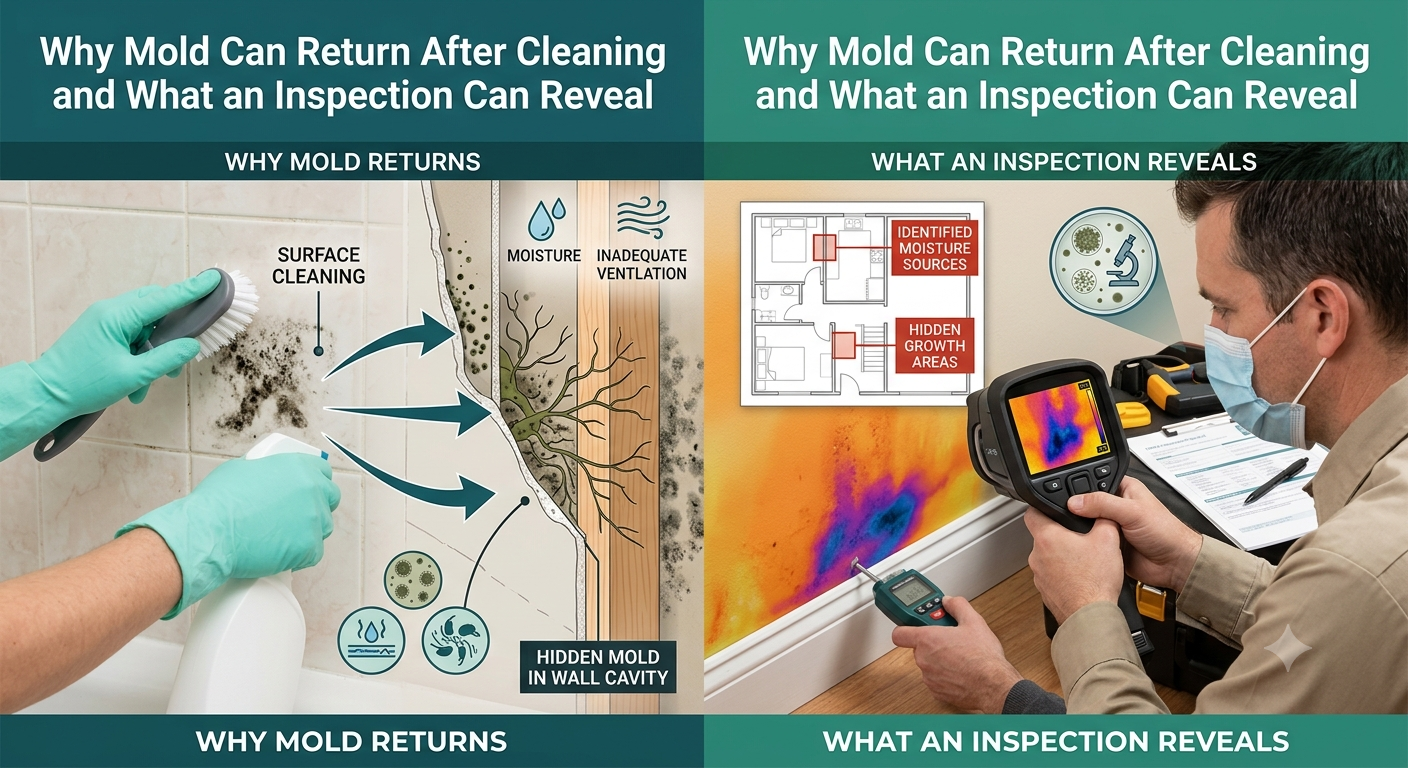
One of the most common reasons mold returns is hidden moisture that has not been discovered or adequately addressed. Water can enter a property through plumbing leaks, roof problems, damaged windows, poor drainage, condensation, or moisture migration through walls. Some leaks are small enough that they remain unnoticed while continuously keeping building materials damp. Even when a surface appears dry, moisture may still exist inside drywall, insulation, flooring, cabinets, or other concealed areas. Continued moisture can create an environment where mold begins growing again shortly after cleaning. An inspection can help identify moisture patterns that may not be obvious during a routine visual cleaning.
Cleaning Visible Mold May Only Address the Surface
Visible mold is often the part of a larger problem that homeowners can easily see, but it may not represent the full extent of the affected area. Mold can develop behind walls, underneath flooring, inside ceilings, around plumbing penetrations, and within other concealed spaces. Cleaning a visible patch without determining how far the moisture or contamination extends can leave affected materials untreated. Over time, remaining spores and favorable moisture conditions can contribute to renewed growth. This can make it appear as though the cleaning failed when the underlying issue was never completely identified. A professional inspection can help determine whether visible mold is an isolated concern or an indication of a larger moisture problem.
An Inspection Can Reveal Moisture Problems
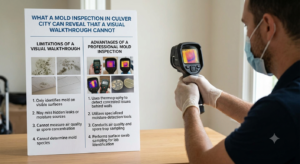
A detailed inspection can provide information that ordinary cleaning cannot provide. Inspectors may examine areas around plumbing fixtures, ceilings, walls, windows, HVAC components, crawl spaces, attics, and other locations where moisture can accumulate. Depending on the property and circumstances, moisture detection equipment can help identify elevated moisture levels within building materials. These findings can provide important clues about why mold continues to appear in a particular location. Identifying the source of moisture is often an essential step toward preventing recurring mold growth. Our inspection process focuses on finding conditions that may explain why the problem keeps coming back.
Condensation Can Create Recurring Mold Conditions
Not every recurring mold problem is caused by a traditional water leak. Condensation can develop when warm, humid air comes into contact with cooler surfaces such as pipes, windows, exterior walls, or air conditioning components. Repeated condensation can keep surfaces damp enough to support mold growth, particularly in bathrooms, kitchens, basements, and poorly ventilated rooms. High indoor humidity can make this problem worse by increasing the amount of moisture available in the air. Cleaning the mold without controlling humidity or improving ventilation can therefore result in recurring growth. An inspection can help identify areas where condensation, humidity, or ventilation may be contributing to the problem.
HVAC Systems Can Contribute to Mold Concerns
Heating, ventilation, and air conditioning systems can sometimes play a role in moisture and indoor mold concerns. Condensation around cooling components, ductwork, drain pans, or other HVAC areas can create conditions that support microbial growth. Air movement may also distribute particles from an affected area into other portions of a property. If a mold concern repeatedly appears near vents or returns after cleaning, the surrounding HVAC environment may deserve closer attention. An inspection can help determine whether visible conditions suggest a moisture issue associated with the system or nearby building materials. Understanding the relationship between the HVAC system and the affected area can provide useful direction for further evaluation and corrective work.
Bathrooms Are Especially Vulnerable to Recurring Mold
Bathrooms frequently experience recurring mold because they combine moisture, warmth, organic materials, and limited drying time. Steam from showers can raise humidity levels and create condensation on ceilings, walls, mirrors, fixtures, and other surfaces. Poor ventilation can allow moisture to remain in the room long after bathing has ended. Small plumbing leaks around toilets, sinks, tubs, and shower areas can introduce additional moisture that may remain hidden. When mold repeatedly develops on bathroom ceilings or walls, simply wiping the affected area may not address the conditions responsible for its return. An inspection can help evaluate moisture sources, ventilation conditions, and surrounding materials to better understand the recurring issue.
Previous Water Damage May Still Matter
Past water damage can continue affecting a property even after the original incident appears to have been resolved. Flooding, plumbing failures, roof leaks, appliance leaks, and other events can introduce significant moisture into building materials. If affected materials were not completely dried, removed, or properly restored, residual moisture can contribute to future mold development. Some materials can retain moisture long after the surface feels dry to the touch. A history of water damage can therefore be an important part of understanding recurring mold. Fun Guy Inspections can evaluate current conditions and document findings that may help explain whether previous moisture events remain relevant.
What an Inspection Can Tell Property Owners
An inspection can provide a clearer picture of the conditions surrounding recurring mold rather than focusing only on what is visible. The inspection may identify areas of elevated moisture, potential water intrusion, condensation concerns, ventilation issues, or other environmental conditions. Visual observations can also help determine whether mold-like growth appears concentrated in one location or occurs across multiple areas. Depending on the circumstances, additional testing may be considered when more information is needed to characterize an indoor environmental concern. The purpose of an inspection is to gather useful evidence that can support informed decisions about the next steps. This information can be especially valuable when mold has returned several times despite previous cleaning efforts.
Recurring Mold Should Not Be Ignored
Repeated mold growth deserves attention because it can indicate that an unresolved moisture condition remains present. Covering, wiping, painting, or treating a recurring area may temporarily improve its appearance without correcting the source of the problem. Continued moisture can affect building materials and create increasingly difficult conditions if the source remains unresolved. Property owners should pay particular attention when mold returns in the same location shortly after cleaning or appears in several connected areas. A recurring pattern can provide an important clue about moisture movement within the property. Early investigation can help property owners understand the situation before a seemingly small concern becomes more extensive.
Inspection and Remediation Serve Different Purposes
It is important to understand that inspection and remediation are separate steps with different purposes. An inspection is intended to evaluate conditions, identify potential sources, and provide information about the environment being investigated. Remediation focuses on addressing contamination and correcting the conditions that allowed the problem to develop. Cleaning visible mold without identifying the moisture source can leave the property vulnerable to another cycle of growth. Conversely, addressing a moisture source without properly evaluating the affected area may leave important information undiscovered. Fun Guy Inspections helps property owners better understand existing conditions so that appropriate next steps can be considered.
Preventing Mold From Coming Back
Preventing recurring mold starts with controlling moisture and maintaining conditions that discourage microbial growth. Property owners should address leaks promptly, maintain appropriate indoor humidity, use bathroom ventilation, and watch for signs of condensation or water intrusion. Areas affected by previous water damage should also be monitored for changes in odor, staining, dampness, or visible growth. Regular attention to plumbing, roofing, windows, HVAC components, and drainage can help reduce opportunities for unwanted moisture accumulation. When mold continues returning despite reasonable cleaning and maintenance, a professional inspection can provide additional information about what may be happening behind the scenes. Understanding the cause is often the key to moving from repeated cleaning toward a more informed long term solution.