Understanding the Hidden Mold Problem in Moorpark Homes
Mold is often associated with obvious signs such as dark patches on walls, musty odors, or visible growth around bathrooms. However, many Moorpark homes can develop mold in concealed spaces where homeowners rarely think to look. Moisture can travel behind walls, beneath flooring, inside cabinets, around plumbing penetrations, and through poorly ventilated areas before mold becomes visible. California’s climate can also create conditions where moisture from plumbing leaks, condensation, roof problems, or indoor humidity remains trapped in building materials. Once moisture becomes enclosed, mold can begin developing without producing an immediate warning sign. Homeowners may therefore notice unusual odors or changes in indoor air quality before they ever see the source of the problem.
Why Mold Can Stay Hidden for Long Periods
Mold does not need an obvious flood to establish itself inside a home. A slow plumbing leak, minor roof intrusion, condensation around an air conditioning system, or moisture entering through an exterior wall can provide enough water for fungal growth. When that moisture reaches materials such as drywall, wood framing, insulation, carpet padding, or subflooring, the affected area can remain damp long after the surface appears dry. Furniture, cabinets, appliances, and wall coverings can further conceal these areas from normal household inspection. Because homeowners typically inspect what they can see and reach, moisture behind or underneath these materials can go unnoticed. A hidden problem may continue growing until the affected material begins producing odors, staining, deterioration, or other noticeable symptoms.
Behind Drywall and Inside Wall Cavities
Wall cavities are among the most overlooked locations for concealed mold because the framing and drywall can hide moisture for an extended period. Plumbing lines running through walls can develop small leaks that gradually saturate nearby insulation and framing. Water can also enter wall assemblies around windows, doors, exterior penetrations, and damaged siding or stucco. If the cavity has limited airflow, the moisture may take considerable time to evaporate. Mold can consequently develop on the backside of drywall or on wooden framing while the finished surface looks relatively normal. During a professional inspection, we look for moisture indicators, staining, material deterioration, and other clues that may suggest a problem beyond what a visual surface inspection can reveal.
Under Sinks and Inside Kitchen Cabinets
Kitchen and bathroom cabinets can create enclosed environments where small leaks remain unnoticed. Homeowners may regularly wipe the exterior of a cabinet while rarely removing stored items to examine the plumbing connections underneath. A loose supply line, deteriorated drain connection, or slow leak from a garbage disposal can introduce moisture into the cabinet base and surrounding materials. Water may also migrate beneath flooring or into adjacent walls before the leak becomes obvious. Because cabinets restrict airflow, damp wood products and other materials can remain moist enough to support mold growth. Checking these enclosed spaces can provide important clues about whether a property has experienced a localized moisture problem.
Beneath Flooring and Carpet Padding
Flooring can conceal moisture problems just as effectively as walls. Carpet padding can absorb water from spills, plumbing leaks, appliance failures, or moisture entering from below, while the carpet surface may eventually feel dry. Hardwood, laminate, and other flooring systems can also conceal moisture within subflooring or adjacent structural materials. If water becomes trapped underneath these surfaces, mold may develop where normal household cleaning cannot reach it. Homeowners may instead notice persistent odors, warped flooring, discoloration, or unusual changes in the floor’s appearance. A careful inspection considers these warning signs rather than assuming that a clean-looking floor means the entire assembly is dry and unaffected.
Around HVAC Systems and Air Ducts
Heating, ventilation, and air conditioning systems can create moisture conditions that homeowners may not immediately associate with mold. Condensation can form around cooling equipment, drain lines, coils, and other components when moisture management is inadequate. If condensate drains become restricted, water can accumulate near equipment and surrounding building materials. Air ducts located in attics, crawlspaces, wall cavities, or other concealed areas can also be exposed to moisture depending on the condition of the surrounding environment. Mold growth in these areas may be difficult to identify because much of the HVAC system is inaccessible during ordinary household cleaning. We pay attention to visible moisture evidence and environmental conditions around HVAC components when evaluating potential areas of concern.
Attics Can Hide Moisture and Mold
The attic is another area that homeowners may overlook even though it can provide several opportunities for moisture accumulation. Roof leaks, damaged flashing, inadequate ventilation, and condensation can introduce or retain moisture within attic assemblies. Insulation can conceal staining or microbial growth on roof decking and framing, making the issue difficult to recognize from the living areas below. Bathroom exhaust fans that terminate improperly can also introduce warm, humid air into an attic rather than exhausting it outdoors. Over time, repeated moisture exposure can affect wood components and other materials within the space. Regular attic evaluation can therefore help identify moisture conditions before they result in extensive deterioration or concealed mold growth.
Crawlspaces and Areas Beneath the Home
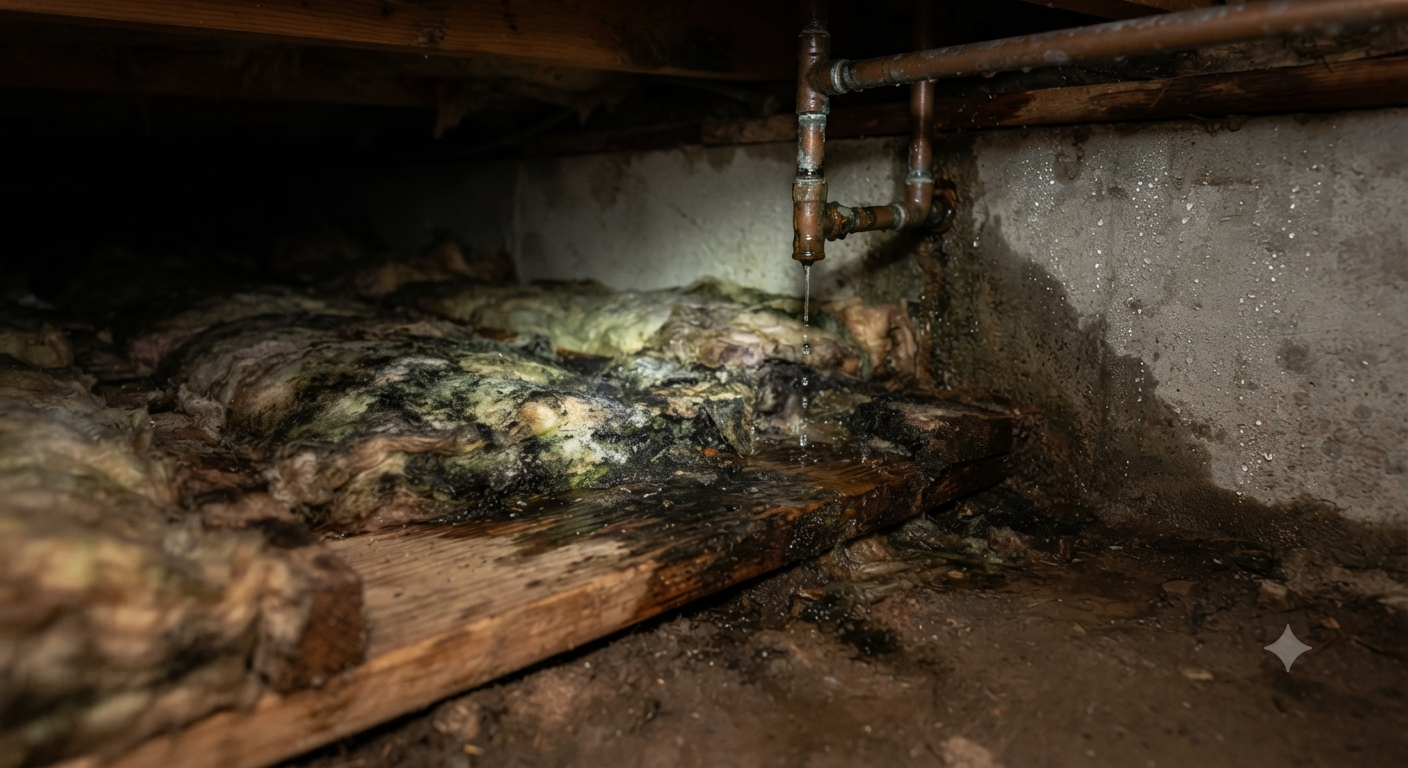
A crawlspace can be one of the least visited areas of a property while also being particularly important for moisture assessment. Ground moisture, plumbing leaks, poor drainage, inadequate ventilation, and condensation can all contribute to elevated moisture levels beneath a home. Wooden structural components can absorb moisture and remain damp in areas with limited air circulation. Mold can develop on framing, insulation, subflooring, and other materials without producing visible evidence inside the living space. Homeowners may only become aware of the issue when odors migrate upward or when structural deterioration becomes apparent. Inspecting these less accessible spaces can reveal conditions that would otherwise remain hidden during everyday homeownership.
Behind Appliances and Fixtures
Large appliances and fixed fixtures can create hidden pockets where moisture accumulates without being noticed. Refrigerators, washing machines, dishwashers, toilets, and other fixtures all involve plumbing or moisture-producing processes that can contribute to water damage when something fails. A dishwasher leak, for example, may allow water to enter cabinetry or flooring beneath the appliance while leaving the surrounding surfaces looking normal. Washing machine connections can similarly develop slow leaks that affect nearby walls and flooring. Since these appliances are not always moved during routine cleaning, moisture damage can remain concealed for months. Looking beyond the visible front surfaces of a property can therefore be important when investigating unexplained odors or suspected moisture problems.
Window Areas and Exterior Wall Connections
Windows can become sources of concealed moisture when seals, flashing, drainage components, or surrounding exterior materials fail. Rainwater can enter around a window assembly and migrate into framing or wall cavities without immediately appearing on the interior wall. Small amounts of repeated moisture intrusion can be especially problematic because materials may never fully dry between exposure events. Interior paint may remain intact while hidden framing or insulation becomes affected. Condensation around windows can create another source of moisture, particularly when indoor humidity and temperature differences cause water to accumulate repeatedly. Homeowners should pay attention to staining, deteriorated trim, unusual odors, peeling finishes, or recurring condensation around window areas.
Bathrooms Have More Hidden Moisture Than You May Expect
Bathrooms naturally produce substantial amounts of moisture, but the most significant problems are not always located on visible shower or tub surfaces. Water can penetrate damaged grout, deteriorated caulking, failed shower surrounds, plumbing penetrations, and improperly sealed fixtures. Moisture can then travel behind tile assemblies or into wall cavities where it is difficult to detect visually. Poor ventilation can compound the problem by allowing humidity to remain elevated after bathing. Over time, repeated exposure can affect drywall, framing, flooring, and other materials located outside the immediate wet area. A bathroom that looks clean and well maintained can therefore still contain concealed moisture conditions that warrant closer examination.
Why Musty Odors Should Not Be Ignored
A persistent musty odor can sometimes provide an important clue when visible mold is absent. The odor may originate from concealed materials that have experienced prolonged moisture exposure or microbial growth. Air movement through wall cavities, HVAC systems, crawlspaces, and other areas can allow odors to travel away from their original source. This means the room where the odor is strongest is not necessarily the location where the moisture problem began. Covering the smell with air fresheners or increased cleaning may temporarily mask the symptom without addressing the underlying condition. When an unexplained musty odor continues, identifying potential moisture sources and concealed areas becomes more important than simply treating the odor.
How Moorpark Homeowners Can Recognize Warning Signs
Hidden mold does not always announce itself through dramatic visual changes. Recurring condensation, peeling paint, warped materials, staining, unexplained odors, damaged flooring, and deteriorating wood can all indicate that moisture may be present somewhere nearby. Previous plumbing leaks, roof repairs, flooding, appliance failures, or water intrusion should also increase attention to concealed areas. Homes that have undergone renovations can contain additional hidden spaces where older moisture damage may have been covered rather than fully investigated. Even when a previous problem has been repaired, affected materials may have remained damp or damaged if drying and remediation were incomplete. Recognizing these warning signs early can help homeowners investigate potential problems before they become larger and more expensive.
Why Professional Inspection Can Find What Routine Cleaning Misses
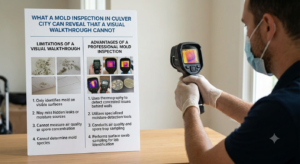
Routine housekeeping focuses primarily on visible and accessible surfaces, whereas a professional property inspection evaluates the building more systematically. An inspector can look for evidence of moisture intrusion, material deterioration, ventilation concerns, plumbing issues, and other conditions that may contribute to hidden mold development. Moisture-related clues can sometimes point toward areas that require additional evaluation even when mold itself is not visible. Professional inspection does not mean that every concealed space can be opened or that mold can always be confirmed through visual observation alone. When warranted, further assessment or specialized testing may be recommended based on the conditions discovered during the inspection. This approach helps homeowners distinguish ordinary household conditions from signs that deserve closer attention.
The Importance of Addressing Moisture at Its Source
Finding mold without understanding why moisture is present can leave a property vulnerable to recurring problems. Mold growth is closely associated with moisture availability, so repairing the underlying water intrusion or humidity issue is an important part of resolving the condition. A plumbing leak needs to be repaired, roof intrusion needs to be corrected, and ventilation deficiencies may need to be addressed. Wet or damaged building materials may also require appropriate drying, removal, or professional remediation depending on the severity and circumstances. Simply cleaning visible growth without correcting the moisture source can allow the problem to return. A thorough inspection can help establish where moisture may be entering or accumulating so that the appropriate next steps can be considered.
Protecting the Long-Term Condition of Your Home
Hidden moisture problems can affect more than indoor appearance and odors. Prolonged moisture exposure can contribute to deterioration of drywall, insulation, flooring, cabinetry, framing, and other building components. Early identification can make it easier to determine the scope of a problem and address contributing conditions before damage spreads to additional areas. Homeowners should be particularly attentive after water leaks, roof issues, appliance failures, or other incidents that introduce moisture into the property. Regular inspection can also be valuable for identifying conditions that are not obvious during everyday use of the home. At Fun Guy Inspections, we focus on identifying observable conditions and potential moisture concerns so homeowners can make informed decisions about their property.
Making Hidden Mold Inspection Part of Home Maintenance
Mold prevention is not simply about cleaning visible surfaces because moisture can originate in places homeowners rarely inspect. Attics, crawlspaces, wall cavities, cabinets, flooring assemblies, window areas, and HVAC spaces can all contain conditions that deserve attention when moisture is suspected. Paying attention to small warning signs can help homeowners investigate concerns before they develop into larger property issues. Regular maintenance of plumbing, roofing, drainage, ventilation, and HVAC components can also reduce opportunities for moisture to remain trapped indoors. When there is evidence of past or current water intrusion, a professional inspection can provide an additional layer of information about the condition of the property. Fun Guy Inspections helps Moorpark homeowners take a closer look at the less obvious areas of a home so potential moisture concerns are not overlooked.