
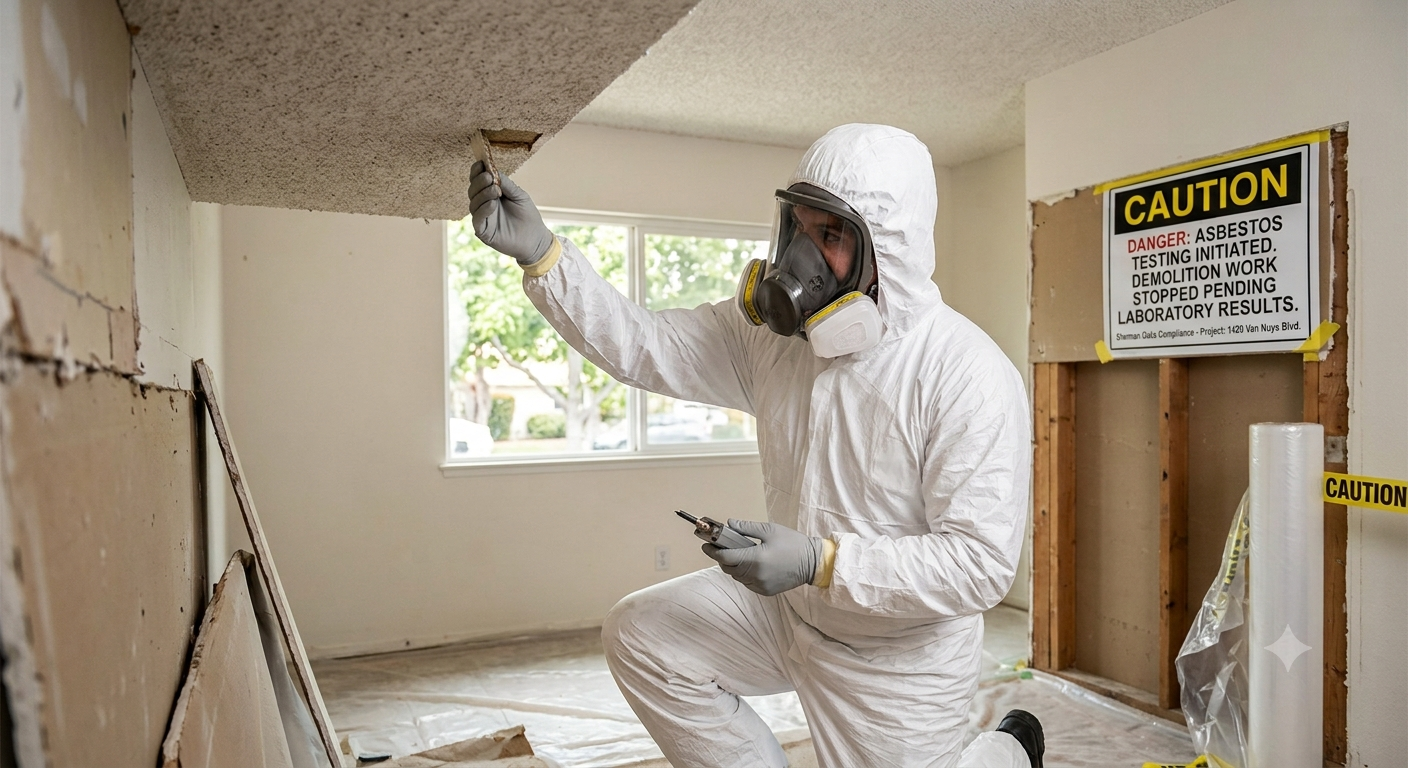
Why Asbestos Testing in Sherman Oaks Should Come Before Any Demolition Work
Property demolition is often the first major step in a renovation or redevelopment project. Whether you are removing a single wall, renovating an older kitchen, or preparing an entire building for reconstruction, the excitement of beginning a new project can sometimes overshadow an important safety consideration. Before any demolition begins, asbestos testing should always be a priority.
Many residential and commercial properties built before the 1980s may contain asbestos in various construction materials. Disturbing these materials without proper testing can release microscopic fibers into the air, creating serious health risks for everyone on the property. At Fun Guy Inspections, we believe every successful demolition project starts with understanding what is hidden behind the walls, ceilings, floors, and insulation.
Understanding Why Asbestos Is Still a Concern
Asbestos was once considered an ideal building material because of its durability, heat resistance, and insulating properties. It was commonly used in homes, apartment buildings, schools, offices, and industrial facilities throughout California for decades.
Although its use has significantly declined, many older properties in Sherman Oaks still contain asbestos-containing materials that remain undisturbed until renovation or demolition begins. The danger does not come from asbestos simply existing within a structure. The risk appears when demolition breaks, cuts, drills, or crushes these materials, allowing fibers to become airborne.
Because these fibers are invisible to the naked eye, people often have no idea they are breathing them in during construction work.
Common Places Where Asbestos May Be Found
One of the reasons asbestos testing is so important before demolition is that asbestos can be present in many unexpected locations.
It may be found inside drywall compounds, vinyl floor tiles, ceiling textures, insulation around pipes, roofing materials, siding products, HVAC duct insulation, cement boards, popcorn ceilings, adhesives, mastics, and even old electrical components.
A building may look modern after cosmetic updates while still hiding original asbestos materials underneath newer finishes.
Without professional testing, there is simply no reliable way to know which materials contain asbestos.
Demolition Creates the Highest Risk
Demolition is far more aggressive than routine occupancy or minor repairs.
Walls are broken apart.
Floors are removed.
Ceilings are opened.
Insulation is exposed.
Power tools generate dust throughout the work area.
If asbestos-containing materials are present during these activities, countless microscopic fibers can spread through the building and beyond the immediate demolition zone. Workers, homeowners, neighbors, and future occupants may all become exposed.
Once airborne, asbestos fibers can remain suspended for long periods before settling on surfaces throughout the property.
Health Risks Associated With Asbestos Exposure
Medical experts have linked asbestos exposure to several serious illnesses. These conditions often develop slowly, sometimes taking decades before symptoms appear.
The most widely recognized diseases include asbestosis, lung cancer, and mesothelioma.
Even though prolonged occupational exposure carries the greatest risk, unnecessary exposure during renovation projects should never be ignored. Every effort should be made to identify asbestos before disturbing building materials.
Preventing exposure is significantly easier than trying to clean contaminated areas after demolition has already begun.
Older Properties Require Extra Attention
Sherman Oaks features many homes and commercial buildings constructed during periods when asbestos products were widely used.
Even if a property has undergone previous remodeling, original materials may remain hidden behind updated finishes.
Property owners sometimes assume that because a building looks renovated, asbestos has already been removed. Unfortunately, that assumption can be costly and dangerous.
Only laboratory analysis of collected samples can determine whether asbestos is present.
Why Visual Inspection Alone Is Not Enough
Many asbestos-containing materials closely resemble modern products.
Drywall joint compound containing asbestos may appear identical to newer versions.
Vinyl flooring can look exactly like non-asbestos flooring.
Pipe insulation often shows no obvious signs that asbestos is present.
Even experienced contractors cannot accurately identify asbestos through appearance alone.
Professional testing provides scientific confirmation instead of guesswork.
Protecting Everyone on the Job Site
Demolition projects involve multiple people working in close proximity.
General contractors, demolition crews, electricians, plumbers, HVAC technicians, painters, and homeowners may all enter the work area.
Testing before demolition helps everyone understand where hazardous materials exist so proper precautions can be taken.
Instead of exposing every trade to unnecessary risks, asbestos-containing materials can be managed safely before broader demolition work begins.
This organized approach creates a safer work environment from the first day of construction.
Avoiding Project Delays
Finding asbestos after demolition has already started often creates significant disruptions.
Work may need to stop immediately.
Additional inspections become necessary.
Specialized abatement contractors may need to be scheduled.
Cleanup procedures can increase project costs while extending completion timelines.
By completing asbestos testing before demolition, property owners gain a clear understanding of potential hazards early in the planning process.
This allows projects to move forward with fewer unexpected interruptions.
Supporting Regulatory Compliance
California has strict regulations regarding asbestos management during renovation and demolition activities.
Depending on the project scope, property owners and contractors may have specific legal responsibilities related to asbestos identification, handling, removal, and disposal.
Testing before demolition helps demonstrate responsible planning while reducing the likelihood of regulatory complications later in the project.
Proper documentation also provides valuable records that may be requested during permitting or construction activities.
Protecting Indoor Air Quality
Air quality is often overlooked during demolition planning.
Once asbestos fibers become airborne, they can settle inside HVAC systems, ventilation ducts, furniture, carpets, and other surfaces throughout the building.
Cleaning contaminated areas after widespread dust circulation can be extremely difficult and expensive.
Preventing fiber release through early asbestos identification is far more effective than attempting to remove contamination afterward.
Saving Money in the Long Run
Some property owners hesitate to schedule asbestos testing because they see it as an additional project expense.
In reality, testing is often one of the most cost-effective investments before demolition begins.
Unexpected contamination discovered mid-project can lead to emergency abatement, work stoppages, equipment downtime, permit delays, additional labor, and extended construction schedules.
Early testing helps reduce financial uncertainty while supporting more accurate project budgeting.
Peace of Mind During Renovation
Demolition already involves enough uncertainty without wondering whether hazardous materials are being disturbed.
Knowing the condition of your property before construction begins provides confidence throughout the renovation process.
Contractors can work with greater certainty.
Property owners understand the risks involved.
Future occupants benefit from safer construction practices.
This peace of mind becomes especially valuable during larger remodeling projects where extensive demolition is planned.
Choosing Qualified Professionals
Accurate asbestos testing requires more than collecting random building samples.
Proper procedures include identifying suspect materials, following safe sampling techniques, preventing unnecessary fiber release, and submitting samples to qualified laboratories for analysis.
Working with experienced inspectors helps ensure reliable results that support informed decisions before demolition begins.
At Fun Guy Inspections, we understand the importance of thorough inspections, detailed reporting, and dependable asbestos testing services that help property owners move forward with confidence.
The Value of Planning Ahead
Successful demolition is not simply about tearing materials apart. It begins with understanding exactly what exists within the structure.
Asbestos testing transforms uncertainty into knowledge.
Instead of reacting to unexpected discoveries during construction, property owners can develop safer, more efficient demolition plans from the beginning.
This proactive approach protects workers, occupants, contractors, and neighboring properties while helping renovation projects stay on schedule.
Demolition marks the beginning of exciting property improvements, but it should never begin without first evaluating potential asbestos hazards. Older homes and commercial buildings in Sherman Oaks may contain asbestos in numerous construction materials that cannot be identified through visual inspection alone.
Professional testing before demolition reduces health risks, supports regulatory compliance, minimizes costly project delays, protects indoor air quality, and provides valuable peace of mind throughout the renovation process. Whether you are planning a small remodel or a complete structural demolition, Fun Guy Inspections is committed to helping ensure your project starts with the information needed to protect everyone involved.