
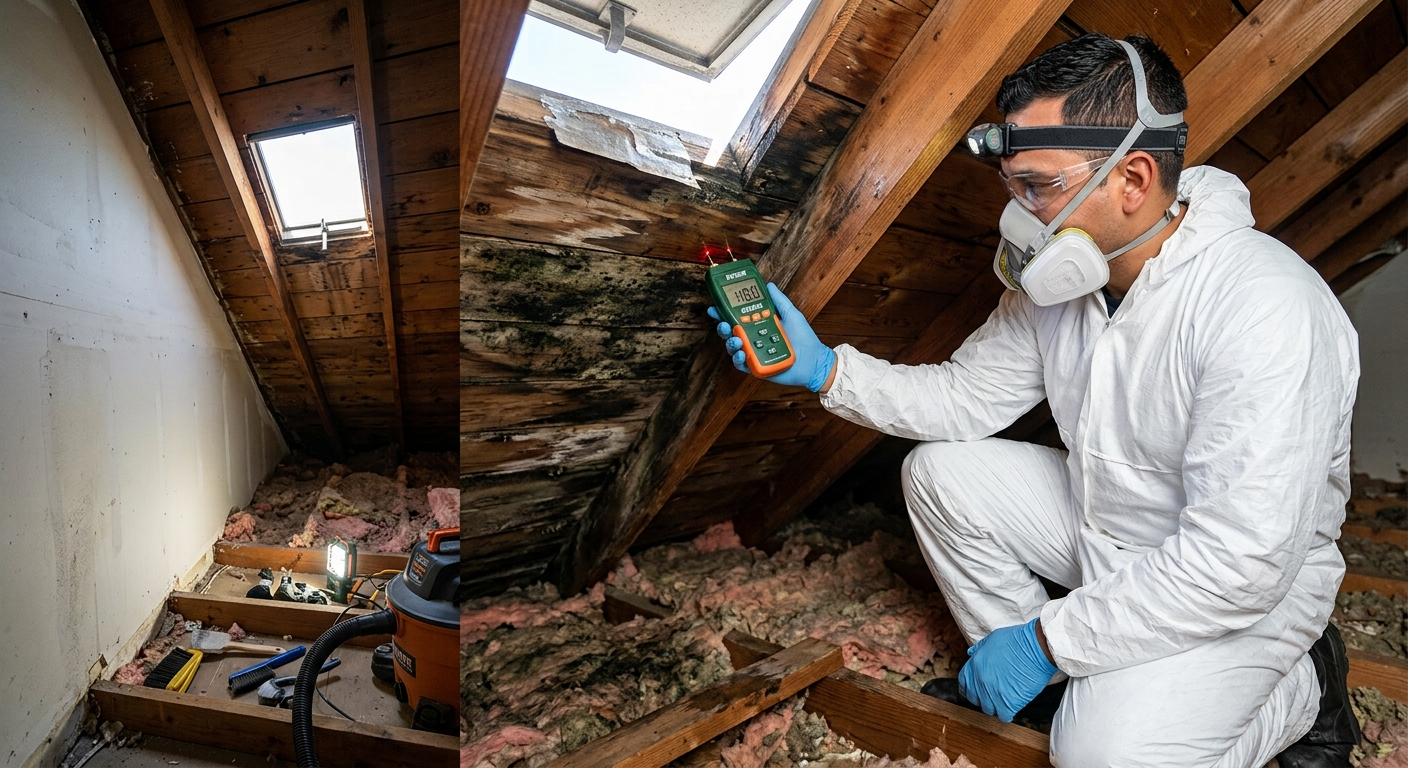
Mold Removal in Sherman Oaks: Why Source Control Matters More Than Cleaning
Mold is one of the most common problems homeowners and property managers face after water damage, plumbing leaks, roof issues, or excessive indoor humidity. While many people focus on cleaning visible mold, that approach often addresses only the surface of the problem. The real issue lies beneath what can be seen. Without identifying and eliminating the source of moisture, mold is likely to return no matter how thoroughly the affected area is cleaned.
At Fun Guy Inspections, we believe successful mold removal begins with understanding why mold developed in the first place. Surface cleaning has its place, but lasting results come from source control. When we inspect properties in Sherman Oaks, we focus on uncovering hidden moisture conditions that allow mold to grow so that property owners can make informed decisions about remediation and long term prevention.
Understanding How Mold Develops
Mold spores naturally exist in both indoor and outdoor environments. Under normal circumstances, they remain harmless because they lack the moisture needed to grow. Problems begin when water enters a building through leaks, flooding, condensation, or high humidity. Once a damp environment exists, mold can begin growing within 24 to 48 hours.
Many building materials provide an excellent food source for mold. Drywall, wood framing, insulation, ceiling tiles, carpeting, and even dust accumulation can support mold colonies when moisture is present. Cleaning visible mold without removing the moisture source is similar to treating a symptom instead of the underlying cause.
Why Cleaning Alone Is Not Enough
Homeowners often purchase household cleaners or mold sprays expecting them to solve the issue permanently. While these products may remove surface discoloration, they rarely eliminate mold growing beneath finishes or inside building materials.
Visible mold is often only a small portion of a much larger problem. Moisture can travel behind walls, under flooring, inside insulation, and through ceiling cavities. Mold growing in these hidden spaces continues spreading even after visible areas appear clean.
This is why recurring mold problems are so common. The mold may disappear temporarily, but if moisture remains, new growth can quickly develop.
The Importance of Source Control
Source control means identifying and eliminating the conditions that allow mold to survive. Instead of focusing only on removing visible contamination, we determine why moisture exists and where it is coming from.
Common moisture sources in Sherman Oaks properties include leaking roofs, damaged plumbing, poor drainage around foundations, malfunctioning HVAC systems, bathroom ventilation problems, appliance leaks, and elevated indoor humidity.
Every successful mold remediation project begins by addressing these underlying issues. Once moisture is controlled, mold removal becomes much more effective and the chances of future growth are significantly reduced.
Hidden Moisture Can Be More Dangerous Than Visible Mold
Many property owners assume that if they cannot see mold, the problem must be gone. Unfortunately, hidden moisture often supports mold growth for months before visible signs appear.
Water can move through wall cavities, ceiling assemblies, crawl spaces, and subfloors without creating obvious symptoms immediately. By the time staining or musty odors become noticeable, mold may already be widespread.
Professional inspections help identify these concealed moisture issues before they cause more extensive structural damage or require larger remediation projects.
Why Professional Inspections Matter
Every mold problem is unique. Some situations involve a small isolated leak, while others involve widespread moisture intrusion affecting multiple building components.
Professional inspections provide valuable information about the scope of contamination and help determine whether mold growth is localized or more extensive.
During our inspections, we evaluate moisture conditions, identify likely water intrusion pathways, inspect building materials, assess indoor environmental conditions, and recommend the next steps based on our findings.
Rather than making assumptions based on visible mold alone, we collect information that supports informed remediation planning.
Common Causes of Mold in Sherman Oaks Homes
Although Southern California enjoys a relatively dry climate, mold problems remain surprisingly common because buildings experience many different sources of moisture.
Older plumbing systems may develop slow leaks inside walls that remain unnoticed for extended periods. Roof damage after seasonal storms can introduce moisture into attics and ceiling assemblies. Air conditioning systems may produce condensation that accumulates over time if drainage becomes restricted. Bathrooms with poor ventilation frequently experience elevated humidity that supports mold growth on walls and ceilings.
Even small water events that seem insignificant can create conditions suitable for mold development if drying is delayed.
The Connection Between Water Damage and Mold
Water damage and mold are closely connected. Whenever a building experiences flooding, burst pipes, appliance leaks, or roof failures, immediate drying becomes essential.
If moisture remains trapped inside construction materials, mold growth often follows shortly afterward.
Prompt inspections after water damage help determine whether materials have dried properly or whether hidden moisture remains. Early detection allows property owners to address problems before mold spreads throughout larger portions of the building.
Why Accurate Moisture Detection Is Essential
Moisture is not always visible to the naked eye. Professional inspection equipment allows us to evaluate conditions that would otherwise remain hidden.
Moisture meters help identify elevated moisture levels inside walls, flooring, ceilings, and other structural materials. Thermal imaging can reveal temperature differences that may indicate moisture intrusion. Visual inspections combined with moisture mapping provide a clearer understanding of where water has traveled.
This information helps ensure remediation efforts target the actual source rather than simply treating visible symptoms.
Preventing Mold from Returning
Long term mold prevention requires more than removing contaminated materials. Buildings must also remain dry after remediation is complete.
Regular maintenance plays an important role in prevention. Roofs should be inspected periodically for damage. Plumbing leaks should be repaired promptly. HVAC systems should receive routine maintenance to prevent condensation problems. Bathrooms and kitchens should have adequate ventilation, and indoor humidity should remain at appropriate levels throughout the year.
Property owners who proactively manage moisture significantly reduce the likelihood of future mold problems.
Why Early Action Saves Money
Small moisture issues often become expensive repairs when ignored.
A minor plumbing leak hidden behind drywall may initially require only a simple repair. If left untreated, however, moisture can spread through insulation, framing, flooring, and adjacent rooms. Mold remediation, material replacement, and reconstruction costs increase substantially as the problem grows.
Early inspections allow property owners to identify developing issues before they become major restoration projects.
Protecting Property Value
Whether planning to remain in a home or preparing it for sale, addressing moisture and mold problems protects long term property value.
Buyers often request inspections when purchasing residential properties, and evidence of unresolved moisture problems may complicate transactions. Proper documentation showing that moisture sources have been identified and addressed provides greater confidence during real estate transactions.
Investing in professional inspections today may help prevent costly surprises later.
Choosing the Right Approach
Every successful mold remediation project follows a logical sequence. First, identify the moisture source. Second, eliminate the source. Third, remove contaminated materials where necessary. Finally, verify that moisture conditions have returned to acceptable levels.
Skipping the first step often leads to recurring mold growth and repeated remediation expenses.
At Fun Guy Inspections, we focus on helping property owners understand the complete picture rather than simply identifying visible mold. Our inspections provide detailed information that supports effective remediation planning and long term moisture management.
Mold removal is far more effective when it begins with source control instead of surface cleaning. While cleaning may improve appearance temporarily, it rarely solves the underlying moisture problem responsible for mold growth. Eliminating the water source is the key to preventing mold from returning and protecting both the building and its occupants.
If you suspect mold in your Sherman Oaks property, an inspection can help identify hidden moisture, determine the extent of the issue, and provide the information needed for effective remediation. At Fun Guy Inspections, we are committed to helping property owners uncover the true cause of mold problems so they can move forward with confidence and lasting results.