
Why Older Commercial Buildings Need Routine Asbestos Testing
Older commercial buildings often carry a unique charm and structural durability that newer properties may not match. However, many of these buildings were constructed during a time when asbestos was widely used in construction materials because of its strength, heat resistance, and insulating properties. While asbestos was once considered an excellent building material, it is now recognized as a serious health hazard when its fibers become airborne.
Routine asbestos testing has become an essential part of responsible commercial property ownership. Whether you own an office building, retail center, warehouse, school, healthcare facility, or industrial property, understanding the condition of asbestos-containing materials can help protect occupants, reduce liability, and support long term property management. At Fun Guy Inspections, we help commercial property owners identify potential asbestos risks before they become costly or dangerous problems.
Understanding Why Asbestos Was Used
For decades, asbestos was incorporated into thousands of commercial building products. It could be found in insulation, ceiling tiles, floor tiles, roofing materials, pipe coverings, wall textures, cement products, adhesives, and fireproofing materials. Buildings constructed before the late twentieth century have a much greater likelihood of containing these materials.
The presence of asbestos alone does not necessarily create immediate danger. Materials that remain intact and undisturbed often pose minimal risk. The concern arises when renovation projects, aging materials, moisture damage, vibration, or routine maintenance cause asbestos fibers to become airborne.
These microscopic fibers cannot be seen with the naked eye and can remain suspended in the air for extended periods. Once inhaled, they may become trapped in the lungs, creating serious health concerns over time.
Aging Buildings Increase the Risk
Commercial buildings naturally experience wear and tear throughout their lifespan. Roofing systems deteriorate, plumbing requires repairs, electrical upgrades become necessary, and HVAC systems eventually need replacement. Every one of these maintenance activities has the potential to disturb hidden asbestos materials.
As construction materials age, they may begin to crack, crumble, or separate from surrounding surfaces. This gradual deterioration increases the possibility that asbestos fibers will be released without anyone realizing it.
Routine asbestos testing allows property owners to monitor these materials before deterioration becomes a larger concern.
Protecting Building Occupants
Commercial properties often accommodate hundreds or even thousands of people each day. Employees, customers, tenants, contractors, visitors, and maintenance personnel all depend on building owners to provide a safe environment.
If asbestos containing materials become damaged without proper identification, everyone inside the building could be exposed to airborne fibers. Since asbestos related illnesses often develop many years after exposure, individuals may not immediately recognize that they have been affected.
Routine testing provides valuable information about the condition of building materials so appropriate management plans can be developed before exposure occurs.
Supporting Safe Renovation Projects
Commercial buildings regularly undergo renovations to remain competitive, improve efficiency, or accommodate changing business needs. Even relatively small projects such as replacing flooring, installing new lighting, upgrading plumbing, or modifying office layouts may disturb asbestos containing materials.
Testing before renovation helps contractors understand exactly where asbestos may be present. This information allows work to proceed safely while reducing the chance of accidental contamination.
Unexpected asbestos discoveries during construction frequently lead to project delays, increased costs, and regulatory complications. Identifying asbestos before work begins helps projects remain organized and efficient.
Reducing Financial Risk
Many commercial property owners focus on visible maintenance issues while overlooking hidden environmental hazards. Unfortunately, failing to identify asbestos can result in substantial financial consequences.
Emergency remediation after accidental asbestos exposure often costs significantly more than planned asbestos management. Additional expenses may include project delays, temporary building closures, professional cleanup, legal costs, regulatory fines, and increased insurance claims.
Routine testing represents a proactive investment that can help property owners avoid far greater expenses in the future.
Supporting Regulatory Compliance
Commercial property owners have legal responsibilities regarding workplace safety and environmental hazards. Regulations often require employers and building owners to manage known asbestos containing materials appropriately and prevent unnecessary exposure.
Routine testing provides documentation that demonstrates responsible property management and helps establish a clear record of environmental due diligence.
Having updated asbestos information also makes it easier to communicate with contractors, maintenance teams, tenants, and regulatory agencies whenever building work is planned.
Improving Property Transactions
Buying or selling an older commercial building involves significant due diligence. Environmental concerns frequently become part of negotiations, especially when properties were constructed during periods when asbestos use was common.
A current asbestos assessment gives buyers greater confidence by providing documented information about the property’s condition. Sellers who proactively complete testing often reduce uncertainty during negotiations and may avoid unexpected issues that delay closing.
Commercial lenders and investors also appreciate properties with well documented environmental records because they represent lower long term risk.
Preventing Unexpected Business Interruptions
Business operations depend on stable facilities that remain safe and functional. Discovering damaged asbestos unexpectedly can force portions of a building to close while testing, containment, and remediation take place.
These interruptions may affect employee productivity, customer access, tenant satisfaction, and overall revenue.
Routine asbestos testing helps identify developing concerns early, allowing building owners to schedule corrective actions during planned maintenance instead of responding to emergency situations.
Water Damage Can Increase Concerns
Leaks, flooding, and ongoing moisture intrusion can accelerate the deterioration of many building materials that contain asbestos.
Water damaged ceiling tiles, insulation, drywall compounds, flooring adhesives, and pipe insulation may become increasingly fragile after prolonged moisture exposure. If these materials begin to break apart, asbestos fibers can be released more easily during cleanup or repairs.
After significant water damage, asbestos testing becomes an important step before restoration work begins.
HVAC Systems and Maintenance Activities
Heating and cooling systems require ongoing servicing throughout the life of a commercial building. Technicians often access ceiling spaces, mechanical rooms, ductwork, insulation, and utility areas where asbestos containing materials may exist.
Without prior testing, routine maintenance may unintentionally disturb hazardous materials.
Knowing where asbestos is located allows maintenance personnel to perform repairs safely while protecting themselves and building occupants.
Schools, Healthcare Facilities, and Public Buildings
Many educational institutions, medical facilities, government buildings, and public spaces were constructed when asbestos was commonly used.
These facilities often serve vulnerable populations and experience continuous occupancy throughout the day. Routine asbestos testing helps facility managers make informed maintenance decisions while maintaining safer environments for employees, visitors, patients, students, and staff.
Because these buildings undergo frequent repairs and upgrades, maintaining current asbestos records supports long term facility management.
Creating an Effective Asbestos Management Plan
Testing is only one part of responsible asbestos management. Once asbestos containing materials have been identified, property owners can develop practical strategies for ongoing monitoring.
Some materials may remain safely in place if they are in good condition and unlikely to be disturbed. Others may require encapsulation, repair, periodic inspection, or professional removal depending on their condition and future renovation plans.
An organized management plan reduces uncertainty and provides guidance whenever maintenance or construction work is scheduled.
The Value of Professional Testing
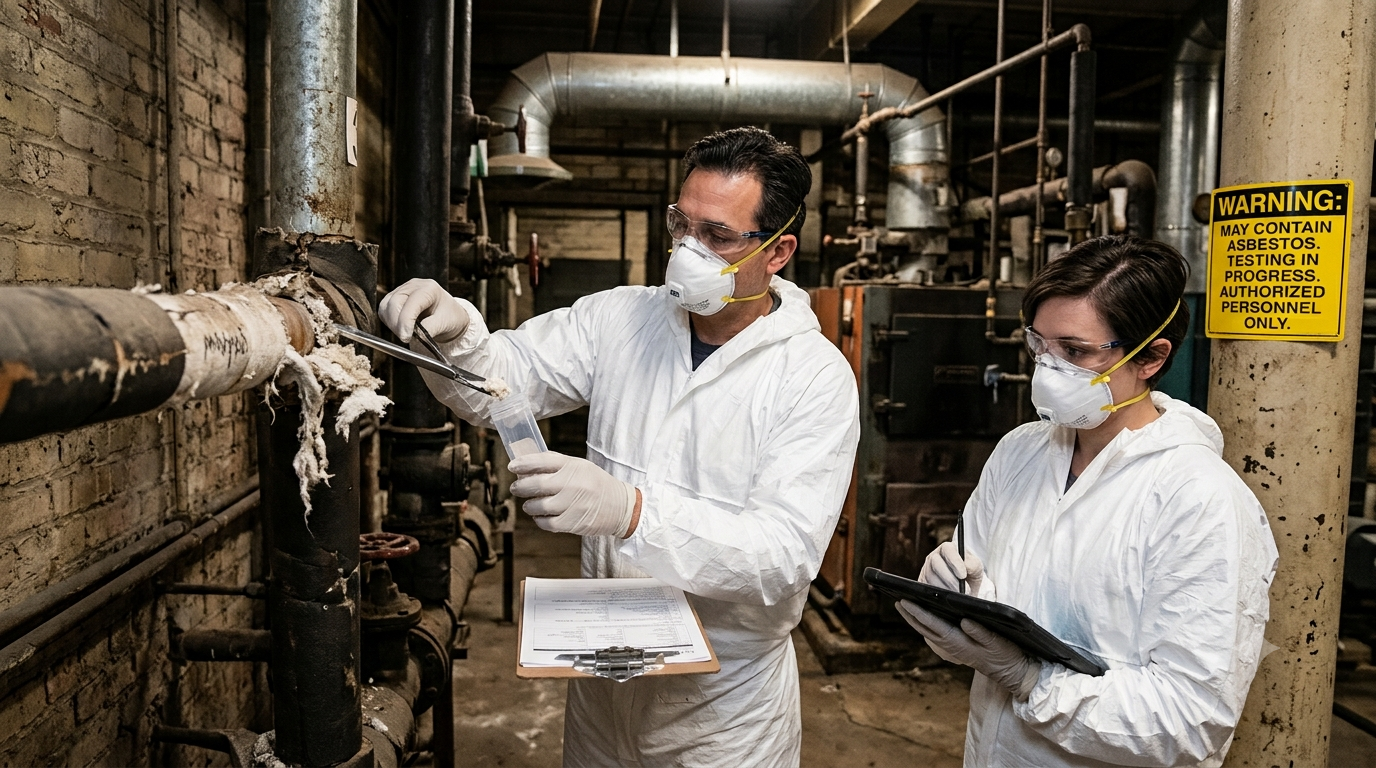
Accurately identifying asbestos requires specialized sampling techniques and laboratory analysis. Materials that appear identical may contain different components, making visual inspection alone unreliable.
Professional inspectors understand where asbestos was commonly used, how to collect representative samples safely, and how to interpret laboratory findings accurately. This expertise provides commercial property owners with dependable information that supports informed decision making.
Routine evaluations also establish a documented history of the property’s condition, making future inspections and maintenance planning more efficient.
Older commercial buildings offer tremendous value, but they also require careful attention to environmental hazards that may remain hidden behind walls, ceilings, flooring, and mechanical systems. Routine asbestos testing helps identify potential risks before maintenance, renovation, or natural deterioration creates hazardous conditions. It protects building occupants, supports regulatory compliance, reduces financial exposure, and allows property owners to make confident decisions about their facilities.
At Fun Guy Inspections, we understand the unique challenges associated with older commercial properties and provide thorough asbestos testing services that help building owners manage risk with confidence. Whether you oversee a single commercial building or an entire portfolio, routine asbestos testing is an important step toward maintaining a safer and more reliable property.
When you partner with Fun Guy Inspections, you gain experienced professionals who are committed to delivering accurate inspections and dependable guidance. Our goal is to help commercial property owners identify potential asbestos concerns early so they can protect their investments, support occupant safety, and plan future maintenance with greater confidence.