

The Complete Property Inspection Checklist for Mold, Water Damage, Lead, and Asbestos Concerns
Buying, selling, renovating, or maintaining a property involves much more than checking its appearance. Hidden environmental hazards can significantly impact the health of occupants, the structural integrity of a building, and the overall value of a property. Mold, water damage, lead based materials, and asbestos are among the most common concerns that property owners face, yet many of these issues remain unnoticed until they become serious problems. At Fun Guy Inspections, we believe that a thorough inspection provides the knowledge property owners need to make informed decisions before expensive repairs or health risks develop. Understanding what professionals examine during a comprehensive inspection can help homeowners recognize the importance of evaluating every part of a building rather than focusing only on visible defects.
Why a Comprehensive Property Inspection Matters
A complete property inspection goes beyond identifying cosmetic flaws. It evaluates conditions that may compromise safety, indoor air quality, and long term property performance. Moisture intrusion can quietly weaken structural components while creating the ideal environment for mold growth. Older construction materials may contain hazardous substances such as lead or asbestos that require specialized handling during renovations. Without a systematic inspection process, these hidden concerns can remain undetected for years, resulting in costly remediation and potential health complications. A professional assessment gives property owners confidence by identifying risks before they escalate into major problems.
Exterior Drainage and Water Management
The inspection process begins outside because many interior problems originate from exterior water intrusion. Inspectors carefully evaluate grading around the property to determine whether rainwater flows away from the foundation instead of pooling near the structure. Gutters, downspouts, roof drainage systems, and exterior drainage channels are examined for blockages, damage, or improper installation. Cracks in foundations, deteriorated siding, missing caulking, and damaged exterior finishes are also reviewed because these openings allow moisture to enter the building envelope. Proper exterior water management significantly reduces the likelihood of interior moisture problems and mold development.
Roof Condition and Moisture Entry Points
The roof serves as the first line of defense against weather, making its condition essential during any inspection. Professionals inspect roofing materials for missing shingles, cracked flashing, deteriorated sealants, damaged vents, and signs of aging that could allow water penetration. Chimneys, skylights, roof penetrations, and valleys receive special attention because these locations commonly develop leaks over time. Even small roof leaks can create significant hidden moisture inside ceilings and attic spaces, eventually leading to mold growth, insulation damage, and structural deterioration if left unresolved.
Attic Inspection for Hidden Moisture Issues
Attics often reveal early warning signs of moisture problems that remain invisible elsewhere in the home. Inspectors evaluate insulation, roof decking, ventilation systems, and framing components for water staining, condensation, mold growth, or wood deterioration. Poor attic ventilation can trap humid air, creating excessive moisture that affects both the roof structure and indoor air quality. Evidence of previous repairs, active leaks, or improper ventilation may indicate ongoing conditions that require corrective action before additional damage develops throughout the property.
Foundation, Basement, and Crawl Space Evaluation
Lower levels of a building frequently experience moisture intrusion because they remain in constant contact with surrounding soil. During the inspection, basements and crawl spaces are examined for standing water, excessive humidity, foundation cracks, efflorescence, deteriorating concrete, damaged vapor barriers, and signs of previous flooding. Structural framing is evaluated for moisture related deterioration while insulation is checked for evidence of water absorption or mold activity. Persistent dampness in these areas often contributes to indoor humidity problems that affect the entire property.
Interior Walls, Ceilings, and Flooring Assessment
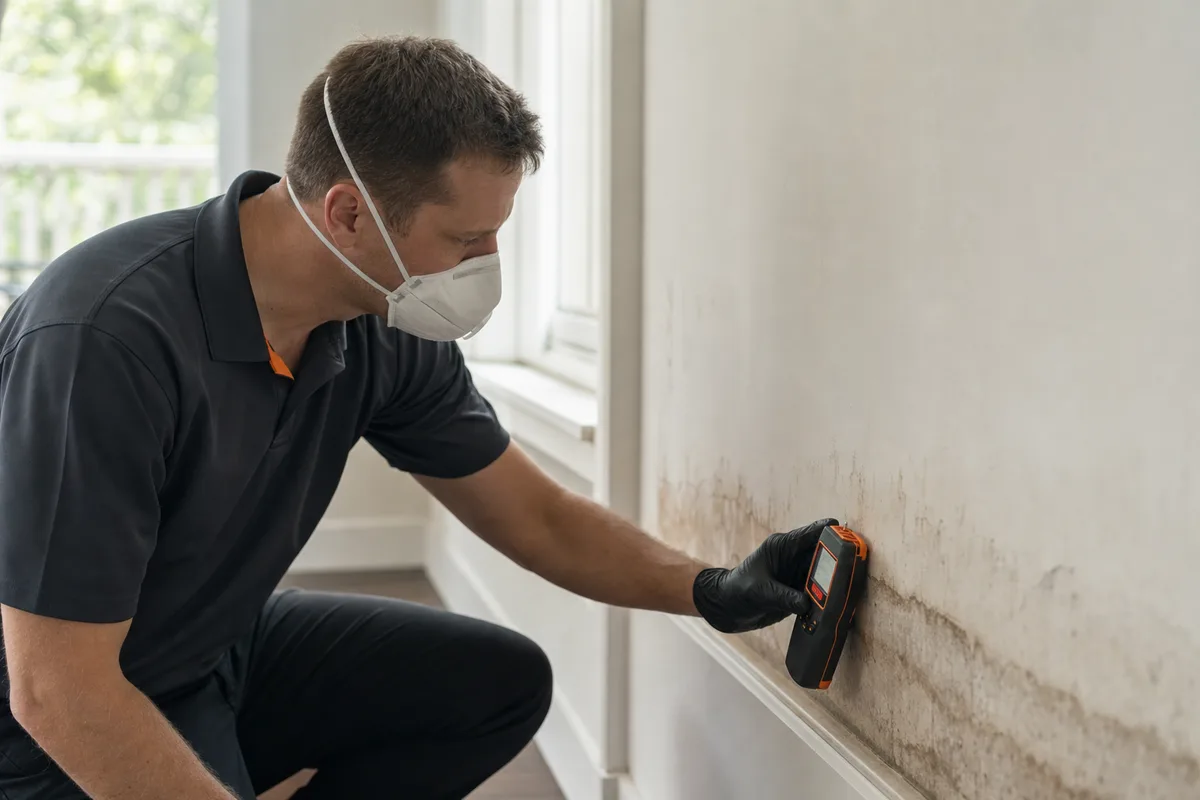
Interior finishes provide valuable clues about hidden water damage behind walls and beneath flooring materials. Inspectors carefully look for discoloration, bubbling paint, warped drywall, peeling wallpaper, sagging ceilings, soft flooring, and staining around windows and doors. These visual indicators often point toward plumbing leaks, roof leaks, or moisture entering through the building envelope. Even when damage appears minor, further evaluation may be necessary to determine whether moisture has affected framing materials or insulation hidden behind finished surfaces.
Plumbing Systems and Leak Detection
A property’s plumbing system represents one of the most common sources of water damage when leaks develop slowly over time. Pipes, fixtures, water supply lines, drain lines, shutoff valves, water heaters, and appliance connections are inspected for corrosion, active leaks, water staining, and improper installation. Bathrooms, kitchens, laundry rooms, and utility areas receive close examination because plumbing failures frequently originate in these locations. Identifying minor leaks early helps prevent extensive structural repairs while reducing the conditions necessary for mold growth.
HVAC Systems and Indoor Moisture Control
Heating, ventilation, and air conditioning systems play an important role in controlling indoor humidity and maintaining healthy air quality. Inspectors evaluate air handlers, condensate drain lines, ductwork, filters, ventilation systems, and cooling equipment for moisture accumulation or microbial growth. Poorly maintained HVAC systems may distribute mold spores throughout a building while clogged condensate drains can introduce unwanted moisture into surrounding construction materials. Proper ventilation also helps reduce condensation that contributes to hidden mold development.
Mold Inspection and Moisture Identification
Mold inspections involve much more than looking for visible fungal growth. Professionals search for moisture sources that allow mold colonies to develop and spread throughout a structure. Areas around plumbing fixtures, windows, HVAC systems, basements, attics, and previously repaired water damage receive careful examination because mold often grows behind walls or beneath flooring where it cannot be seen. Moisture measurements and visual observations help determine whether conditions currently support mold growth or if previous water events have created an elevated risk that requires further investigation.
Water Damage Indicators Throughout the Property
Water damage can present itself in subtle ways that property owners may overlook during routine maintenance. Inspectors evaluate wood framing for swelling, flooring for uneven surfaces, drywall for softness, trim materials for deterioration, and ceilings for staining patterns that suggest repeated moisture exposure. Electrical components located near water damaged areas are also considered because prolonged moisture can create safety concerns. Understanding the extent of water intrusion helps determine whether repairs involve simple cosmetic restoration or more significant structural remediation.
Lead Hazard Evaluation in Older Properties
Properties constructed before modern regulations may contain lead based paint or other lead containing materials that require careful assessment. Inspectors identify areas where older painted surfaces remain intact or show signs of deterioration such as peeling, chipping, or friction wear. Window frames, doors, trim, stair railings, and exterior painted surfaces are commonly evaluated because these locations often experience repeated contact. Recognizing potential lead hazards allows property owners to plan renovations safely while protecting children and other vulnerable occupants from unnecessary exposure.
Asbestos Containing Materials Assessment
Many older buildings include construction materials that may contain asbestos, particularly in insulation, flooring products, ceiling textures, roofing materials, and pipe coverings. During the inspection, professionals identify materials that appear consistent with asbestos containing products without unnecessarily disturbing them. Damaged or deteriorating materials receive particular attention because fibers become hazardous when released into the air. Understanding where these materials may exist helps property owners make informed decisions before remodeling or demolition activities begin.
Documentation and Professional Recommendations
An effective inspection concludes with detailed documentation that explains observed conditions, identifies areas requiring further evaluation, and outlines recommended next steps. Clear reporting allows property owners to prioritize repairs according to urgency while understanding the potential consequences of delaying corrective action. Professional recommendations often include moisture control improvements, additional environmental testing, structural repairs, or specialized remediation services depending on the inspection findings. Well documented reports also provide valuable information during property transactions, insurance claims, and future maintenance planning.
Protecting Your Investment Through Preventive Inspections
Preventive property inspections remain one of the most effective ways to protect both financial investments and occupant health. Early identification of mold, water damage, lead concerns, or potential asbestos containing materials allows problems to be addressed before they become significantly more expensive to resolve. Routine inspections also help maintain property value while supporting safer indoor environments for families, tenants, and employees. At Fun Guy Inspections, we are committed to delivering comprehensive evaluations that help clients understand the true condition of their properties through careful attention to every detail. When you invest in a professional inspection from Fun Guy Inspections, you gain valuable insight that supports confident property decisions and long term peace of mind.