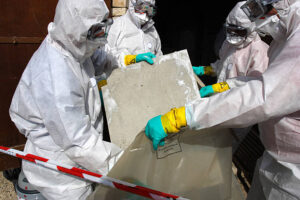
Discovering visible mold growth or enduring a persistent musty odor in your Los Angeles apartment is alarming. When toxic mold spores impair your indoor air quality and cause recurring health issues, your first instinct is often to pack up and move or stop paying rent until your landlord fixes the problem.
However, taking drastic steps—like withholding rent or breaking your lease agreement—without following specific procedures under California law can put you at serious risk for an eviction filing or costly legal judgments.
Here is an objective overview of how California tenant protections work regarding mold, when an apartment is legally considered uninhabitable, and the exact steps you need to take to protect your health and your legal rights.
Legal Disclaimer: Fun Guy Inspection & Consulting provides independent, certified environmental testing and indoor air quality investigations. We do not offer legal advice or legal representation. California landlord-tenant laws are complex, and rights depend on individual lease agreements and specific facts. Tenants considering breaking a lease or withholding rent should consult a licensed real estate attorney or a local tenant rights organization.
1. California Law & The Implied Warranty of Habitability
In California, every residential lease includes an Implied Warranty of Habitability. Under California Civil Code § 1941.1 and Health and Safety Code § 17920.3, landlords are legally required to maintain rental units in a condition fit for human occupancy.
For mold to fall under habitability protections, it must generally be severe enough to threaten the health or safety of occupants. Under California regulations:
Visible Mold & Dampness: Substantial mold growth or chronic dampness caused by building defects (such as active plumbing leaks, roof intrusions, or structural water damage) can make a unit legally uninhabitable.
Tenant Maintenance Responsibilities: Landlords are generally not responsible for mold resulting from tenant negligence, such as failing to clean visible surface condensation, blocking ventilation, or failing to report plumbing leaks promptly.
2. Can You Break Your Lease Due to Mold in Los Angeles?
Under California Civil Code § 1942, a tenant may have legal grounds to terminate a lease and vacate the property without future rent liability if the landlord fails to repair conditions that render the dwelling uninhabitable.
However, you cannot simply pack your bags overnight without creating an official record. To establish a legally defensible claim for lease termination:
Notice Must Be Given: You must inform your landlord or property management company of the mold issue in writing.
Reasonable Time to Repair: You must allow your landlord a reasonable amount of time to remediate the water intrusion and mold—typically 30 days under standard statutory guidelines, though urgent health hazards may require faster action.
Third-Party Documentation: Having a third-party report from a certified mold inspection firm proving high moisture levels or elevated spore counts is crucial evidence if your landlord disputes the lease break.
3. The Risks of Withholding Rent in Los Angeles
While withholding rent is a legal remedy under California law for serious habitability defects, it carries significant legal risks.
If you stop paying rent, your landlord can serve you with a 3-Day Notice to Pay or Quit and file an Unlawful Detainer (eviction) lawsuit against you. In court, you will have to prove that the mold was severe enough to make the unit uninhabitable and that you followed all notice requirements.
If you plan to withhold rent, legal professionals generally recommend:
Depositing the withheld rent funds into a separate, dedicated escrow bank account to prove in court that you have the financial ability to pay once repairs are made.
Consulting a legal advisor before withholding a single dollar.
4. Step-by-Step Protocol Before Taking Legal Remedies
If you suspect mold is making your rental unit unsafe, follow these essential steps to protect yourself:
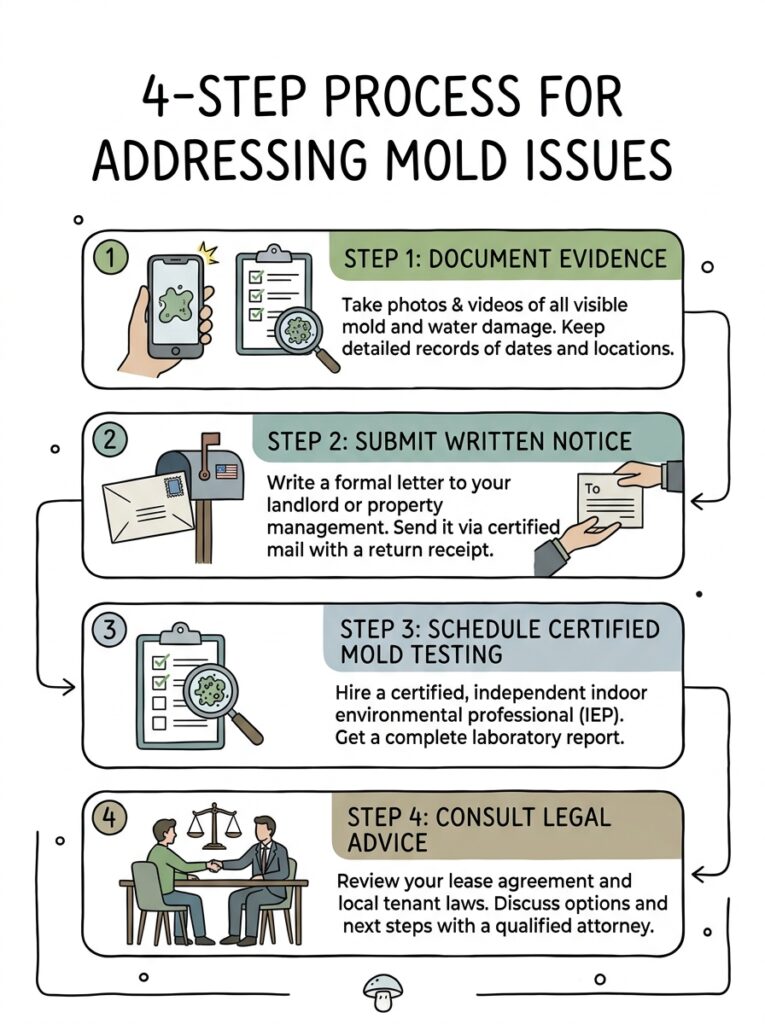
Step 1: Document the Physical Evidence
Photograph all visible discoloration, peeling paint, warped baseboards, and active water drips. Maintain a daily record of any health symptoms you experience.
Step 2: Send Written Notice to Your Landlord
Always send maintenance requests via email or certified mail to establish a dated paper trail. Avoid relying solely on phone calls or verbal conversations.
Step 3: Get an Independent Environmental Assessment
A landlord or property maintenance staff member may dismiss mold as simple “mildew” or “dirt.” Scheduling independent commercial and residential mold inspection services provides certified laboratory air testing and moisture mapping. Learn more about our specialized mold inspection in Los Angeles to see how non-invasive diagnostics work.
Step 4: Verify Air Quality and Moisture Sources
If you suspect hidden water leaks inside shared walls or ceilings, professional inspectors utilize non-invasive tools like thermal imaging cameras to track moisture plumes without tearing up drywall. Learn how we isolate environmental hazards through our dedicated indoor air quality testing services.
Step 5: File a Complaint or Seek Legal Counsel
If your landlord ignores written notices, contact the Los Angeles Housing Department (LAHD) or LA County Department of Public Health to request an official housing inspection. Additionally, explore specialized legal aid or post-remediation verification testing to verify if a landlord’s cleanup attempt was successful.
Key Legal Resources for Los Angeles Tenants
If you are facing an unaddressed mold problem in your rental unit, reach out to these official public resources and legal advocacy organizations for direct assistance:
Los Angeles Housing Department (LAHD) — Submit formal habitability complaints and request city code enforcement inspections for residential properties within the City of Los Angeles.
LA County Department of Public Health – Environmental Health — Provides public health guidelines, housing inspections, and health code enforcement across Los Angeles County.
Stay Housed LA — A partnership between Los Angeles County, the City of Los Angeles, and local legal aid organizations providing free legal resources, tenant education, and eviction defense representation.
Legal Aid Foundation of Los Angeles (LAFLA) — Offers direct legal services and guidance for low-income Los Angeles residents dealing with substandard housing conditions and landlord disputes.
California Department of Consumer Affairs – Tenant Guide — Read the official California Tenants Guide detailing repair rights, rent withholding rules, and civil code procedures.
Frequently Asked Questions (People Also Ask)
Can a landlord evict me for reporting mold in Los Angeles?
No. Under California Civil Code § 1942.5, landlords are strictly prohibited from retaliating against tenants for exercising their legal rights—such as requesting habitability repairs or reporting violations to housing health inspectors. Retaliatory actions include raising rent, decreasing services, or serving an eviction notice within 180 days of a tenant complaint.
Is mold exposure considered a emergency in California rental law?
Severe mold caused by active plumbing leaks, sewage backups, or widespread flooding that affects breathing or safety can be treated as an urgent health hazard. In such cases, the standard 30-day repair window is significantly reduced, and immediate corrective action is expected.
What proof do I need to break my lease legally due to mold?
To protect yourself against financial liability, you typically need written notices sent to your landlord, clear photographic evidence, an official city code enforcement inspection report, medical records (if health was impacted), and an independent certified mold testing report confirming elevated spore levels or moisture saturation.
Related Articles & Field Resources
Los Angeles Mold Testing and Environmental Inspection Services — Explore complete inspection solutions for residential properties, apartment complexes, and commercial spaces.
Indoor Air Quality Testing & Thermal Imaging Diagnostics — Discover how thermal cameras and air sampling identify hidden moisture behind rental walls.
Post-Remediation Clearance Testing Protocol — Learn how independent clearance testing verifies if your landlord’s mold cleanup was executed safely and completely.
Understanding Mold Inspection Reports for Tenants & Property Owners — A guide to reading laboratory air sample analysis and environmental assessment documentation.