
Introduction
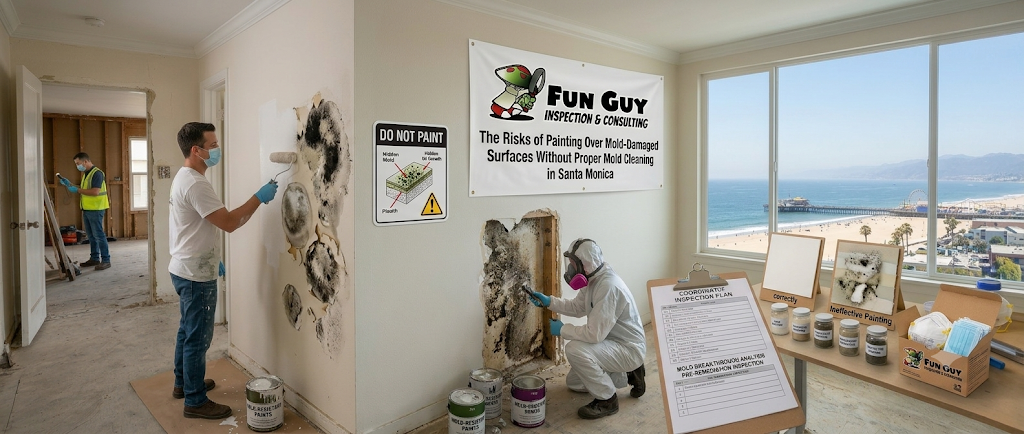
A fresh coat of paint can make a room look cleaner, brighter, and more inviting, but it does not necessarily mean the underlying surfaces are healthy or safe. In coastal communities like Santa Monica, moisture-related problems can develop inside homes and commercial properties due to plumbing leaks, roof damage, poor ventilation, condensation, and elevated indoor humidity. When mold appears on walls, ceilings, drywall, or other building materials, painting over the affected areas may seem like a quick and affordable solution. However, covering visible mold without addressing the underlying contamination can allow the problem to continue developing beneath the new paint. Over time, this can contribute to recurring discoloration, deteriorating building materials, persistent musty odors, and indoor air quality concerns. At Fun Guy Inspections, we believe property owners should understand why proper mold cleaning and moisture assessment are essential before attempting cosmetic repairs.
Why Painting Over Mold Is Not a Reliable Solution
Painting over mold-damaged surfaces does not eliminate the underlying mold contamination. Standard interior paints are designed to improve appearance and protect surfaces, but they are not substitutes for professional mold remediation. Even when a new coat of paint completely covers visible discoloration, mold may remain on the surface or within porous materials such as drywall, insulation, wood, and ceiling panels. If moisture remains present, these materials can continue providing favorable conditions for mold growth. Eventually, the paint may begin to bubble, peel, crack, or develop discoloration as the underlying damage progresses. Property owners in Santa Monica should understand that concealing a mold problem does not resolve it, and proper cleaning, moisture correction, and material assessment should always come before repainting.
Hidden Mold Growth Can Continue Beneath Fresh Paint
One of the biggest concerns with painting over mold-damaged surfaces is that contamination may continue developing in areas that are no longer visible. Mold can grow on many building materials, and some materials can become contaminated beyond what ordinary surface cleaning can address. Applying paint over an affected area may temporarily conceal dark spots, but it does not necessarily prevent mold from spreading into nearby materials. Moisture trapped behind walls, underneath wallpaper, or around window frames can create additional opportunities for hidden growth. This is particularly concerning when a property has experienced previous plumbing leaks, roof problems, or recurring condensation. Without investigating the source of moisture and evaluating the affected building materials, homeowners may mistakenly believe the issue has been resolved when the underlying conditions remain unchanged.
Coastal Moisture Conditions Can Increase Mold Concerns in Santa Monica
Santa Monica’s coastal environment creates specific moisture-related considerations for residential and commercial properties. Marine air, seasonal humidity changes, temperature differences, and limited ventilation can contribute to condensation in certain indoor spaces. Properties located near the coastline may also experience moisture accumulation around windows, exterior walls, bathrooms, and poorly ventilated rooms. When moisture repeatedly collects on building materials, it can create conditions that support mold development. Painting over these areas without addressing the moisture source can lead to recurring problems, even if the original discoloration temporarily disappears. We encourage property owners to pay attention to persistent dampness, condensation, musty odors, and recurring wall stains because these warning signs may indicate a moisture issue that requires further investigation.
Paint Can Bubble, Crack, and Peel When Mold Problems Remain Unresolved
Another noticeable consequence of painting over mold-damaged surfaces is premature paint failure. Paint generally requires a properly prepared, dry, and stable surface to adhere effectively. When walls or ceilings contain moisture, the bond between the paint and the underlying material may weaken. This can cause bubbling, blistering, cracking, peeling, and uneven patches that gradually become more noticeable. In some cases, property owners may repeatedly repaint the same areas without realizing that the underlying moisture problem has never been corrected. This creates unnecessary maintenance expenses while allowing the original damage to continue. Properly identifying and addressing moisture intrusion before repainting helps create a more reliable foundation for interior repairs and reduces the likelihood of repeated cosmetic issues.
Mold Contamination Can Affect Indoor Air Quality
Mold growth can become an indoor environmental concern, particularly when contaminated materials are disturbed or when moisture-related problems remain untreated. Mold can release spores and other airborne particles into indoor environments, depending on the species, growth conditions, and surrounding materials. Painting over affected surfaces does not reliably prevent these particles from becoming airborne or eliminate existing contamination. People spending time in affected spaces may experience different reactions depending on their individual sensitivities and health circumstances. Respiratory irritation, coughing, sneezing, and allergy-like symptoms are among the concerns commonly associated with indoor mold exposure, although symptoms alone cannot establish the presence or extent of mold contamination. A proper assessment can help property owners understand whether visible mold is limited to a small surface area or whether further investigation is necessary.
Painting Can Make Future Mold Inspections More Complicated
Covering mold-damaged surfaces before an appropriate assessment can make it more difficult to identify the original extent of a moisture problem. Fresh paint may conceal discoloration, staining, and other visible indicators that would otherwise help an inspector recognize areas requiring additional attention. Although painting does not necessarily make mold impossible to detect, it can complicate the evaluation of previously affected surfaces. This is especially important when homeowners are preparing to sell a property, complete renovations, or address complaints about indoor odors. An inspection performed before cosmetic repairs can provide a clearer understanding of the property’s condition and help identify areas that may require further investigation. At Fun Guy Inspections, we encourage property owners to consider professional mold inspection before covering suspicious areas with paint or other finishing materials.
Porous Building Materials May Require More Than Surface Cleaning
Not every mold-affected surface can be restored through ordinary cleaning. Nonporous materials such as certain metal, glass, and hard plastic surfaces may often be cleaned effectively when appropriate procedures are followed. However, porous materials such as drywall, ceiling tiles, insulation, and some types of wood can absorb moisture and support mold growth within their structure. In these situations, wiping the visible surface or applying a mold-resistant coating may not adequately address the contamination. Depending on the extent of the damage, affected materials may need specialized cleaning or removal and replacement. Property owners should avoid assuming that every mold-damaged surface can be saved with household cleaners and fresh paint. An appropriate evaluation helps determine which materials can be cleaned, which require additional treatment, and which may need to be replaced.
Painting Over Mold Can Lead to Repeated Repair Expenses
Choosing paint as a shortcut for an unresolved mold problem can become more expensive over time. Initially, repainting may appear to be an affordable way to improve the appearance of a damaged room. However, if the original moisture source remains active, mold-related discoloration and paint damage may eventually return. Homeowners may then spend additional money on repainting, patching drywall, replacing damaged materials, and investigating recurring leaks. In more extensive situations, prolonged moisture exposure can also affect surrounding structural components and interior finishes. Taking the time to identify the source of moisture and properly address mold contamination can help reduce unnecessary repair cycles. A well-planned approach focuses on correcting the underlying problem rather than repeatedly covering the visible symptoms.
The Importance of Identifying the Original Moisture Source
Effective mold management begins with understanding why the affected area became damp in the first place. Common sources include leaking plumbing connections, damaged roofing, poorly sealed windows, inadequate bathroom ventilation, condensation around HVAC components, and water intrusion through exterior walls. Sometimes the source is obvious, while other situations involve moisture accumulating behind cabinets, underneath flooring, or inside wall cavities. Simply removing visible mold without correcting the moisture problem can allow new growth to develop in the same location. Property owners should therefore consider a comprehensive moisture assessment when mold is discovered. Addressing leaks, improving ventilation, correcting drainage problems, and controlling indoor humidity are important steps toward reducing conditions that support recurring mold growth.
Why Professional Mold Inspection Matters Before Repainting
A professional mold inspection can help determine whether visible staining is associated with mold growth, identify potential moisture sources, and evaluate areas that may require additional investigation. Inspectors may assess affected rooms, examine visible building materials, use appropriate moisture measurement equipment, and recommend further evaluation when concealed contamination is suspected. Depending on the property and the inspection objectives, additional testing may also be considered. However, laboratory testing is not always necessary to establish that visible mold requires attention. The appropriate inspection approach depends on the conditions observed and the questions that need to be answered. Before investing in new paint, flooring, drywall, or other renovation work, Santa Monica property owners can benefit from understanding the actual condition of the affected surfaces and the potential extent of moisture damage.
Proper Mold Cleaning and Remediation Should Come Before Painting
The correct approach to mold-damaged surfaces involves more than applying a cleaning solution and covering the area with paint. First, the moisture source should be identified and corrected to prevent continued dampness. Next, the affected area should be evaluated to determine the extent of contamination and whether surrounding materials have also been impacted. Appropriate containment and cleaning procedures may be necessary to limit the spread of mold particles during remediation. Materials that cannot be adequately cleaned may need to be removed and replaced using suitable procedures. Once the affected area has been properly addressed and thoroughly dried, repairs and repainting can be considered. Using suitable building materials and moisture-resistant coatings where appropriate can also help reduce future moisture-related concerns, although no paint product should be treated as a replacement for proper mold remediation.
Warning Signs Santa Monica Property Owners Should Never Ignore
Mold problems are not always immediately obvious, especially when growth develops behind furniture, inside cabinets, beneath flooring, or within wall cavities. Nevertheless, certain warning signs can indicate that a property needs further evaluation. Persistent musty odors, recurring dark spots, unexplained wall discoloration, bubbling paint, peeling wallpaper, and repeated condensation around windows should not be dismissed as ordinary cosmetic issues. Previous water leaks and flooding incidents also deserve attention, even when the visible damage appears to have dried. Property owners should pay particular attention to areas that repeatedly develop stains after cleaning or repainting. Recognizing these warning signs early can make it easier to investigate moisture problems before they contribute to more extensive building material damage.
Protect Your Santa Monica Property With a Proper Mold Inspection
Whether you own a coastal home, manage a rental property, or operate a commercial building in Santa Monica, addressing mold concerns before beginning cosmetic renovations is an important part of responsible property maintenance. Painting over mold-damaged surfaces may temporarily improve appearances, but it does not provide a dependable solution to contamination or moisture problems. A professional inspection can help you understand the condition of affected areas, identify possible moisture sources, and determine whether additional evaluation or remediation is necessary. At Fun Guy Inspections, we understand the importance of looking beyond visible stains to help property owners make informed decisions about their indoor environments. Our goal is to help you identify potential mold concerns before investing in repairs that may only hide the underlying problem.
Do not let a fresh coat of paint conceal a potentially bigger problem. If you have noticed musty odors, recurring wall stains, peeling paint, or suspected mold growth in your Santa Monica property, contact our team today to discuss scheduling a professional mold inspection. Let us help you understand what is happening beneath the surface so you can take the appropriate steps toward a cleaner, healthier, and better-maintained property. Reach out to Fun Guy Inspections today and take the first step toward addressing your mold concerns with confidence.