
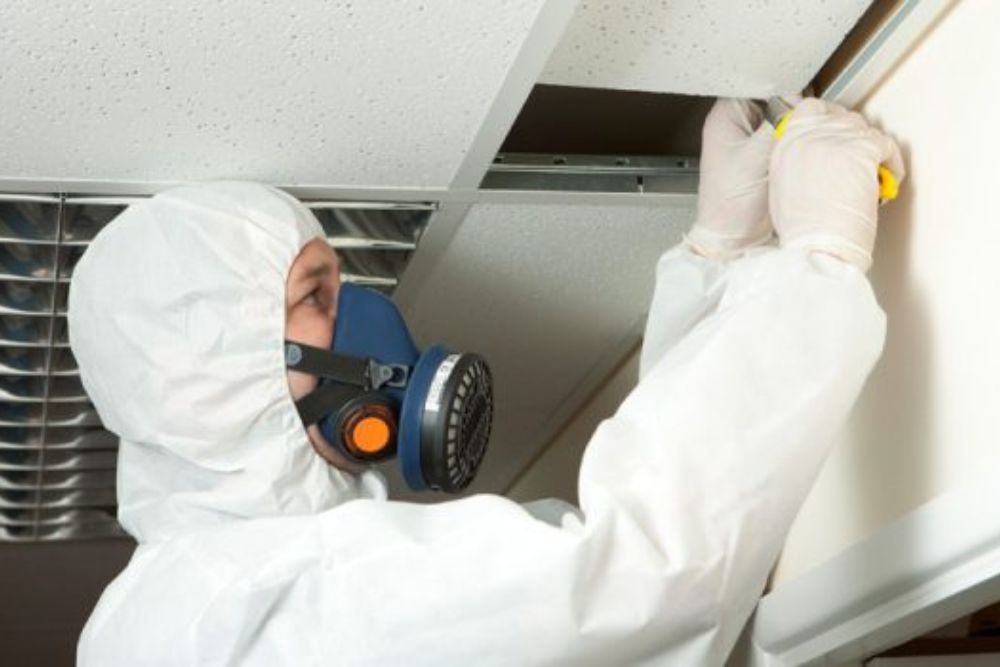
How Asbestos Inspectors Determine Which Building Materials Need Laboratory Analysis
Understanding the Purpose of Asbestos Inspection
Asbestos inspection is not simply a matter of looking at an older building and identifying materials that appear suspicious. Many construction products can look identical whether they contain asbestos or not, which makes visual identification alone unreliable. The purpose of an inspection is to determine which materials could contain asbestos, evaluate their condition, identify areas where materials are homogeneous, and decide which samples require laboratory analysis. The U.S. Environmental Protection Agency states that the only way to be certain whether a suspect material contains asbestos is through testing by a qualified laboratory. During an inspection, we therefore combine information about the building, construction materials, installation history, physical characteristics, and planned disturbance before deciding what should be sampled. This systematic approach helps produce reliable results while avoiding unnecessary disturbance of materials that may pose an exposure risk.
At Fun Guy Inspections, we approach asbestos inspections as an evidence-based investigation rather than a simple visual walkthrough. We examine the age and history of the structure, identify materials that may have been manufactured with asbestos, and determine where those materials are located. We also consider whether materials appear to be part of the same homogeneous area or whether differences in installation, appearance, texture, or construction history warrant separate consideration. This distinction matters because a single laboratory result should not automatically be applied to every visually similar material throughout an entire building. Sampling decisions must represent the materials that could actually be disturbed during renovation, demolition, repair, maintenance, or other activities. Our objective is to make sure the laboratory receives samples that accurately represent the materials relevant to the project.
Why Visual Identification Is Not Enough
One of the most important principles of asbestos inspection is that asbestos cannot reliably be identified simply by looking at a material. Older floor tiles, ceiling materials, insulation, plaster, joint compounds, roofing products, siding, mastics, and other construction components can resemble modern asbestos-free products. Even experienced inspectors may not be able to determine asbestos content from appearance alone. EPA specifically recommends that suspect materials be sampled by properly trained and accredited asbestos professionals when they are damaged or when planned renovation work could disturb them. This means an inspector’s visual assessment is primarily used to determine which materials warrant further evaluation rather than to provide definitive confirmation of asbestos content. Laboratory analysis provides the scientific evidence needed to establish whether asbestos is present in the collected bulk material.
Visual characteristics can still provide valuable information during the inspection process. Inspectors may examine texture, color, layering, construction methods, material type, apparent age, and location within the building. They may also review building records, renovation documents, product information, and historical construction practices when such information is available. However, these observations generally support the sampling decision rather than replace laboratory testing when confirmation is necessary. A material that looks harmless can contain asbestos, while a material that appears similar to a known asbestos-containing product may not contain asbestos at all. For this reason, responsible inspection practices avoid treating visual similarity as laboratory evidence.
Evaluating the Age and History of the Building
The age of a building is one of the first factors inspectors consider when determining whether asbestos sampling may be appropriate. Certain building periods involved widespread use of asbestos in construction products, particularly in insulation, surfacing materials, flooring systems, and various specialty products. Older buildings may also have undergone multiple renovations, creating layers of materials installed at different times. As a result, the original construction date alone may not tell the entire story. An inspector needs to determine whether additions, remodels, repairs, or replacements introduced newer materials into areas that otherwise appear original.
Construction history can also help explain why two materials that look almost identical may require separate consideration. A wall surface installed during the original construction may have a different composition from a similar-looking surface added during a later renovation. Likewise, flooring installed in one room may have been manufactured or installed at a different time from flooring in an adjoining room. EPA guidance emphasizes the importance of evaluating materials by homogeneous areas, particularly when determining whether representative sampling is sufficient. Understanding the building’s history therefore helps inspectors avoid making assumptions that could result in an incomplete assessment.
Identifying Suspect Building Materials
Once the building history has been considered, inspectors examine the actual materials throughout the areas relevant to the inspection. Potentially suspect materials can include flooring products, ceiling materials, pipe insulation, sprayed or troweled surfacing materials, roofing components, wall systems, mastics, and other construction products. The exact materials considered will depend on the building’s age, construction type, previous renovations, and the scope of planned work. Inspectors also consider whether a material is friable or non-friable because its physical characteristics influence how it may behave when disturbed. EPA describes non-friable suspected asbestos-containing building materials as materials that cannot be crumbled, pulverized, or reduced to powder by hand pressure when dry.
The presence of a suspect material does not automatically mean that every portion of the building must be sampled. Instead, inspectors evaluate whether the material represents a distinct homogeneous area and whether laboratory analysis is necessary to establish its asbestos status. Homogeneous areas generally consist of materials that appear sufficiently uniform in composition and application that representative sampling can provide meaningful information. However, materials that look similar but were installed at different times may need to be treated as separate areas. This is why an effective asbestos inspection requires more than walking through the property and collecting random pieces. The sampling strategy must be based on the characteristics and distribution of the materials throughout the building.

Understanding Homogeneous Areas
The concept of a homogeneous area is central to determining which materials require laboratory analysis. A homogeneous area is generally a section of material that appears uniform in characteristics and is believed to have been installed using the same material or formulation. For example, a particular type of floor tile installed throughout several rooms during the same renovation may potentially be evaluated as one homogeneous area if the inspector determines that the materials are sufficiently representative. However, visual uniformity by itself is not always enough. Differences in installation dates, material composition, substrate, texture, layering, or construction history can justify treating apparently similar materials separately.
Inspectors use homogeneous-area evaluation to balance thoroughness with responsible sampling. Taking too few samples can leave important materials unrepresented, while indiscriminate sampling can unnecessarily disturb additional suspect materials. EPA guidance requires sampling in a manner sufficient to determine whether suspect materials are asbestos-containing, and its current guidance notes that multiple samples may be necessary depending on the material and circumstances. The inspector therefore determines the appropriate sampling strategy based on the characteristics of the material rather than simply applying one number of samples to every situation. This professional judgment is particularly important when materials vary across different rooms, floors, additions, or renovation phases.
Considering Friable and Non-Friable Materials
The physical condition and friability of a material are also important when determining how it should be evaluated. Friable materials can be more easily crumbled or damaged, potentially allowing asbestos fibers to become airborne when the material is disturbed. Examples can include certain older insulation and sprayed or troweled surfacing materials. Non-friable materials can be more tightly bound within a product, although they may still present concerns if they are cut, sanded, drilled, broken, demolished, or otherwise disturbed. The distinction does not mean that non-friable materials can automatically be ignored. Instead, inspectors consider the material’s characteristics alongside its location, condition, and the activities planned for the building.
The condition of a suspect material can influence the urgency and relevance of testing. A deteriorating material may require closer evaluation because damage can increase the potential for disturbance and fiber release. Conversely, an intact material may present a different management situation if it will remain undisturbed. EPA recommends inspection and appropriate assessment of asbestos-containing materials, with the condition, location, quantity, and building use influencing how the material should be managed. By considering these factors together, inspectors can identify which laboratory analyses are most important for the property’s current circumstances.
Sampling Around Planned Renovation Work
Planned renovation is one of the strongest reasons for laboratory analysis of suspect materials. A material that might remain safely undisturbed for years could become highly relevant if a contractor intends to remove a wall, replace flooring, open a ceiling, relocate plumbing, modify electrical systems, or demolish part of a structure. EPA recommends testing suspect materials when planned renovation or other work could disturb them. This means asbestos inspection should ideally occur before demolition or construction begins rather than after workers have already started disturbing building materials. Early sampling allows project teams to understand potential asbestos hazards before work methods and schedules are finalized.
The scope of the renovation also influences the inspector’s sampling strategy. If a project involves removing several layers of flooring, the inspector may need to evaluate the tile, adhesive, leveling compounds, or other associated materials separately when appropriate. If walls are being demolished, wallboard, joint compound, texture coatings, insulation, or other components may require individual consideration. OSHA has specifically stated that certain wallboard construction components should be analyzed separately rather than automatically treating the entire system as one material. By matching the sampling plan to the actual scope of work, inspectors can help ensure that materials likely to be disturbed receive appropriate attention.
Why Different Layers May Require Separate Analysis
Many building assemblies contain multiple layers, and inspectors must determine whether each layer represents a distinct material. A flooring system, for example, could contain a surface layer, adhesive, underlayment, leveling compound, and substrate. Similarly, a wall may contain several layers of coatings, joint compounds, textured finishes, insulation, or panel products. Even when these materials appear to function as one assembly, their asbestos content can differ. OSHA guidance indicates that certain components of wall construction must be treated as separate materials for asbestos analysis rather than automatically combining them into a single sample.
This layered approach is important because laboratory results only describe the material that was actually submitted for analysis. If an inspector samples one layer but another potentially suspect layer remains untouched, the laboratory cannot provide an asbestos determination for the untested material. We therefore examine the construction assembly carefully and determine which layers could be disturbed during the planned work. The sampling process must account for concealed or underlying materials whenever the project could expose them. This is particularly important in older buildings where decades of renovations may have created complex material assemblies. Careful layer identification reduces the risk of assuming that one laboratory result applies to materials that were never actually analyzed.
Selecting Appropriate Samples
Sample selection involves more than choosing the most convenient piece of material. Inspectors seek representative samples from locations that accurately reflect the material being evaluated while minimizing unnecessary disturbance. Sampling locations may be selected based on the distribution of the material, differences in appearance, construction history, accessibility, and the planned scope of work. The inspector also considers whether multiple areas appear to belong to the same homogeneous material. Proper sampling is essential because even a highly capable laboratory cannot compensate for a sample that does not accurately represent the building material in question.
Sampling must also be performed using appropriate safety practices. OSHA identifies bulk sampling as a disturbance activity and specifies work practices and controls for asbestos-related sampling activities in applicable circumstances. Inspectors therefore need appropriate training, procedures, protective measures, and contamination-control practices when collecting samples. The goal is to obtain enough material for analysis without unnecessarily spreading dust or contaminating surrounding areas. Proper handling and documentation also help preserve the integrity of the sample from collection through laboratory analysis.
Choosing the Right Laboratory Analysis
After representative samples have been collected, they are submitted to a qualified laboratory for analysis. Bulk asbestos analysis is commonly performed using Polarized Light Microscopy, or PLM, which OSHA identifies as an appropriate method for asbestos bulk material analysis. The laboratory examines the sample using established analytical procedures to determine whether asbestos is present and, where applicable, estimate or quantify its concentration according to the applicable requirements. Laboratory selection is therefore an important part of the inspection process. The EPA recommends that asbestos samples be analyzed by qualified laboratories, and it specifically notes that laboratories accredited through appropriate programs provide an important quality assurance measure.
The analytical method and laboratory requirements can vary depending on the project, building type, jurisdiction, and regulatory framework involved. For example, AHERA-related asbestos samples from schools have specific laboratory accreditation requirements. OSHA also identifies recognized proficiency and accreditation programs for laboratories performing asbestos analysis in circumstances covered by its standards. This is why inspectors should not simply send samples to any general-purpose laboratory. The laboratory must have the appropriate capability, quality procedures, and accreditation or proficiency credentials for the analysis being performed.
What Happens When Results Are Unclear
Occasionally, laboratory analysis may produce a result that requires additional evaluation. Asbestos can occur in complex materials, and its distribution within a sample may not always be uniform. Some regulatory frameworks also have specific requirements concerning quantitative analysis, detection, and interpretation. OSHA guidance describes situations in which additional analytical procedures such as point counting may be used when asbestos is detected at certain estimated concentrations. When results require clarification, the appropriate response is not to make assumptions based on appearance. Instead, the inspector, laboratory, industrial hygienist, building owner, or other qualified professional should determine whether additional sampling or analysis is warranted.
Additional sampling may also be appropriate when the original sample was not representative of the material in question. This can occur when materials vary significantly across a building or when different layers were unintentionally combined or overlooked. A qualified inspector can review the laboratory report alongside the field documentation and determine whether the results adequately address the project scope. If there is uncertainty, conservative decision-making can help prevent workers from disturbing an inadequately characterized material. This is particularly important when demolition or renovation is scheduled to begin soon.
Documentation Is Part of the Inspection Process
A professional asbestos inspection does not end when the laboratory report arrives. The inspector should connect laboratory results to the specific materials and locations from which the samples were collected. Documentation can include sample identifiers, material descriptions, room or area locations, photographs, floor plans, sampling dates, laboratory reports, and observations about material condition. This information allows building owners, contractors, project managers, and other professionals to understand exactly which materials were analyzed. It also helps prevent confusion when multiple materials have similar appearances.
Good documentation becomes especially valuable when a property has several renovation phases or a large number of suspect materials. A laboratory report showing asbestos in a sample is meaningful only when the responsible parties can identify where that material exists within the building. Likewise, a negative result should not automatically be interpreted as clearance for every similar-looking material unless the sampling strategy adequately represented those materials. Documentation creates the connection between the laboratory evidence and the physical building. It also provides a useful reference for future renovation, maintenance, repair, or property management activities.
Why Professional Judgment Matters
Asbestos inspection involves regulatory requirements, laboratory science, construction knowledge, and field judgment. Inspectors must determine which materials are potentially suspect, how they are grouped, where samples should be taken, how many samples are appropriate, and whether additional analysis may be needed. These decisions cannot always be reduced to a simple visual checklist because buildings frequently contain unique construction histories and complex material assemblies. EPA guidance recognizes the role of trained and accredited professionals in collecting samples and assessing asbestos-containing materials. Professional judgment is therefore an important component of developing a defensible sampling strategy.
At Fun Guy Inspections, we focus on connecting the field inspection with the laboratory process so that testing provides meaningful information about the building. We evaluate materials in context rather than relying solely on age, appearance, or assumptions about common construction practices. We also consider how proposed work could affect materials that are currently intact or concealed. By combining visual assessment, construction-history research, homogeneous-area evaluation, representative sampling, and qualified laboratory analysis, we can develop a more reliable understanding of potential asbestos-containing materials. The result is a practical inspection process designed to give property owners and project teams information they can use when planning renovation, maintenance, or other building activities.
Preparing for an Asbestos Inspection
Property owners can make an asbestos inspection more effective by providing as much building information as possible before the inspection begins. Construction documents, renovation records, previous inspection reports, architectural drawings, maintenance records, and information about planned construction can help the inspector understand the property. The owner should also explain which areas will be renovated, demolished, repaired, or otherwise disturbed. This information allows the inspector to focus sampling decisions on materials relevant to the actual project. It can also help identify areas where concealed materials may become accessible during construction.
It is equally important to avoid disturbing suspect materials before the inspection is completed. Cutting, drilling, sanding, scraping, breaking, or removing suspect materials can alter their condition and potentially create unnecessary exposure concerns. EPA recommends having suspect materials sampled by a properly trained and accredited asbestos professional when renovation work could disturb them. Waiting until after construction begins can make the investigation more difficult because materials may already have been removed or damaged. Early inspection provides a much stronger foundation for making informed decisions about the project.
Making Laboratory Analysis Part of a Larger Safety Strategy
Laboratory analysis is one component of a broader asbestos management process. The laboratory can determine whether asbestos is present in the submitted material, but the building owner and project team must then use those results to determine appropriate controls and work practices. The condition, location, quantity, accessibility, and planned disturbance of asbestos-containing materials all influence how they should be managed. EPA notes that management decisions can differ depending on the condition and circumstances of asbestos-containing materials, with options potentially including operations and maintenance procedures, repair, encapsulation, enclosure, or removal by appropriately trained professionals. Testing therefore should be viewed as a decision-making tool rather than an isolated administrative requirement.
A well-designed inspection helps establish a clear chain from building assessment to laboratory evidence and then to project planning. Inspectors identify suspect materials, determine appropriate homogeneous areas, select representative samples, and coordinate analysis through qualified laboratories. The resulting information can help contractors understand which materials require specific precautions before disturbance. It can also help owners avoid unnecessary assumptions about materials that have not been adequately evaluated. When these steps are performed systematically, asbestos inspection becomes a practical part of responsible building management.
Conclusion
Determining which building materials require laboratory analysis is a detailed process that depends on far more than the age or appearance of a property. Inspectors consider construction history, material type, homogeneous areas, friability, physical condition, renovation plans, material layers, and the likelihood that specific components will be disturbed. Samples must be representative of the materials being evaluated, and laboratory analysis must be performed using appropriate methods by qualified laboratories. OSHA and EPA guidance reinforce the importance of qualified sampling, appropriate laboratory analysis, and careful evaluation of suspect materials.
For property owners and contractors, the most important principle is to avoid guessing when asbestos may be present. A material that looks harmless may still require testing, while a visually similar material may have a completely different composition. At Fun Guy Inspections, we use a systematic inspection and sampling approach to help identify which materials need laboratory analysis and how those results relate to the building and proposed project. Our process is designed to provide clear, documented information that supports safer renovation and maintenance decisions. Proper asbestos assessment before disturbance can help project teams understand potential hazards before work begins. When inspection, sampling, laboratory analysis, and project planning work together, building owners can make more informed decisions about managing suspect materials.