Why a Visual Walkthrough Is Not Enough
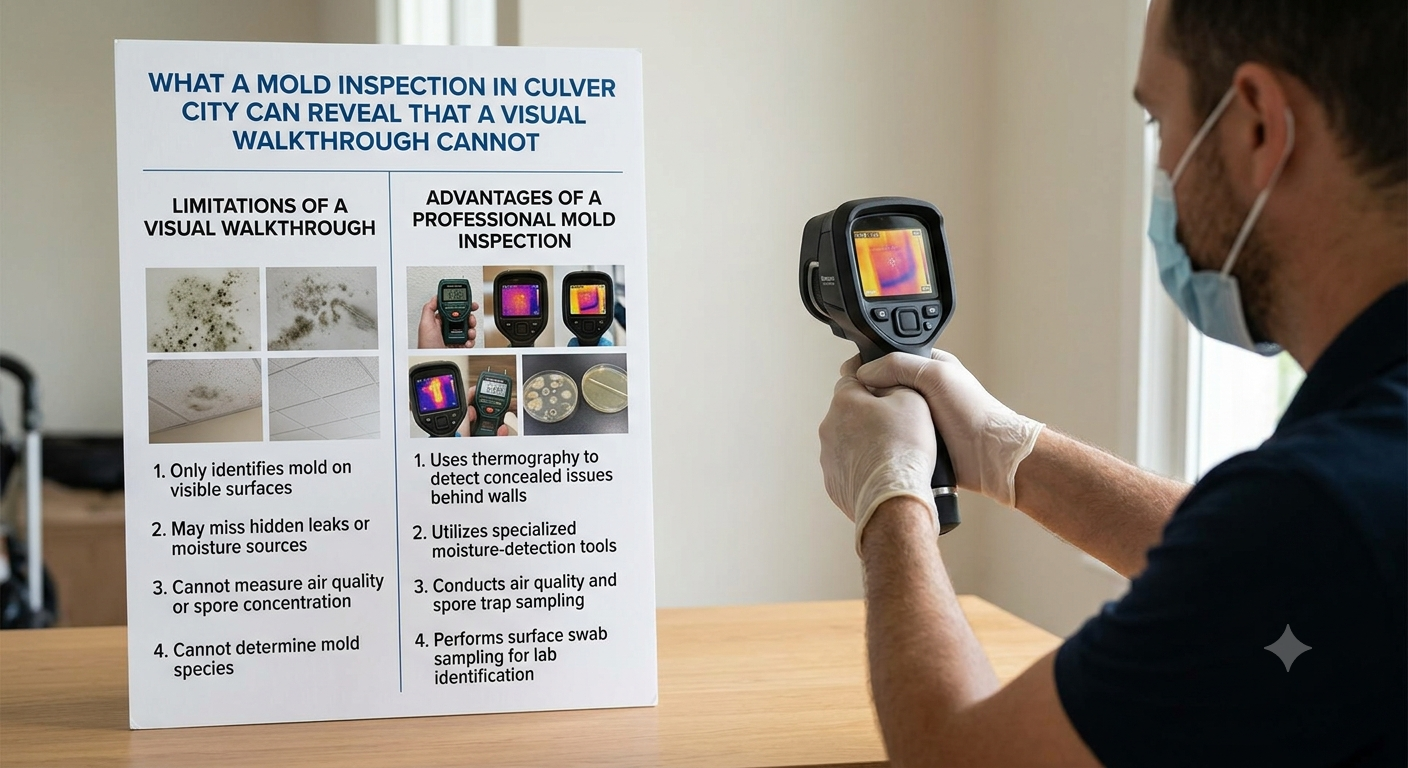
A visual walkthrough can help identify obvious signs of moisture, staining, or visible fungal growth inside a property. However, many mold problems develop behind walls, beneath flooring, above ceilings, or inside other concealed areas. A property can therefore appear clean while still having conditions that support hidden mold growth. During a professional mold inspection in Culver City, we look beyond what can be seen during an ordinary walkthrough. We evaluate areas where moisture and mold may exist without producing obvious surface evidence. This deeper approach can provide property owners with a clearer understanding of potential indoor environmental concerns.
Hidden Moisture Behind Surfaces
Moisture is one of the most important factors associated with mold growth inside buildings. A visual walkthrough may identify a water stain, but it cannot always determine whether moisture remains trapped behind the affected surface. Our inspection process can focus attention on areas around plumbing, bathrooms, kitchens, windows, roofs, and other locations where moisture intrusion may occur. Hidden moisture can remain present even after a visible leak appears to have stopped. This is particularly important because damp building materials can create favorable conditions for mold development. Identifying moisture concerns early can help property owners address the underlying source before the problem becomes more extensive.
Mold Inside Walls and Ceilings
Mold does not always grow where it can be easily seen by occupants or visitors. It may develop inside wall cavities, above ceiling materials, beneath flooring, or within other concealed building components. A visual inspection may show nothing unusual on the surface even when conditions behind that surface are different. We examine accessible areas for signs that may indicate moisture movement or concealed environmental concerns. Depending on the circumstances, additional inspection methods may be appropriate to investigate areas that cannot be evaluated through ordinary visual observation. This can provide information that a simple room-by-room walkthrough would otherwise miss.
Early Signs of Water Intrusion
Water intrusion can occur gradually and may leave subtle evidence before major damage becomes visible. Discoloration, unusual odors, damaged materials, peeling finishes, or changes in surface condition can sometimes point toward a moisture-related issue. During our inspection, we consider these indicators together rather than viewing each symptom in isolation. We also pay attention to locations where exterior water can enter through roofs, windows, walls, foundations, or other building components. Understanding how water may be entering a property can be important when evaluating the conditions associated with mold growth. A visual walkthrough may notice the symptom, while a more detailed inspection can help identify the circumstances surrounding it.
Unusual Musty Odors
A persistent musty odor can sometimes be associated with moisture or microbial growth, even when visible mold is absent. Odors may be particularly noticeable in enclosed spaces, closets, basements, bathrooms, crawlspaces, or areas with limited ventilation. A visual walkthrough can document what is visible, but an odor may indicate that additional investigation is warranted. We consider unusual smells alongside building conditions, moisture indicators, ventilation, and areas where concealed growth could potentially occur. This does not mean that every musty odor confirms the presence of mold, since other building conditions can produce similar smells. A professional inspection helps place these observations into the broader context of the property.
Conditions That Encourage Mold Growth
Mold growth generally depends on environmental conditions that allow it to develop and persist. Excess moisture, elevated humidity, condensation, water intrusion, and damp materials can all be important factors when assessing a property. Our inspection looks at these conditions rather than focusing exclusively on visible mold colonies. This can help reveal areas where the environment may be contributing to a potential mold problem. Finding a moisture source can be especially valuable because addressing the source is an important part of preventing recurring problems. A visual walkthrough may document existing conditions, while a detailed inspection can provide greater insight into the factors behind them.
Problems in Bathrooms and Wet Areas
Bathrooms are naturally exposed to water and humidity, making them areas that deserve careful attention during a mold inspection. Mold may develop around ceilings, walls, plumbing fixtures, cabinets, ventilation openings, or other locations where moisture accumulates. A bathroom can look clean while moisture remains trapped behind finishes or in less accessible areas. We examine visible conditions and consider ventilation, plumbing, condensation, and previous water exposure when assessing the space. Ceiling discoloration or recurring surface growth can also indicate that an underlying moisture condition deserves further attention. A detailed inspection can therefore reveal potential contributing factors that a quick visual walkthrough may overlook.
HVAC and Indoor Moisture Concerns
Heating, ventilation, and air conditioning systems can influence moisture distribution and indoor environmental conditions. Condensation, inadequate drainage, or moisture around certain system components can create conditions that deserve investigation. A visual walkthrough may not provide enough information about areas associated with HVAC equipment or air movement. We consider accessible HVAC-related areas when they are relevant to the inspection and look for visible indications of moisture or other concerns. Proper ventilation and humidity control can also influence how quickly damp conditions develop within a building. Understanding these factors can help property owners recognize why mold-related concerns may persist even after visible growth has been cleaned.
Previous Water Damage
Past water damage can remain relevant long after a leak has been repaired. Building materials that were previously exposed to significant moisture may have experienced conditions that contributed to mold development. A visual walkthrough may only show that the property has been repaired or renovated, without revealing what happened beneath newer finishes. We consider available evidence of previous leaks, flooding, plumbing failures, roof problems, or other moisture events during the inspection. This historical context can help explain unusual staining, odors, damaged materials, or recurring concerns. It can also help property owners determine whether additional investigation may be appropriate in areas affected by earlier water exposure.
Why Professional Inspection Matters
A professional mold inspection provides a more structured evaluation than simply looking around a property for visible growth. We assess observable conditions and consider how moisture, building materials, ventilation, and property history may relate to potential mold concerns. The goal is not simply to identify something that looks unusual, but to understand the conditions that may be contributing to the concern. Depending on the property and circumstances, further assessment or testing may be recommended when appropriate. This approach can help separate obvious surface observations from issues that require closer investigation. For property owners, that distinction can be valuable when deciding what steps should be taken next.
Protecting Your Culver City Property
Properties in Culver City can experience many of the same moisture and building-related challenges found in other Southern California communities. Leaks, plumbing problems, condensation, ventilation issues, and previous water damage can all create conditions that deserve attention. A visual walkthrough remains useful for identifying obvious problems, but it has limitations when conditions are concealed. We use a more detailed inspection approach to look for evidence that may not be apparent during an ordinary property walkthrough. When concerns are identified, understanding their location and possible contributing conditions can help guide appropriate next steps. Choosing a professional inspection can therefore provide valuable information when visible evidence does not tell the complete story.
What an Inspection Can Tell You
The most important difference between a visual walkthrough and a professional inspection is the depth of information that can be gathered. A walkthrough may tell you what appears unusual, while an inspection can investigate the moisture-related conditions and concealed areas associated with those observations. We evaluate the property systematically to identify evidence that could otherwise remain unnoticed. This can include signs of moisture intrusion, areas susceptible to hidden growth, previous water damage, and environmental conditions that may support mold development. The findings can give property owners a clearer picture of what is happening inside the building rather than relying solely on surface appearance. That information can be useful for determining whether additional evaluation, repairs, remediation, or moisture control measures may be necessary.
Making Informed Property Decisions
Mold concerns should be approached by understanding the building conditions involved rather than relying solely on what is immediately visible. A property can look clean while still having hidden moisture or other conditions that warrant further investigation. Our inspections are designed to provide property owners with meaningful information about potential concerns within accessible areas of the building. By identifying warning signs and possible contributing factors, an inspection can help establish a more informed path forward. This is particularly useful when there has been previous water damage, recurring odors, unexplained staining, or repeated surface growth. With a clearer understanding of the property, owners can make decisions based on documented observations instead of appearance alone.
Professional Mold Inspection in Culver City
When you need more than a quick visual check, a professional inspection can provide a deeper look at conditions that may otherwise remain hidden. We examine the property for evidence of moisture, potential mold-related concerns, and building conditions that may require additional attention. Our approach focuses on understanding both visible symptoms and the environmental factors that can contribute to them. Fun Guy Inspections provides inspection services designed to help property owners better understand the condition of their buildings. We can help identify areas that deserve closer attention and explain what the inspection findings may mean for the property. Fun Guy Inspections can be a useful resource when you want a more informed assessment than a basic visual walkthrough can provide.