
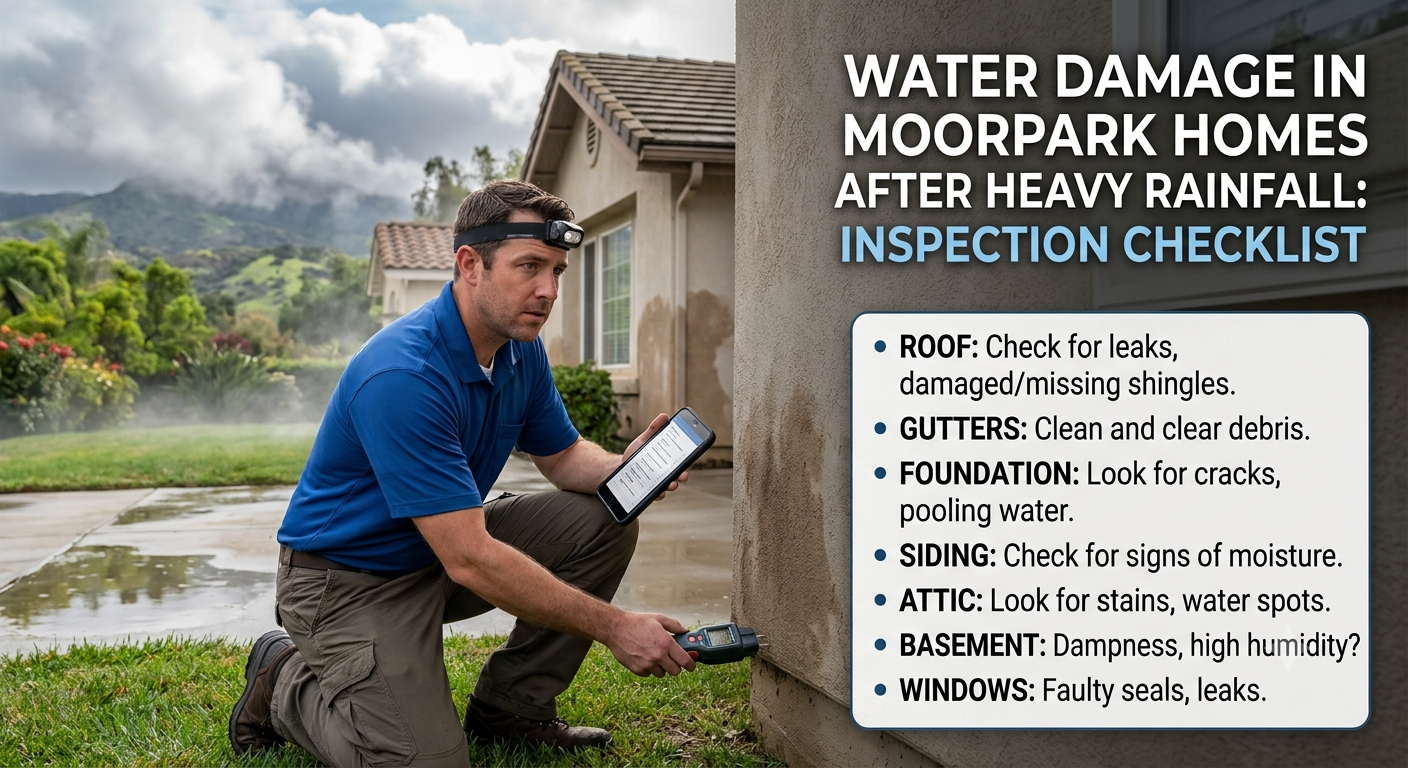
Water Damage in Moorpark Homes After Heavy Rainfall: Inspection Checklist
Heavy rainfall can bring much-needed water to Southern California, but it can also create serious problems for homeowners. In Moorpark, periods of intense rain often expose weaknesses in roofing systems, foundations, drainage systems, and plumbing components. Even homes that appear unaffected from the outside may be hiding moisture intrusion that can lead to costly repairs if left untreated.
Understanding how to inspect your property after a storm is one of the most effective ways to prevent long-term structural damage. A thorough inspection allows homeowners to identify problems early and take corrective action before moisture creates larger concerns such as mold growth, wood rot, or compromised structural materials.
Why Heavy Rainfall Causes Water Damage
Rainwater naturally seeks the path of least resistance. When gutters overflow, roofs develop leaks, or drainage systems become overwhelmed, water can enter areas of the home that are not designed to handle excess moisture.
In Moorpark, sudden storms can deposit large amounts of water within a short period. This can place stress on roofing materials, siding, windows, and foundations. Properties located near slopes or low-lying areas may face additional risks from runoff and pooling water.
Even a small leak can allow moisture to penetrate insulation, drywall, flooring, and framing materials. Once trapped inside these building components, water may remain undetected for weeks or months while causing progressive damage.
Start With an Exterior Inspection
The first step after heavy rainfall is examining the outside of the home. Exterior components serve as the first line of defense against water intrusion.
Walk around the property and look for visible signs of standing water near the foundation. Pooled water can increase hydrostatic pressure against foundation walls and eventually lead to cracks or seepage into basements and crawl spaces.
Pay close attention to gutters and downspouts. Overflowing gutters often indicate blockages or inadequate drainage capacity. Water spilling over roof edges can damage fascia boards, siding, and landscaping while increasing the risk of foundation issues.
Inspect exterior walls for discoloration, water stains, peeling paint, or warped materials. These symptoms may suggest that moisture has penetrated behind the surface.
Windows and doors should also be checked carefully. Damaged seals or deteriorated caulking can create entry points for rainwater during storms.
Examine the Roof for Signs of Trouble
Roof damage is one of the most common sources of water intrusion after severe weather.
Homeowners should inspect the roof from the ground whenever possible. Look for missing shingles, cracked tiles, displaced flashing, or debris accumulation. Any damage that compromises the roofing system can allow water to penetrate the home.
Pay particular attention to roof valleys, chimneys, skylights, and vent penetrations. These areas are especially vulnerable because multiple roofing components intersect at these locations.
Inside the attic, check for damp insulation, water stains, or visible moisture on rafters and sheathing. Early signs of roof leaks are often easier to detect in attic spaces before they become visible on interior ceilings.
Check Interior Ceilings and Walls
Once the exterior inspection is complete, move indoors and examine ceilings and walls throughout the property.
Water stains often appear as yellow, brown, or copper-colored discoloration. These stains may indicate active leaks or previous moisture events.
Look for bubbling paint, peeling wallpaper, soft drywall, or warped wall surfaces. These conditions can develop when moisture becomes trapped behind finishes.
Pay special attention to rooms directly beneath the roof as well as areas surrounding windows and exterior walls. Moisture intrusion frequently appears in these locations first.
Any unusual odors should also be investigated. A persistent musty smell often indicates hidden moisture and potential mold growth.
Evaluate Flooring Materials
Flooring can reveal valuable clues about water damage following heavy rainfall.
Hardwood flooring may begin to cup, buckle, or separate when exposed to excess moisture. Laminate flooring often swells along seams and edges. Carpet may feel damp, develop stains, or emit unpleasant odors.
Inspect flooring near exterior doors, windows, bathrooms, and foundation walls. These areas are often vulnerable to water intrusion.
If flooring materials feel soft or uneven underfoot, further investigation may be necessary to determine whether subfloor damage has occurred.
Inspect Crawl Spaces and Basements
Crawl spaces and basements frequently experience water intrusion during periods of heavy rain.
Check for standing water, wet soil, damp insulation, and visible mold growth. Moisture accumulation in these areas can compromise structural supports and create unhealthy indoor conditions.
Foundation walls should be examined for cracks, water stains, and signs of seepage. Even minor foundation leaks can worsen over time if drainage issues remain unresolved.
Humidity levels should also be monitored. Excess moisture in crawl spaces can migrate upward into living areas and contribute to indoor air quality concerns.
Review Plumbing and Mechanical Systems
Heavy rainfall does not always cause direct water intrusion. Storms can also reveal weaknesses in plumbing systems and drainage infrastructure.
Inspect water heaters, HVAC equipment, and plumbing fixtures for signs of leaks or moisture accumulation. Drainage systems should be evaluated to ensure they are functioning properly and directing water away from the structure.
Sump pumps, where present, should be tested to confirm they are operating correctly. A malfunctioning pump can allow water accumulation during future storms.
Watch for Mold Development
Mold can begin developing within 24 to 48 hours after moisture exposure under favorable conditions.
Areas with elevated humidity, water stains, or damp materials should be monitored closely. Common signs include discoloration on surfaces, musty odors, and visible fungal growth.
Prompt identification and remediation are essential because mold can spread rapidly and affect indoor air quality.
Professional inspections can help identify hidden moisture sources that may not be visible during a routine homeowner assessment.
When to Schedule a Professional Inspection
While homeowners can identify many visible signs of water damage, some problems remain hidden behind walls, beneath flooring, or within structural components.
Professional inspectors use specialized tools such as moisture meters, thermal imaging equipment, and advanced inspection techniques to locate concealed moisture. These assessments provide a clearer understanding of the extent of damage and help homeowners prioritize repairs.
At Fun Guy Inspections, we understand the unique challenges Moorpark homeowners face after significant rainfall events. Our inspection process is designed to identify moisture intrusion, evaluate affected building components, and provide detailed findings that support informed decision-making.
Protecting Your Home After Future Storms
Preventive maintenance remains one of the most effective ways to reduce the risk of water damage. Regular roof inspections, gutter cleaning, proper grading, and prompt repairs can significantly improve a home’s ability to withstand heavy rainfall.
Homeowners should also address minor leaks immediately rather than waiting for visible damage to appear. Early intervention often results in lower repair costs and reduced disruption.
When severe weather strikes, a comprehensive inspection can provide valuable peace of mind. Fun Guy Inspections helps homeowners identify hidden concerns before they become major problems. By taking a proactive approach and following a detailed inspection checklist, property owners can better protect their investment and maintain a safe, healthy living environment for years to come.
If you suspect water damage after a recent storm, our team at Fun Guy Inspections is ready to help assess your property and uncover issues that may otherwise go unnoticed.