
The Role of a Water Damage Inspector After a Plumbing Leak
A plumbing leak can happen without warning and quickly turn into a serious problem for homeowners. Whether it is a burst pipe, a leaking water heater, a damaged supply line, or a hidden plumbing failure behind walls, water can spread rapidly throughout a property. While stopping the leak is the first priority, understanding the extent of the damage is equally important. This is where a water damage inspector plays a critical role.
Many property owners assume that once the leak has been repaired, the problem is resolved. Unfortunately, water often travels beyond visible areas, affecting building materials, insulation, flooring, and structural components. A professional inspection helps identify hidden damage and provides a clear picture of what needs to be addressed before minor issues become major repairs.
Why Water Damage Inspections Matter
Water can penetrate surfaces within minutes and continue spreading long after the source of the leak has been stopped. Moisture trapped inside walls, ceilings, and flooring can create ideal conditions for mold growth, material deterioration, and structural weakening.
A professional inspection provides an objective assessment of the property. The goal is not only to identify visible damage but also to locate hidden moisture that could lead to future problems. Early detection allows homeowners to take corrective action before restoration costs increase.
Assessing the Extent of Water Intrusion
One of the first responsibilities of a water damage inspector is determining how far the water has traveled. Water often follows the path of least resistance, moving through wall cavities, beneath flooring, and into adjacent rooms.
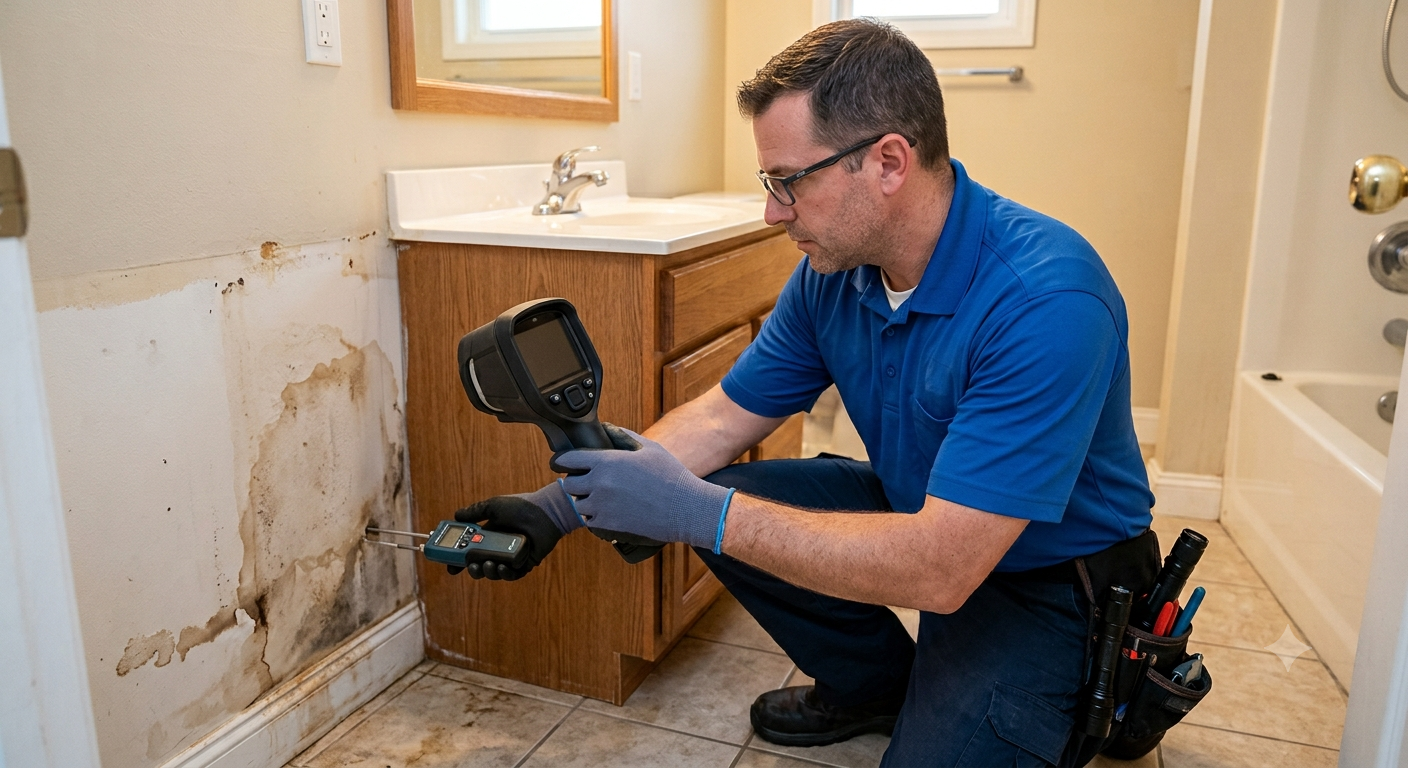
During the inspection process, specialized equipment is used to measure moisture levels in building materials. Areas that appear dry on the surface may still contain elevated moisture levels beneath the visible layer. Identifying these affected areas helps ensure that no damage is overlooked.
By accurately mapping moisture intrusion, inspectors provide valuable information that guides cleanup and restoration efforts.
Identifying Hidden Moisture
Hidden moisture is one of the biggest concerns after a plumbing leak. Even a small amount of trapped water can create long term issues if left untreated.
Inspectors use moisture meters, thermal imaging cameras, and other advanced tools to locate moisture behind walls, under flooring, and above ceilings. These technologies help reveal areas that cannot be evaluated through visual inspection alone.
Detecting hidden moisture early helps prevent the development of mold colonies and reduces the likelihood of costly structural repairs in the future.
Evaluating Structural Impact
Water damage can affect more than just surface materials. Depending on the severity and duration of the leak, structural components may also be compromised.
A water damage inspector evaluates materials such as drywall, wood framing, subfloors, and ceiling assemblies for signs of deterioration. Prolonged exposure to moisture can weaken these materials and reduce their ability to perform as intended.
Understanding the condition of structural components allows homeowners to make informed decisions about repairs and restoration priorities.
Determining the Risk of Mold Growth
Mold can begin developing within a relatively short period when moisture is present. After a plumbing leak, areas that remain damp create favorable conditions for mold growth.
Inspectors assess the property for signs of elevated moisture levels and identify areas where mold is most likely to develop. In some cases, additional mold testing may be recommended if contamination is suspected.
By addressing moisture issues promptly, property owners can significantly reduce the risk of mold related concerns and maintain a healthier indoor environment.
Supporting Insurance Claims
Water damage claims often require documentation that clearly outlines the extent of the loss. A professional inspection can provide detailed findings that help support the claims process.
Inspection reports typically include descriptions of affected areas, moisture readings, photographs, and recommendations for remediation. This information can be valuable when communicating with insurance providers and restoration contractors.
Accurate documentation helps ensure that all affected areas are properly identified and considered during the claims process.
Creating a Restoration Roadmap
Every water damage situation is different. Some leaks may require only minor drying efforts, while others involve extensive restoration work.
A water damage inspector helps establish a clear plan by identifying affected materials and recommending appropriate corrective actions. This roadmap allows restoration professionals to focus their efforts on areas that require immediate attention.
Having a detailed understanding of the damage can improve efficiency, reduce unnecessary work, and help homeowners make informed decisions throughout the recovery process.
Preventing Future Problems
Beyond evaluating current damage, inspectors often identify conditions that contributed to the plumbing leak or increased the severity of water intrusion.
These findings may include aging plumbing components, poor drainage conditions, inadequate ventilation, or maintenance concerns. Addressing these issues can reduce the likelihood of future water related incidents and help protect the property over the long term.
Preventive recommendations provide homeowners with valuable insights that go beyond the immediate repair process.
The Importance of Professional Expertise
Water damage is not always obvious. What appears to be a small leak can sometimes result in extensive hidden damage that remains undetected for weeks or months. Professional inspectors have the training, experience, and equipment needed to identify issues that may not be visible to the untrained eye.
At Fun Guy Inspections, we understand the challenges homeowners face after a plumbing leak. Our thorough inspection process is designed to uncover hidden moisture, evaluate damage accurately, and provide clear recommendations for next steps.
A plumbing leak may end once the water source is repaired, but the effects of water intrusion can continue long afterward if not properly addressed. A water damage inspector plays a vital role in identifying hidden moisture, assessing structural conditions, evaluating mold risks, and supporting restoration efforts.
By obtaining a professional inspection after a plumbing leak, homeowners can gain a complete understanding of the situation and take the necessary steps to protect their property. At Fun Guy Inspections, we help property owners move forward with confidence by providing detailed evaluations and practical guidance. When water damage is suspected, a timely inspection can make all the difference in preventing larger and more expensive problems down the road.