
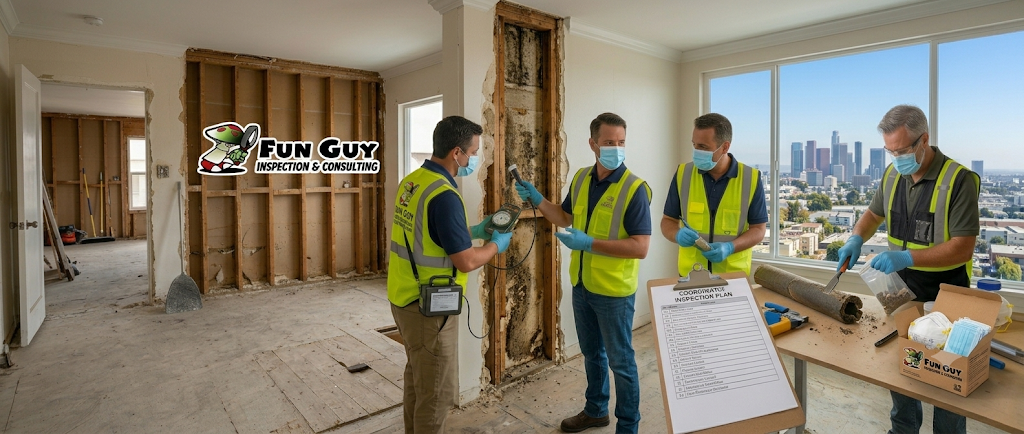
Property remodeling is an excellent opportunity to improve the appearance, functionality, and value of a home or commercial building in Los Angeles. Whether you are planning a kitchen renovation, bathroom upgrade, room addition, flooring replacement, or complete interior transformation, preparing the property properly is essential for a successful project. However, many property owners focus primarily on design choices, construction materials, contractor schedules, and renovation budgets without considering potential environmental hazards hidden within their buildings. Mold growth and asbestos-containing materials are two important concerns that should be investigated before remodeling work begins. These hazards can remain unnoticed for years, particularly in older properties where previous construction materials, plumbing problems, and moisture exposure may have created unsafe conditions. Coordinating mold testing and asbestos inspections before starting renovation work helps property owners make informed decisions, protect occupants, and avoid unexpected complications during construction.
Why Environmental Inspections Matter Before Remodeling
Remodeling projects frequently involve removing drywall, cutting into walls, replacing flooring, opening ceilings, disturbing insulation, and modifying plumbing or ventilation systems. Although these activities are necessary for improving a property, they can also expose materials and contaminants that were previously undisturbed. Mold may develop behind bathroom walls, beneath flooring, around plumbing connections, or inside ceiling cavities where moisture has accumulated over time. Similarly, asbestos may be present in older insulation, ceiling textures, flooring materials, joint compounds, and other building components. When renovation contractors disturb these materials without appropriate precautions, they may release harmful substances into the surrounding environment. This can create health concerns, require additional remediation, and potentially interrupt the entire construction schedule. Arranging professional environmental inspections before demolition allows property owners to understand existing conditions and address potential hazards before they become larger problems.
Understanding the Risks of Mold in Los Angeles Properties
Mold is a common indoor environmental concern that can affect residential and commercial properties throughout Los Angeles. Although the region experiences a relatively dry climate compared with many other parts of the country, buildings can still develop moisture-related problems because of plumbing leaks, roof damage, poor ventilation, condensation, and previous water intrusion. Bathrooms, kitchens, laundry areas, basements, crawl spaces, and enclosed wall cavities are particularly important locations to investigate. Mold does not always grow in areas where it is immediately visible, which means a property can have an underlying moisture problem even when its walls and ceilings appear clean. Remodeling can expose these concealed areas and reveal contamination that may have been developing for months or years. Professional mold testing and moisture assessments help identify potential concerns and provide useful information for determining whether further investigation or remediation is necessary.
Why Asbestos Inspections Are Essential for Older Buildings
Asbestos was historically used in numerous construction products because of its durability, heat resistance, and insulating properties. Although its use has been significantly restricted, asbestos-containing materials may still be present in older residential and commercial buildings throughout Los Angeles. Potential locations include vinyl floor tiles, flooring adhesives, pipe insulation, popcorn ceilings, roofing materials, wall systems, and certain joint compounds. The presence of asbestos does not automatically mean that a building is unsafe, particularly when the material remains intact and undisturbed. However, cutting, sanding, drilling, breaking, or removing asbestos-containing materials can release microscopic fibers into the air. Inhalation of these fibers is associated with serious long-term health conditions, including mesothelioma, lung cancer, and asbestosis. Before remodeling begins, qualified professionals should assess suspect materials and determine whether sampling and laboratory analysis are necessary. Understanding where asbestos may be present allows contractors and property owners to plan renovation activities around appropriate safety requirements.
The Benefits of Coordinating Both Inspections
Although mold testing and asbestos inspections address different environmental concerns, coordinating them as part of the same pre-remodeling assessment can make renovation planning considerably more efficient. Both inspections help identify potential hazards in areas that may be affected by demolition, structural modifications, and material removal. For example, opening a bathroom wall could expose hidden mold caused by an old plumbing leak while also revealing asbestos-containing joint compound or insulation. If these issues are discovered separately after construction begins, contractors may need to stop work, arrange additional assessments, revise their schedules, and adjust project budgets. Coordinating both inspections allows property owners to develop a clearer understanding of the building’s environmental condition before making construction decisions. It also helps contractors determine which areas require additional precautions, specialized handling, or professional remediation before ordinary remodeling activities can proceed.
How Mold and Asbestos Can Affect Each Other During Renovation
Mold and asbestos are different hazards, but they can create overlapping challenges when renovation activities disturb building materials. Mold contamination is generally associated with moisture exposure and fungal growth, whereas asbestos becomes a concern when materials containing asbestos fibers are damaged or disturbed. A property may have both problems in the same renovation area, particularly in older bathrooms, kitchens, utility rooms, and properties with a history of water damage. For instance, a leaking pipe may cause mold to develop around insulation or inside a wall cavity where older construction materials are also present. Removing contaminated drywall without first evaluating the surrounding materials could disturb asbestos-containing components and complicate the remediation process. Understanding both conditions before work begins helps professionals establish an appropriate sequence for inspection, containment, remediation, and construction. This coordinated approach reduces the possibility of one remediation activity creating additional complications for another.
Why the Age of a Property Matters in Los Angeles
Los Angeles has a diverse property landscape that includes historic residences, mid-century homes, older apartment complexes, commercial buildings, and recently constructed developments. The age and renovation history of a property can influence the types of environmental hazards that should be investigated before remodeling. Buildings constructed before asbestos restrictions may contain materials that require professional assessment before they are disturbed. Previous renovation projects can also introduce uncertainty because property owners may not have complete records explaining which materials were removed, replaced, or left untouched. Similarly, older plumbing systems, outdated roofing, and poorly maintained ventilation systems may contribute to moisture intrusion and concealed mold growth. Even properties that have undergone cosmetic upgrades should not automatically be considered free from environmental concerns. A professional inspection provides a better understanding of existing conditions and helps determine whether additional testing is appropriate for the planned renovation.
Planning the Correct Inspection Sequence
One of the most important aspects of coordinating mold testing and asbestos inspections is establishing the correct order of activities. Before demolition or material removal begins, property owners should identify which walls, ceilings, flooring systems, insulation, and other building components will be affected by the renovation. Suspect asbestos-containing materials should be assessed before they are disturbed, with appropriate sampling and laboratory analysis arranged when necessary. At the same time, a mold and moisture assessment can help identify visible contamination, water damage, concealed moisture concerns, and areas that may require further investigation. If asbestos-containing materials are identified, any necessary abatement should be planned and completed by appropriately qualified professionals before disruptive work proceeds. Similarly, identified mold problems should be addressed through appropriate remediation and correction of the underlying moisture source. Once these environmental concerns have been properly evaluated and addressed, contractors can move forward with greater confidence and a clearer understanding of site conditions.
Preventing Unexpected Remodeling Delays and Additional Expenses
Unexpected environmental discoveries can significantly affect the financial and operational planning of a remodeling project. When contractors uncover mold behind drywall or suspect asbestos beneath old flooring, construction activities may need to stop until the materials can be evaluated. This can lead to additional inspection appointments, laboratory testing, remediation expenses, material disposal costs, and scheduling changes. Contractors may also need to coordinate with specialized environmental professionals before they can safely continue their work. These interruptions can be particularly frustrating when homeowners have already arranged temporary accommodation, ordered replacement materials, or scheduled other service providers. Conducting mold testing and asbestos inspections before remodeling provides an opportunity to identify potential complications while there is still time to incorporate them into the original project plan. Although inspections represent an additional upfront expense, they can help reduce the likelihood of more substantial and unexpected costs later. Better preparation also allows property owners to communicate more effectively with contractors and establish realistic construction timelines.
Protecting Homeowners, Families, and Construction Workers
A remodeling project should improve the living environment without unnecessarily exposing occupants or workers to environmental hazards. Mold exposure can cause allergic reactions and respiratory irritation in some individuals, while asbestos exposure can lead to serious diseases that may develop many years after inhalation. These risks make proper identification and management particularly important when renovation work involves older materials or areas with previous moisture problems. Homeowners should avoid entering suspected contaminated work areas or attempting to remove potentially hazardous materials themselves. Construction workers also need to understand the environmental conditions of the property before beginning activities that could disturb walls, ceilings, flooring, or insulation. Professional assessments help identify concerns that may require containment, protective equipment, specialized removal procedures, or other safety measures. Taking these precautions demonstrates a responsible approach to property improvement and helps protect everyone who may be affected by the renovation.
Understanding California and Los Angeles Asbestos Requirements
Property owners planning remodeling projects should also understand that asbestos-related work may be subject to federal, state, and local requirements. The Environmental Protection Agency’s National Emission Standards for Hazardous Air Pollutants establish specific requirements for certain renovation and demolition activities involving asbestos-containing materials. Applicability depends on factors such as the building type, project scope, and amount and type of material involved. In the Los Angeles region, the South Coast Air Quality Management District also plays an important role in regulating applicable asbestos-related activities. Certain projects require advance notification, appropriate work practices, and compliant handling and disposal of regulated materials. Requirements can differ depending on whether the property is a single-family residence, a multifamily building, or a commercial facility. Property owners should therefore confirm applicable requirements with the relevant authorities and qualified environmental professionals before scheduling demolition or asbestos-related work. Understanding these responsibilities early can help prevent compliance problems and unnecessary project interruptions.
Why Professional Mold Assessment Is Important
Mold identification involves more than simply looking for dark spots on walls or ceilings. Experienced professionals consider the property’s moisture history, visible building conditions, ventilation, plumbing systems, and areas where water intrusion may have occurred. They can investigate locations that are difficult for property owners to access, including enclosed cavities, areas beneath flooring, and spaces around plumbing fixtures. Depending on the conditions, the assessment may involve moisture measurements, visual inspection, targeted sampling, or other investigative methods. It is important to understand that mold testing is not always necessary when visible mold or an obvious moisture problem has already been identified. California’s Department of Public Health emphasizes that finding and correcting the underlying moisture source is essential to addressing mold problems. A properly planned assessment should therefore focus on understanding the building conditions and determining the appropriate next steps rather than relying exclusively on laboratory results. This information can help property owners make better decisions before remodeling changes the condition of the building.
The Importance of Reliable Asbestos Testing
Asbestos cannot be reliably identified simply by examining the appearance, color, or texture of a building material. Materials that look similar can have completely different compositions, making professional assessment and laboratory analysis important when asbestos is suspected. An asbestos inspection typically involves examining relevant building components and collecting samples of suspect materials when appropriate. These samples are then submitted for laboratory analysis to determine whether asbestos is present. The findings can help property owners understand which materials require special handling and whether the planned renovation could disturb them. If asbestos is identified, the appropriate response depends on the material’s condition, location, quantity, and the nature of the proposed construction work. In some situations, leaving intact materials undisturbed may be appropriate, while other projects may require professional repair, encapsulation, enclosure, or removal. Working with qualified professionals helps ensure that decisions are based on reliable findings rather than assumptions.
Creating a More Organized Remodeling Plan
Once mold testing and asbestos inspection findings are available, property owners can use the information to develop a more organized renovation strategy. Contractors should review relevant inspection reports before finalizing demolition procedures, material removal plans, and construction schedules. Any identified environmental concerns should be discussed with the appropriate specialists so that responsibilities and work sequences are clearly established. If mold remediation is required, the underlying moisture problem should be corrected rather than simply covering the affected area with new drywall, flooring, or paint. If asbestos-containing materials are present, contractors should ensure that applicable handling, containment, removal, and disposal requirements are followed. Property owners should also retain inspection findings, laboratory reports, and remediation documentation for future reference. Maintaining these records can be useful when planning additional renovations, managing the property, or communicating with future contractors. A well-organized approach helps keep the project focused on both construction quality and environmental safety.
Choosing the Right Environmental Inspection Company in Los Angeles
Selecting an experienced environmental inspection provider is an important part of preparing a property for remodeling. Property owners should look for professionals who understand building conditions, moisture-related concerns, asbestos sampling procedures, and the importance of accurate reporting. It is also important to understand the difference between inspection, laboratory testing, and remediation because these services involve different responsibilities and qualifications. In California, mold assessment and remediation are not subject to a dedicated statewide licensing program, so checking professional experience, training, testing procedures, and relevant credentials is particularly important. Asbestos-related work, meanwhile, is subject to specific regulatory and qualification requirements depending on the activity being performed. At Fun Guy Inspections, we believe that informed property owners are better prepared to make responsible decisions about their buildings. Our approach focuses on helping clients understand potential environmental concerns and obtain the information they need before moving forward with renovation plans. Choosing the right inspection support can make the preparation stage more straightforward and help property owners approach remodeling with greater confidence.
Schedule Mold Testing and Asbestos Inspections Before Your Next Remodeling Project
Remodeling should be an investment in your property’s comfort, functionality, and long-term value, not an opportunity to uncover avoidable environmental complications. Coordinating mold testing and asbestos inspections before construction begins helps identify hidden concerns, establish appropriate safety measures, and create a more predictable renovation schedule. Whether you are upgrading an older home, renovating a rental property, modernizing a commercial building, or preparing an entire property for redevelopment, understanding its environmental condition is an important first step. Waiting until contractors begin removing walls, flooring, or ceilings can make unexpected discoveries more difficult and expensive to manage. Our team at Fun Guy Inspections encourages Los Angeles property owners to make environmental assessments part of their renovation preparation rather than treating them as an afterthought. We can help you take the next step toward understanding potential mold and asbestos concerns before your remodeling project gets underway. Contact Fun Guy Inspections today to discuss your property inspection needs and schedule an assessment before beginning your next renovation project in Los Angeles.